
Pennsylvania drivers experience all four seasons and while that brings beautiful scenery, it also exposes vehicles to a wide range of environmental hazards. From road salt in winter to intense UV rays in summer, each season presents unique challenges that can gradually wear down your vehicle’s finish.
If you’re looking for the best protection for car paint, understanding how seasonal weather affects your vehicle is the first step toward preserving its appearance and value. Investing in professional paint protection film services can help create a durable barrier against many of the elements your car faces throughout the year.
How Pennsylvania’s Seasons Affect Your Car’s Paint
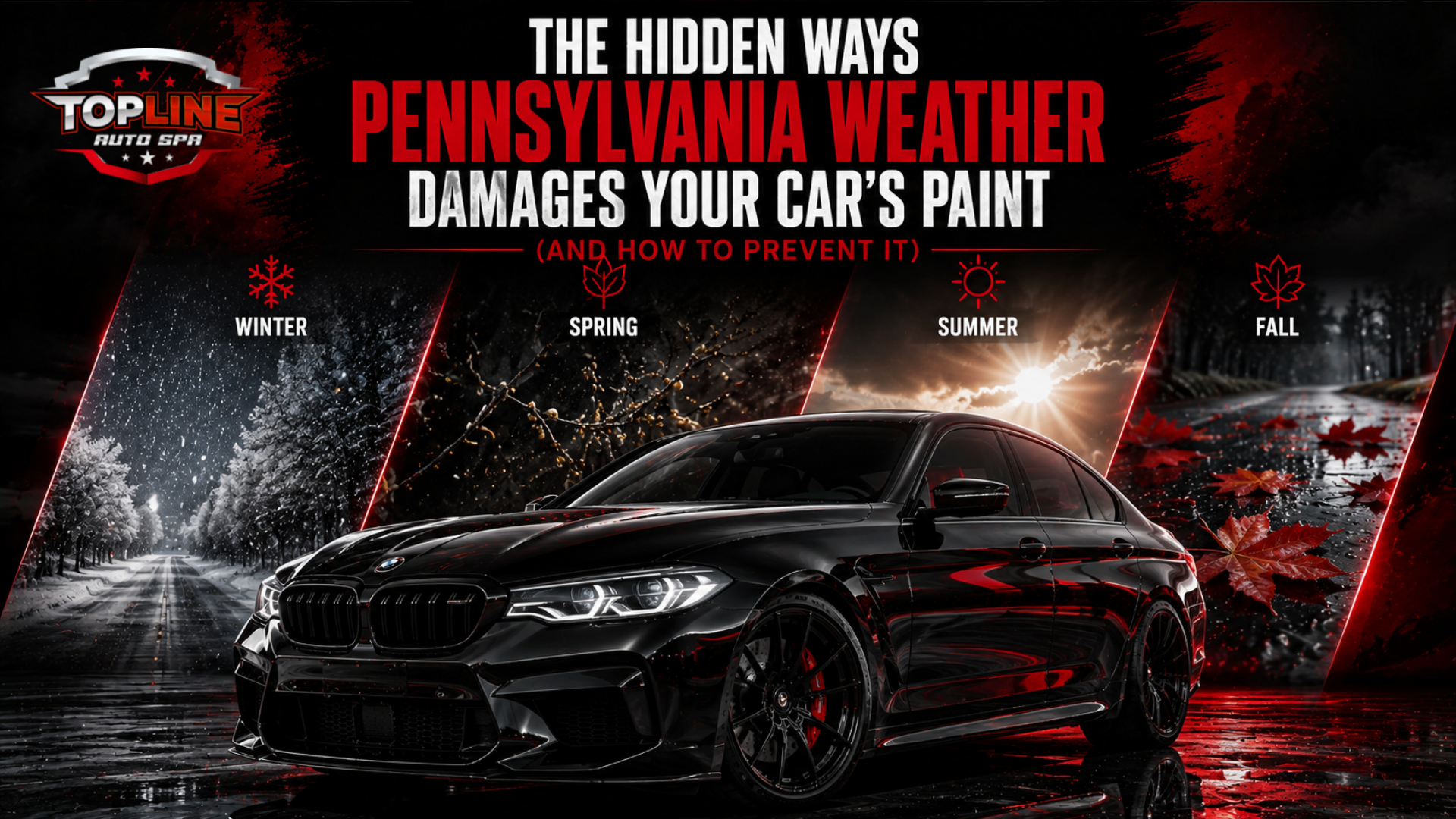
Winter: Road Salt and Snow Can Accelerate Corrosion
Winter is often the harshest season for your vehicle’s exterior. Snow, ice, and road salt may help keep roads safe, but they can wreak havoc on automotive paint. Road salt sticks to your vehicle and can gradually break down protective layers. If left untreated, it may lead to corrosion, rust formation, and paint deterioration.
Common Winter Paint Threats
- Salt residue buildup
- Ice scraping scratches
- Moisture trapped in hard-to-clean areas
- Increased risk of rust formation
To minimize winter damage, wash your vehicle regularly and remove salt deposits as soon as possible.
Spring: Pollen, Tree Sap, and Rain Contaminants
Spring often brings relief from winter weather, but it introduces a new set of paint hazards.
Pollen may seem harmless, but when mixed with moisture, it can create acidic compounds that cling to your vehicle’s surface. Tree sap and bird droppings become more common and can permanently etch paint if not removed promptly.
Spring Paint Hazards
- Pollen accumulation
- Tree sap deposits
- Bird droppings
- Acidic rain contaminants
Regular washing and surface protection become especially important during this season.
Summer: UV Rays Cause Fading and Oxidation
Summer sunshine can make your vehicle look great, but prolonged exposure to ultraviolet rays can gradually damage paint. Over time, UV radiation breaks down clear coat protection, leading to fading, oxidation, and a dull appearance. Dark-colored vehicles are especially vulnerable because they absorb more heat.
Professional ceramic coating services help add a layer of protection against UV exposure while making the vehicle easier to clean. If you’re looking for additional ways to reduce sun-related damage, check out How to Protect Your Car Paint from Sun Damage: 5 Best Ways for practical tips that can help keep your vehicle looking newer for longer.
Summer Paint Threats
- UV fading
- Oxidation
- Water spotting
- Heat-related clear coat deterioration
Fall: Leaves, Moisture, and Debris Build-Up
Many car owners underestimate the impact of autumn conditions on vehicle paint. Falling leaves can trap moisture against painted surfaces. As leaves decompose, they release organic compounds that may stain or discolor paint if left sitting for extended periods. Cooler temperatures and increased rainfall also contribute to moisture-related issues.
Fall Paint Risks
- Leaf staining
- Moisture retention
- Mud and debris accumulation
- Increased contamination before winter
5 Ways to Protect Your Vehicle Year-Round
1. Wash Your Vehicle Consistently
Routine washing removes contaminants before they have time to damage the paint. Aim to wash your vehicle more frequently during winter and spring when contaminants are most aggressive.
2. Apply Long-Term Surface Protection
Protective solutions help create a barrier between your paint and environmental hazards. Paint protection film and ceramic coatings are among the most effective options for long-term defense against seasonal exposure.
3. Avoid Letting Contaminants Sit
Bird droppings, bug splatter, tree sap, and road salt should be removed as soon as possible to prevent staining and etching.
4. Park Smart Whenever Possible
Covered parking can reduce exposure to UV rays, tree sap, falling branches, and snow accumulation. Even partial shade can help reduce long-term paint degradation.
5. Address Paint Damage Early
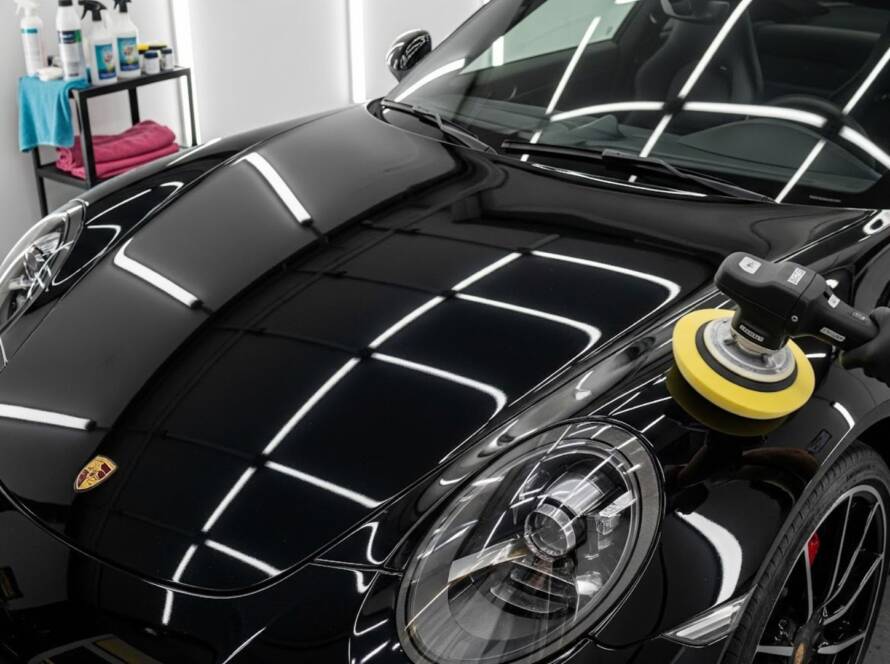
Minor scratches, swirl marks, and oxidation can become more noticeable as seasonal exposure continues. Professional paint correction services can help restore gloss and remove many surface imperfections before they worsen.
Why Seasonal Protection Matters More Than Most Drivers Realize
Many paint problems don’t happen overnight. Instead, they develop slowly through repeated exposure to weather conditions throughout the year.
A single season may not cause noticeable damage, but several years of UV exposure, salt buildup, moisture retention, and contamination can significantly impact your vehicle’s appearance and resale value.
The earlier you protect your vehicle, the easier it becomes to maintain that showroom-quality finish.
Conclusion
Pennsylvania’s changing seasons create unique challenges for vehicle owners. From corrosive road salt in winter to intense UV exposure in summer, your car’s paint is constantly under attack from environmental factors that can gradually reduce its shine and durability.
The good news is that most seasonal paint damage is preventable. Regular washing, prompt contaminant removal, and professional paint protection solutions can significantly reduce the impact of weather-related wear and tear.
Rather than waiting until fading, oxidation, or scratches become obvious, it’s better to take a proactive approach. Protecting your vehicle today can save you time, money, and frustration down the road while helping maintain its appearance and value for years to come.
FAQs
Does Pennsylvania road salt damage car paint?
Yes. Road salt can break down protective layers and contribute to corrosion if it remains on the vehicle for extended periods.
Which season is hardest on a car’s paint?
Winter and summer are typically the most damaging. Winter introduces salt and moisture, while summer brings prolonged UV exposure and heat.
What is the best protection for car paint in Pennsylvania?
A combination of regular maintenance, paint protection film, ceramic coating, and prompt contaminant removal provides the most comprehensive protection.