
Your alloy wheels are one of the first things people notice about your vehicle. They catch light, show off the style of your car, and contribute significantly to the overall appearance. But over time, they accumulate brake dust, road grime, tar, mineral deposits, and other contaminants that make them look dull and neglected.
The problem is that alloy wheels are also expensive to replace and easy to damage if you use the wrong cleaning methods. Too much pressure from a pressure washer, the wrong chemicals, or abrasive brushes can scratch the finish, etch the clear coat, or even damage the underlying aluminum. You need to know what you’re doing to clean them properly.
This comprehensive guide covers everything from understanding your wheel type to step-by-step cleaning procedures, protection strategies, and professional detailing options. Whether you’re dealing with light dust buildup or heavy brake dust accumulation, you’ll find proven methods that work without damaging your investment.
Why Alloy Wheels Require Special Attention
Unlike steel wheels, alloy wheels are made from aluminum or magnesium alloys that are lighter but more susceptible to certain types of damage. They’re typically coated with a clear coat for protection, but that clear coat can be compromised by improper cleaning or exposure to harsh chemicals.
Alloy wheels are exposed to some of the harshest conditions your vehicle faces. Brake dust is actually tiny particles of metal from your brake pads, mixed with dust and other debris. This material is corrosive and can bond to your wheel surface over time. Road salt, especially in Pennsylvania winters, accelerates corrosion on aluminum. Tar from road surfaces can harden on your wheels. Mineral deposits from water splash can etch the finish.
All of this means your wheels need regular cleaning with the right approach. Neglecting them doesn’t just make your car look bad. It actually allows damage to accumulate that becomes harder and more expensive to fix over time.
Understanding Your Alloy Wheel Finish
Before you start cleaning, you need to understand what type of finish your wheels have. Different finishes require different care approaches.
Most alloy wheels have a clear coat applied over the underlying finish. This clear coat serves as protection against UV rays, oxidation, and contamination. Some wheels are polished aluminum with a clear coat. Others have a painted finish with clear coat on top. Some luxury vehicles have specialized finishes like matte black, satin finishes, or chrome-plated wheels.
Each finish type reacts differently to cleaning products and methods. Polished aluminum is beautiful but high maintenance. Painted finishes are more forgiving. Chrome needs gentle handling. Understanding your specific wheel type helps you choose the right products and methods.
Check your vehicle’s owner manual or the wheel manufacturer’s recommendations for your specific wheels. If you don’t have that information, look at the wheel in detail. If you can see the natural aluminum color underneath, it’s polished aluminum. If the surface is uniform in color, it’s painted.
The Problem with Brake Dust and Road Contamination
The biggest enemy of alloy wheels is brake dust. Every time you apply your brakes, tiny particles of metal from your brake pads become airborne and settle on your wheels. This isn’t regular dust. It’s corrosive material that bonds to your wheel surface.
Brake dust contains iron particles, which means it’s actually attracted to certain cleaning chemicals and can leave stains if not removed properly. The longer brake dust sits on your wheels, the harder it becomes to remove and the more damage it can cause.
Road salt in winter is another major problem for wheel owners in Pennsylvania. Salt accelerates corrosion of aluminum and can cause pitting if left untreated. Tar from asphalt roads hardens on wheel surfaces and requires specific solvents to remove. Mineral deposits from water and acid rain can etch clear coats.
Regular cleaning prevents these problems from accumulating. Even light brake dust buildup shouldn’t sit on your wheels for months. The sooner you remove contaminants, the less damage they cause.
Basic Wheel Cleaning Method: DIY Approach
For regular maintenance and light brake dust buildup, this method works well and is gentle on your wheels.
Start by gathering your supplies. You’ll need a bucket of warm water, a dedicated wheel cleaner or pH-neutral car soap, two soft brushes (one with bristles about 2-3 inches long for the face of the wheel and one smaller brush for the barrel and spokes), microfiber cloths for drying, and optionally a pressure washer on low settings.
Never use the same brushes you use for your car’s body on your wheels. Wheels collect harsher contaminants and you don’t want to cross-contaminate your paint.
Fill your bucket with warm water and add wheel cleaner according to product instructions. Many dedicated wheel cleaners are specifically formulated to break down brake dust without being harsh on the finish. If you’re using regular car soap, make sure it’s pH-balanced and gentle.
Start by rinsing each wheel with a hose to remove loose debris. This preliminary rinse removes dust and dirt that could scratch your wheels if you brush over it.
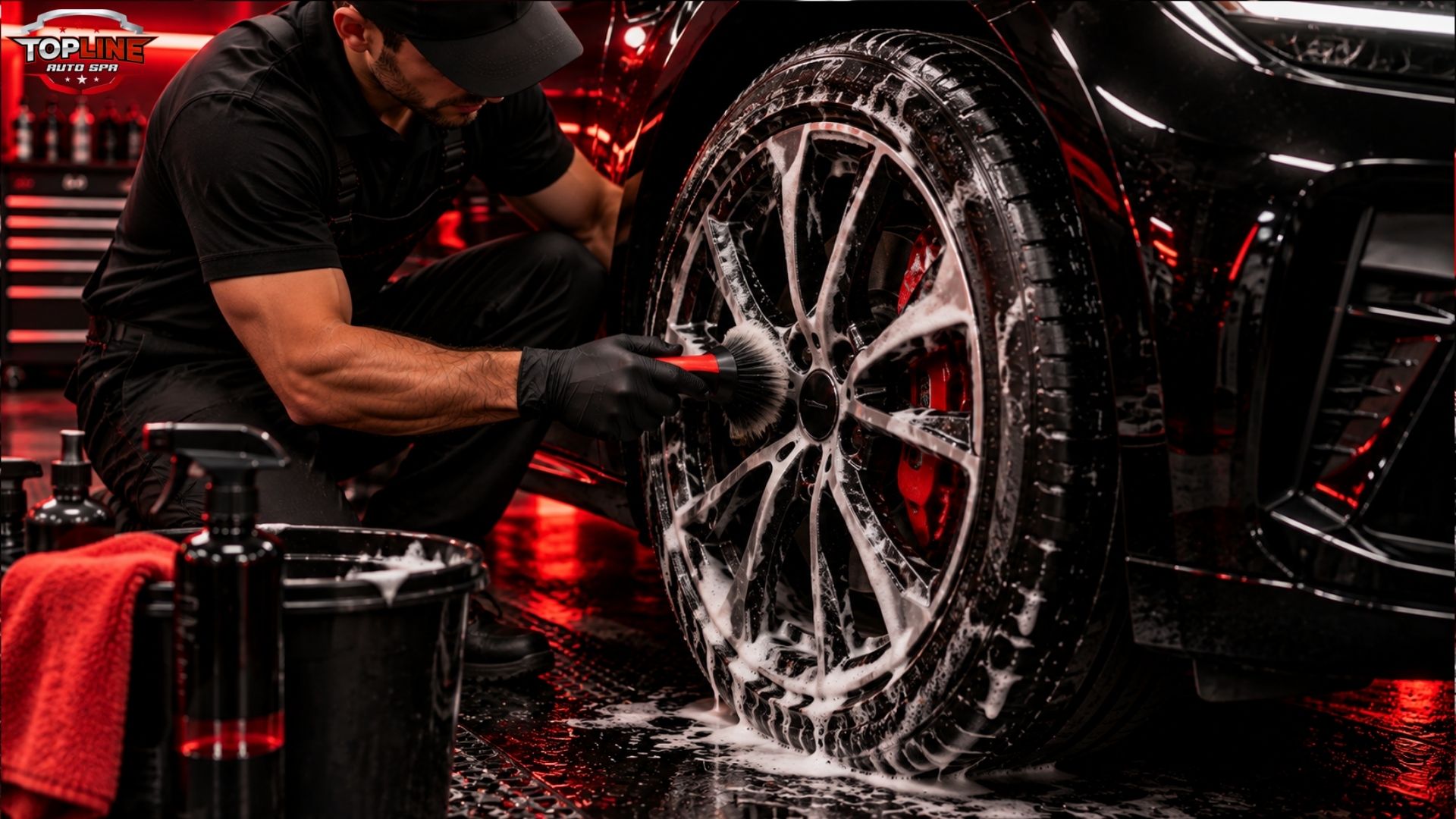
Now soak your brush in the cleaner solution and begin working on the wheel face. Use circular motions and moderate pressure. You’re trying to break down the brake dust and grime, not scrub aggressively. Pay special attention to the crevices between spokes where dirt accumulates.
For the inside of the wheel (the barrel), use your smaller brush. This area traps a lot of brake dust because it’s closer to the brake caliper. Take your time here because this is where most of the brake dust concentrates.
Rinse thoroughly with clean water. More importantly, use a microfiber cloth to dry each wheel completely. Water left on your wheels can lead to water spotting and mineral deposits.
This basic method takes about 20 to 30 minutes for all four wheels and works well for routine maintenance.
Deep Cleaning Method: Heavy Brake Dust and Buildup
When you’ve let your wheels go a while or you live somewhere that produces lots of brake dust, basic cleaning isn’t enough. This method tackles more stubborn contamination.
You’ll need stronger wheel cleaner, potentially a clay bar designed for wheels, soft brushes, and possibly a pressure washer. Some wheel cleaners are quite aggressive and specifically designed for heavy brake dust removal. Read the product label to make sure it’s safe for your wheel type.
Start with the same preliminary rinse. Then apply the heavier-duty wheel cleaner. Let it sit for 5 to 10 minutes. This dwell time allows the chemistry to break down stubborn brake dust and grime. Some wheel cleaners foam up visibly, which indicates they’re working.
After the dwell time, brush the wheel face, barrel, and spokes with your soft brush. Use slightly more pressure than basic cleaning, but still avoid aggressive scrubbing. The cleaner has already done much of the work in breaking down contaminants.
For particularly stubborn brake dust that won’t come off, consider using a clay bar designed for wheels. A clay bar is gentle but effective at removing bonded contamination. Spray clay lubricant on a section of the wheel, then gently work the clay bar over that section with light pressure. Replace the clay bar as it becomes loaded with contamination.
Rinse very thoroughly. Wheel cleaner residue can damage your wheels if left sitting on the surface. Use a hose or pressure washer on low setting to make sure all cleaner is removed.
Dry completely with microfiber towels. Take your time on this step. Any water left behind will leave mineral deposits or water spots.
This method takes 45 minutes to an hour for all four wheels but removes significantly more contamination than basic cleaning.
Professional Wheel Detailing: When to Consider It
For wheels that have heavy buildup, oxidation, or damage, professional exterior detailing services are worth considering.
Professional detailers have industrial equipment like pressure washers with precise pressure control, access to commercial-grade wheel cleaners, and experience handling different wheel types and finishes. They can clean your wheels more thoroughly than DIY methods and do it without risking damage.
Professional detailing is especially valuable if your wheels have oxidation, etching, or other damage that makes them look dull even after cleaning. Some professional detailers offer wheel refinishing, polishing, or restoration services that can bring deeply damaged wheels back to life.
For vehicles in the Allentown and Lehigh Valley area, TopLine Auto Spa offers professional exterior detailing that includes specialized wheel cleaning. If your wheels need more than basic cleaning, this is worth the investment.
Professional wheel cleaning typically costs between $50 and $150 per wheel depending on condition and any additional treatments. It might sound expensive, but when you consider the cost of replacing a set of alloy wheels, professional restoration of existing wheels is a bargain.
Protecting Your Wheels After Cleaning
Once your wheels are clean, protecting them prevents future buildup and makes cleaning easier next time. This is where many people miss a crucial step.
The most effective protection is a ceramic wheel coating. Ceramic coatings create a hydrophobic barrier on your wheel surface that repels water, brake dust, and road contamination. Water beads off instead of sitting on the surface. Brake dust doesn’t bond as easily. When you do need to clean, contaminants come off much more easily.
TopLine Auto Spa offers ceramic coating services that can be applied specifically to your wheels. Ceramic coatings designed for wheels last 6 to 12 months typically, providing protection through multiple seasons. After that time, you can reapply to maintain protection.
Professional-grade ceramic wheel coatings cost between $100 and $300 for all four wheels depending on the product used. This is an investment that pays for itself through easier maintenance and longer intervals between cleanings.
If ceramic coating isn’t in your budget, wheel sealants or wheel wax provide temporary protection. These last 2 to 4 months but are much more affordable. They still make brake dust stick less aggressively to your wheels.
Some people use traditional car wax on their wheels. While not ideal, it does provide some protection. The key is applying something protective after cleaning rather than leaving wheels unprotected.
Specific Issues: Tar, Road Salt, and Corrosion
Different types of contamination require specific approaches beyond standard wheel cleaning.
Tar on wheels typically comes from road surfaces and hardens as it dries. Standard wheel cleaners usually won’t remove heavy tar buildup. You need a dedicated tar remover. Apply it to the affected area, let it dwell for several minutes, then gently rub with a cloth or soft brush. Tar removers are typically petroleum-based solvents designed specifically for this purpose. They work much better than trying to scrub tar off with soap and water.
Road salt damage in Pennsylvania winters is a real concern. Salt accelerates corrosion and can cause white oxidation spots on aluminum wheels. If you see white powdery spots on your wheels, that’s oxidation from salt exposure. Regular cleaning removes salt before it causes this damage. If oxidation has already occurred, professional restoration or polishing might be necessary. Some wheel cleaners now include de-icing additives that help protect against salt damage.
Corrosion appears as pitting or rough spots on the wheel surface. This happens when salt or corrosive contaminants attack the aluminum underneath the clear coat. Once corrosion starts, you can’t reverse it completely through cleaning. You need professional restoration, refinishing, or replacement depending on severity. Prevention through regular cleaning is much better than trying to fix corrosion.
Common Mistakes That Damage Alloy Wheels
Even well-intentioned cleaning can damage wheels if you use the wrong approach.
Using a pressure washer on high settings is one of the most common mistakes. High pressure can strip clear coat, force water into bearings, or even cause micro-damage that leads to corrosion. If you use a pressure washer, keep it on low setting and maintain distance from the wheel surface.
Using harsh chemicals designed for other purposes is another common problem. Never use oven cleaner, sulfuric acid, or other harsh solvents on your wheels. These are designed for industrial applications and will damage automotive finishes. Stick to products specifically formulated for alloy wheels.
Using the same cleaning tools as your body paint is a mistake. Brake dust particles on your wheel brush will scratch your car’s paint. Always use dedicated wheel cleaning brushes and tools.
Letting water sit on wheels after cleaning leads to water spotting and mineral deposits. Dry immediately and completely. This is especially important in areas with hard water.
Using abrasive pads or scrubbing too hard damages the finish. Your wheels have a clear coat that’s relatively delicate. Gentle agitation with soft brushes is the right approach.
Preventing Excessive Brake Dust Buildup
Some vehicles naturally produce more brake dust than others. Metallic brake pad compounds create more dust than ceramic pads. Performance vehicles with larger brake systems produce more dust. But there are ways to reduce dust accumulation even if you can’t eliminate it entirely.
Using lower-metallic or ceramic brake pads instead of semi-metallic pads significantly reduces brake dust. When you need new brakes, mention to your mechanic that you want lower-dust options.
Your driving habits matter too. Aggressive braking generates more brake dust than smooth, gentle deceleration. When possible, use light pressure on the brake pedal rather than hard stops.
Regular wheel cleaning prevents heavy buildup. Cleaning wheels every 2 to 3 weeks during high-dust seasons keeps contamination from accumulating.
Wheel Protection Film and Advanced Options
For people who want maximum protection, wheel paint protection film is an option. PPF creates a physical barrier between your wheel and environmental contaminants. It protects against brake dust bonding, road salt damage, tar sticking, and UV damage.
Wheel protection film is applied to the wheel surface and is nearly invisible once installed. It lasts 5 to 10 years. The cost is higher than ceramic coating (typically $150 to $300 per wheel) but the protection is superior and longer lasting.
This is an option worth considering for high-value vehicles or if you want the best possible protection for your wheels.
Maintenance Schedule for Wheel Care
Different conditions require different cleaning frequencies. Establishing a routine keeps your wheels looking good and prevents damage.
In normal conditions, clean your wheels every 2 to 4 weeks. This keeps brake dust from accumulating excessively.
During winter in Pennsylvania, increase frequency to every 1 to 2 weeks. Road salt accelerates damage and needs to be removed quickly.
After long road trips or highway driving where you might have picked up tar, clean wheels as soon as you can.
Always clean wheels before applying any protective coating. You want the coating going on clean wheels.
Professional detailing can be done annually or bi-annually depending on your environment and how well you maintain the wheels between visits.
Alloy Wheel Cleaning on a Budget
If you’re on a tight budget, here’s how to clean wheels effectively without spending much.
Dawn dish soap mixed with water is actually gentler than many expensive wheel cleaners. It removes light brake dust without being harsh. Use warm water and soft brushes.
A microfiber cloth for drying is worth the small investment. It prevents water spotting better than regular towels.
You don’t need special wheel cleaners for routine maintenance. Save those for heavy cleaning. Regular gentle cleaning with soap and water prevents the need for heavy cleaning.
A clay bar designed for wheels is inexpensive and highly effective. You can reuse it many times before it needs replacement.
Professional wheel protection isn’t necessary if you clean regularly. Regular cleaning combined with occasional wax or sealant application provides decent protection without the expense.
When Wheels Need Professional Restoration
Sometimes cleaning isn’t enough and wheels need restoration or refinishing.
If your wheels have lost their shine even after cleaning, oxidation has likely compromised the clear coat. Professional polishing can sometimes restore the shine. In some cases, the clear coat needs to be stripped and reapplied.
Curb rash or damage to the wheel lip can’t be fixed through cleaning. Professional wheel refinishing services can sand out damage, repair bent areas, and refinish the wheel to look like new.
Pitting from corrosion can’t be completely fixed but can be minimized through professional restoration and protective coating application.
If wheels are bent or damaged structurally, they might need replacement rather than restoration depending on severity.
For professional wheel restoration in the Lehigh Valley area, TopLine Auto Spa can evaluate your wheels and recommend the best course of action, whether that’s cleaning, protection, or restoration.
The Connection Between Wheel Care and Overall Vehicle Appearance
Your wheels are a significant visual component of your vehicle’s overall appearance. Clean, well-maintained wheels elevate the entire look of your car even if other details are neglected. Conversely, dirty wheels make even a well-maintained car look neglected.
Regular wheel cleaning is one of the easiest and most impactful maintenance tasks you can do. It requires minimal investment in products and tools. The time investment is reasonable. The impact on how your vehicle looks is substantial.
This is why professional detailers emphasize wheel cleaning. It’s one of the highest-impact areas of vehicle detailing because wheels are so visible.
Conclusion: Making Wheel Cleaning Part of Your Routine
Alloy wheels don’t have to become a maintenance nightmare. With the right approach and regular attention, they stay looking clean and new for years.
The key is establishing a routine. Clean your wheels every 2 to 4 weeks with basic methods. Use stronger cleaning when necessary for heavy contamination. Protect your wheels with ceramic coating or wheel sealant. Address issues like tar or salt damage promptly before they become problems.
This combination of regular maintenance, proper technique, and protective measures keeps your wheels in excellent condition with minimal effort or cost.
For wheels that need professional attention or you’re tired of DIY cleaning, TopLine Auto Spa in Allentown offers comprehensive wheel detailing and protection services. Book Now to discuss your wheel situation and learn about professional cleaning, protection, and restoration options.
Clean wheels make a massive difference in how your vehicle looks. It’s worth the effort to keep them looking great. Start with your next cleaning session and establish habits that keep your wheels beautiful for years to come.
“Schedule your professional wheel detailing with TopLine Auto Spa today.”
Frequently Asked Questions About Alloy Wheel Cleaning
Q1: What’s the safest product to use when cleaning alloy wheels?
The safest products are those specifically formulated for alloy wheels or delicate automotive finishes. Look for pH-balanced wheel cleaners designed for aluminum or alloy wheels. pH-neutral cleaners won’t damage clear coat. Avoid products containing caustic chemicals, sulfuric acid, or harsh solvents designed for industrial purposes. If you prefer a budget option, dish soap mixed with water works fine for light cleaning. Always read product labels and follow manufacturer instructions. When trying a new product, test it on a small area first to make sure it doesn’t damage your specific wheel finish.
Q2: How often should I clean my alloy wheels?
In normal conditions, cleaning your wheels every 2 to 4 weeks maintains good appearance and prevents brake dust from bonding to the surface. If you drive frequently or in dusty conditions, weekly cleaning might be necessary. During winter months when roads are salted, increase to every 1 to 2 weeks because salt causes faster damage. Long road trips that expose wheels to tar and debris warrant immediate cleaning upon return. The goal is preventing contamination from sitting on wheels for extended periods. More frequent light cleaning is better than occasional heavy cleaning.
Q3: Can I use a pressure washer on my alloy wheels?
A pressure washer can be used but with caution. Keep pressure below 1200 PSI and maintain distance from the wheel surface. High-pressure spray can strip clear coat, damage the finish, or force water into wheel bearings and brake components. Most home pressure washers operate above 2000 PSI, which is too high for delicate wheel finishes. If you use a pressure washer, keep it on the low-pressure setting and use a wide spray pattern rather than focusing pressure in one spot. For safety, hand washing with brushes and gentle rinsing is the better option for most people.
Q4: How do I remove tar from alloy wheels?
Tar requires a dedicated tar remover product because standard wheel cleaners won’t dissolve hardened tar. Apply tar remover to affected areas and let it dwell for several minutes, allowing the solvents to break down the tar. Gently rub the area with a microfiber cloth. Do not scrub aggressively or use abrasive tools, which can damage the clear coat. Tar removers are petroleum-based solvents designed for this specific purpose. After tar is removed, wash the wheel thoroughly with regular wheel cleaner to remove tar remover residue and prevent damage to the finish.
Q5: Does ceramic coating really work on wheels?
Yes, ceramic coating on wheels provides significant benefits. It creates a hydrophobic barrier that repels water, brake dust, and road contamination. Water beads off instead of sitting on the surface. Brake dust doesn’t bond as aggressively, making future cleaning easier. Contamination comes off more easily during routine washing. Ceramic wheel coatings last 6 to 12 months depending on the product and driving conditions. Professional-grade ceramic coatings outperform consumer products. While not permanent, ceramic coating provides excellent protection and makes maintenance much easier than uncoated wheels. The investment typically pays for itself through reduced cleaning time and less frequent deep cleaning required.
Q6: What should I do about white oxidation spots on my wheels?
White oxidation spots indicate that salt or corrosive contaminants have attacked the aluminum underneath the clear coat. Light oxidation can sometimes be improved through aggressive polishing, but it can’t be completely reversed once it’s started. Prevention through regular cleaning, especially in winter, is much better than trying to fix oxidation after the fact. If your wheels already have oxidation, professional restoration or refinishing might be the best solution. This involves sanding out oxidized areas, repairing damage, and refinishing with new clear coat. For future prevention, clean wheels regularly during winter and consider protective coatings that shield wheels from salt damage.
Q7: Can I use regular car wash soap on my wheels?
Regular pH-balanced car wash soap works for light cleaning but isn’t ideal for heavy brake dust. Car wash soaps are designed primarily for painted body surfaces and don’t break down brake dust compounds as effectively as dedicated wheel cleaners. That said, a gentle car wash soap mixed with warm water is safe for regular maintenance cleaning and won’t damage your wheels. Dedicated wheel cleaners work better because they’re formulated specifically to dissolve brake dust and road contamination. For routine light cleaning, regular soap is fine. For heavy contamination, use a dedicated wheel cleaner.
Q8: How do I prevent my wheels from getting so dirty?
While you can’t prevent all contamination, you can reduce accumulation through several methods. Using ceramic brake pads instead of semi-metallic pads produces significantly less brake dust. Smooth driving habits with gentle braking generate less dust than aggressive driving. Parking in a garage or under cover protects wheels from road spray and debris. Regular washing prevents light contamination from accumulating into heavy buildup. Applying protective coatings makes contaminants less likely to bond to the wheel surface. None of these completely eliminate wheel soiling, but together they substantially reduce how quickly wheels get dirty.
Q9: Is professional wheel detailing worth the cost?
For wheels with heavy contamination, oxidation, or damage, professional detailing is worth considering. Professionals have equipment and products that DIY methods can’t match. They can clean wheels more thoroughly and handle specialized issues like tar, oxidation, or refinishing needs. Professional detailing typically costs $50 to $150 per wheel depending on condition and services. When you consider that replacing a set of alloy wheels costs thousands of dollars, professional restoration and protection of existing wheels is a bargain. For routine maintenance, DIY cleaning is sufficient and cost-effective. For beyond-normal situations, professional help is worth the investment.
Q10: What’s the difference between wheel cleaning and wheel polishing?
Wheel cleaning removes surface contamination like brake dust, dirt, and grime. It’s maintenance that should happen regularly. Wheel polishing removes oxidation, dulling, and minor damage to restore shine and finish. Polishing is more intensive and should only be done when needed, not as routine maintenance. Aggressive polishing removes material and can eventually compromise the finish if done too frequently. Most wheels need regular cleaning but only occasional polishing if at all. Professional detailers can assess your wheels and recommend whether polishing is necessary or if regular cleaning is sufficient for your situation.