
Pet owners face a unique interior maintenance challenge that traditional car owners don’t experience. Pet hair accumulates on upholstery, becomes embedded in carpet fibers, and spreads throughout your vehicle’s interior despite your best efforts to control it. Beyond the obvious appearance issue, pet hair traps odors, allergens, and dander that compromise air quality inside your vehicle. Understanding how to effectively remove pet hair from your car prevents buildup that becomes increasingly difficult to address and maintains your vehicle’s interior condition for years of ownership.
Pet hair removal is deceptively complex. Surface vacuuming removes some hair, but significant portions become deeply embedded in fabric fibers where standard vacuuming cannot reach. Many pet owners attempt quick fixes with inadequate tools, only to find pet hair returns within days. Professional pet hair removal requires understanding what you’re dealing with, using appropriate techniques, and employing specialized equipment that actually addresses the problem comprehensively rather than temporarily masking it.
For Lehigh Valley pet owners, vehicle interior maintenance is particularly important. Our region’s climate with humidity swings, salt exposure, and temperature extremes creates conditions where trapped pet hair and moisture promote mold growth and odor development. Regular professional removal prevents these issues while maintaining your vehicle’s interior condition and resale value.
This comprehensive guide explores every aspect of pet hair removal, from understanding why pet hair is problematic to learning DIY removal techniques to recognizing when professional services are necessary. Whether you’re a new pet owner discovering pet hair challenges or an experienced pet owner seeking better solutions, this guide provides the knowledge needed for effective, lasting pet hair removal.
Key Takeaways
- Pet hair embeds deeply in car upholstery and carpet fibers requiring specialized removal techniques
- Surface vacuuming removes only loose hair while most pet hair remains embedded requiring additional methods
- Rubber tools and specialized pet hair removal devices are far more effective than standard vacuum attachments
- Damp techniques including slightly moistened rubber gloves or spray bottles loosen embedded hair for easier removal
- Professional interior detailing with commercial equipment and expertise addresses pet hair removal comprehensively
- Pet hair accumulation creates odor issues and promotes mold growth if left unaddressed
- Protective treatments after pet hair removal prevent future accumulation and extend cleanliness duration
- Regular pet hair removal prevents the buildup that becomes increasingly difficult to address
- Lehigh Valley’s climate makes professional pet hair removal and interior protection particularly valuable
- Combining multiple removal techniques yields better results than relying on single methods
Understanding Pet Hair Problems: Why Simple Vacuuming Fails
Before learning removal techniques, understanding why pet hair is problematic and why simple vacuuming fails helps you appreciate why comprehensive removal is necessary.
Pet hair doesn’t simply sit on top of car upholstery like dust or crumbs. Pet fur has a natural texture that causes it to grip fabric fibers, becoming progressively more embedded the longer it remains. As your vehicle moves, vibrations settle hair deeper into fabric. Heat from sun exposure and vehicle operation can actually fuse hair to synthetic fabrics. What starts as surface hair becomes deeply embedded material requiring different removal approach.
Standard car vacuum attachments are designed for loose dirt and debris, not embedded pet hair. Upholstery brushes on typical vacuums lack the aggressive action necessary to dislodge firmly embedded hair. This is why vacuuming helps but never fully resolves pet hair accumulation. Most hair remains after vacuuming, requiring additional removal methods.
Pet hair doesn’t just create appearance issues. Hair traps pet dander, saliva residue, and other allergens that create odor problems. Dander and organic material trapped in fabric fibers promote mold growth, particularly in humid environments like Lehigh Valley experiences. Pet odor becomes progressively worse without comprehensive removal and often persists even after vacuuming because hair and dander remain embedded.
Hair accumulation affects resale value and vehicle condition. Potential buyers notice pet hair and odor, reducing perceived vehicle value and appeal. Interior fabric deteriorates faster when contaminated with pet material. Professional interior condition is impossible to maintain without addressing pet hair comprehensively.
Pet hair also travels beyond where you initially notice it. Hair sheds from seats gets sucked into air vents, becomes embedded in carpet under seats, and distributes throughout the vehicle creating multiple problem areas requiring attention.
DIY Pet Hair Removal Techniques: What Actually Works
Understanding effective DIY techniques helps you address pet hair before professional services become necessary.
Thorough vacuuming remains the foundation of pet hair removal. However, proper vacuuming technique differs from standard car vacuuming. Use slow, deliberate passes with upholstery brush attachment, allowing suction time to dislodge embedded hair. Multiple passes over the same area prove more effective than single quick passes. Spend 30 to 60 seconds per seat section rather than rushing.
Rubber removal tools prove remarkably effective for pet hair removal. Rubber brooms, squeegees, or even rubber-textured gloves when slightly dampened actually grip pet hair better than fabric or plastic tools. The rubber’s texture catches hair and removes it from fabric fibers. Rub affected areas with dampened rubber gloves or specialized pet hair removal brushes, gathering extracted hair into manageable piles for removal.
Lint rollers are useful for small areas and initial loose hair removal but cannot address deeply embedded hair. Lint rollers work better after using other methods to loosen embedded hair. Multiple lint roller passes gradually remove hair but become tedious for large areas.
Damp cloth technique involves slightly dampening a microfiber cloth and wiping fabric surfaces with pressure. Moisture helps release embedded hair while cloth texture grabs hair for removal. This technique works particularly well on fabric seats but requires repeated passes to address deeply embedded hair.
Spray bottle method involves lightly misting affected areas with water (not soaking), then using rubber tools or damp cloths to remove hair. The moisture loosens hair adhesion while allowing tools to grip more effectively. Work in sections, misting and removing systematically across upholstered areas.
Combining multiple techniques yields better results than single methods. Start with thorough vacuuming, follow with rubber tool removal while using slight moisture, then final lint roller passes for remaining loose hair. This multi-step approach addresses hair at different embedding levels.
Duct tape or packing tape pressed sticky-side-down onto fabric and peeled away removes surface hair but cannot address deeply embedded material. Tape works for quick spot treatment but is impractical for complete interior removal.
DIY pet hair removal requires time and patience. Complete pet hair removal from a full car interior through DIY methods takes 2 to 4 hours depending on hair accumulation severity and vehicle size.
Professional Pet Hair Removal: When to Seek Expert Help
Understanding when professional services are justified helps you make economical decisions about pet hair management.
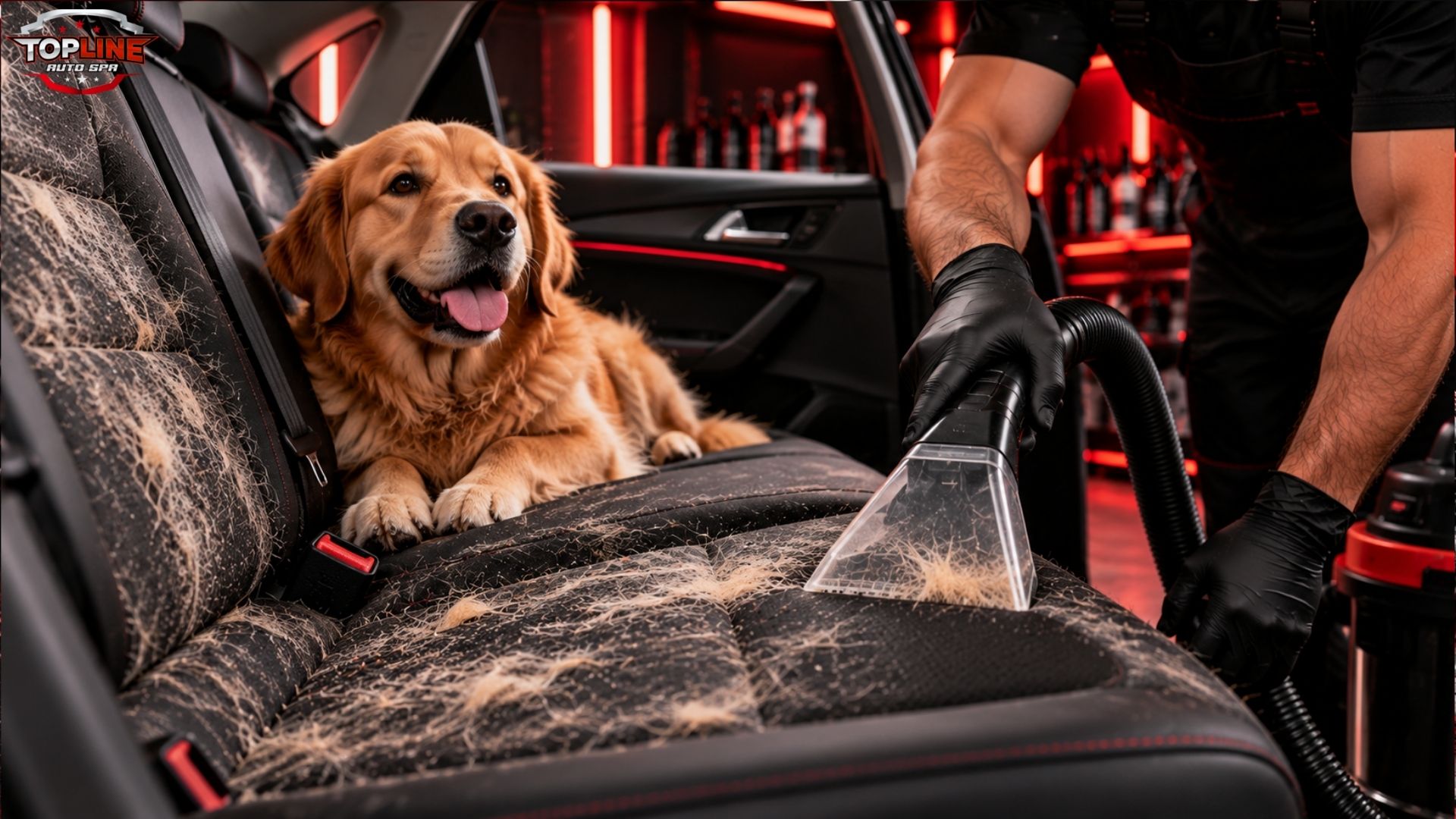
Professional interior detailing combines specialized equipment, proven techniques, and professional expertise that DIY methods cannot match. Commercial-grade vacuums with specialized pet hair attachments provide suction power and techniques unavailable in consumer equipment. Professional detailers understand advanced removal methods addressing embedded hair that basic vacuuming misses.
Professional assessment determines hair accumulation severity and appropriate removal approach. Some pets shed more aggressively than others, creating different removal challenges. Professional evaluation identifies problem areas requiring special attention and determines whether carpet shampooing is necessary beyond hair removal.
Carpet shampooing becomes necessary for heavy pet hair accumulation where hair, dander, and odor have deeply infiltrated carpet fibers. Professional shampooing removes embedded material that vacuuming alone cannot address. Shampooing typically takes 1 to 2 additional hours and adds significant cost but becomes necessary for odor removal when pet hair has accumulated for extended periods.
Professional pet hair removal typically takes 2 to 3 hours for complete interior treatment depending on vehicle size and hair accumulation severity. Heavy accumulation might require 3 to 4 hours. Professional efficiency and effectiveness justify the cost when compared to multiple DIY attempts yielding incomplete results.
Pet hair removal combined with interior protection treatments creates optimal results. Protective coatings applied after removal help prevent hair from re-embedding and make future removal easier. This combination approach maintains cleanliness longer than removal alone.
Professional car detailing packages that include pet hair removal address complete interior restoration. Comprehensive detailing removes pet hair while addressing odors, conditioning materials, and protecting surfaces. Professional packages provide complete interior renewal impossible through DIY spot treatment.
Pet Hair Prevention: Reducing Future Accumulation
Preventing pet hair accumulation is more effective than repeatedly removing it after the fact.
Car seat covers designed for pets protect upholstery from direct hair contact. Waterproof, washable seat covers trap pet hair on the cover surface rather than allowing it to embed in seat fabric. High-quality pet seat covers prevent 80 to 90 percent of direct seat contamination.
Floor mats designed for pet transportation protect carpets similarly to how seat covers protect seats. Heavy-duty, washable mats prevent hair and dirt from contacting original carpet. Pet-specific floor mats cost less than professional cleaning repeatedly.
Barrier method using blankets or protective fabrics over seats and floors contains pet hair to removable surfaces. Washable blankets can be removed and cleaned regularly, preventing hair accumulation on permanent upholstery and carpet.
Regular brushing before car travel removes loose hair before it sheds in your vehicle. Thorough brushing at home captures hair that would otherwise accumulate during driving. This preventive approach significantly reduces in-vehicle hair accumulation.
Vehicle ventilation prevents odor accumulation that develops with trapped pet hair. Cracking windows during driving allows air circulation. Parking in ventilated areas rather than sealed garages prevents moisture and odor buildup.
Protective coatings on fabric surfaces after professional pet hair removal make subsequent removal easier. Fabric protection treatments create surface barriers reducing hair embedding. This protection extends cleanliness between professional removals.
Regular professional maintenance detailing every 2 to 3 months prevents significant hair accumulation. Periodic professional treatment maintains condition better than attempting complete restoration after months of hair buildup.
Addressing Pet Odors: Beyond Hair Removal
Pet hair removal addresses physical hair but often leaves residual odor requiring specific attention.
Enzymatic cleaners break down organic compounds from pet urine, saliva, and dander creating odors. Enzymatic treatment applied to affected areas neutralizes odor-causing materials rather than simply masking smells. Enzymatic cleaners require contact time to work effectively.
Baking soda deodorizing involves sprinkling baking soda on affected areas, allowing it to sit for several hours or overnight, then thoroughly vacuuming. Baking soda absorbs odors from upholstery. This method requires complete removal of all baking soda residue through vacuuming.
Activated charcoal placed in the vehicle overnight absorbs odors. Activated charcoal is odorless and safe but requires complete removal before driving. This method works for mild odors but cannot address heavily embedded smells.
Air fresheners mask odors without eliminating underlying causes. Fresheners provide temporary improvement but do not address root odor issues. Using fresheners without addressing underlying pet hair and dander accumulation only temporarily masks problems.
Professional odor elimination addressing underlying causes proves more effective than DIY masking. Professional treatment removes source material while addressing residual odors that remain after hair removal.
Cabin air filter replacement removes trapped odors and allergens. Cabin filters trap pet dander and odors from recirculated air. New filters improve air quality and reduce pet odors significantly.
Seasonal Pet Hair Management in Lehigh Valley
Understanding seasonal shedding patterns helps you anticipate and manage pet hair in our region.
Spring season sees peak shedding as pets shed winter coats. Spring hair accumulation is heaviest requiring more frequent removal or professional services during this season. Monthly professional maintenance during spring prevents dramatic accumulation.
Summer season sees continued but slightly reduced shedding. Summer heat and humidity can intensify odors from accumulated hair and dander. Regular removal prevents odor development during warm months.
Fall season sees secondary shedding as pets prepare for winter. Fall hair accumulation is moderate but still requires regular maintenance. Fall detailing prepares vehicles for winter when sealed vehicles trap odors more readily.
Winter season sees minimal shedding but trapped hair and moisture create odor issues. Winter humidity and sealed vehicle conditions promote mold growth if pet hair and dander remain. Winter maintenance focuses on odor and mold prevention.
Year-round pet ownership creates ongoing hair accumulation regardless of season. Maintaining regular removal schedule throughout the year prevents seasonal peak accumulation from becoming unmanageable.
Professional Equipment and Techniques for Pet Hair
Understanding professional approaches helps you appreciate specialized pet hair removal services.
HEPA-filter vacuums trap pet dander and allergens better than standard vacuums. Professional HEPA vacuums prevent dander redistribution through exhaust, actually improving air quality during removal. HEPA filtration justifies higher-cost professional equipment.
Specialized pet hair extraction tools use electrostatic principles or rubber technology to remove hair more effectively than standard brushes. Professional tools grip hair better, extract from deeper fibers, and work faster than consumer equipment.
Hot water extraction combined with pet hair removal provides comprehensive carpet treatment. Professional carpet extraction removes deep-seated hair, dander, and odors that dry removal methods cannot address. Extraction takes 2 to 3 hours but completely restores carpet condition.
Air purification treatments address odor molecules remaining after physical removal. Professional ionizers or ozone treatments eliminate microscopic odor particles creating persistent smells. Advanced treatments prevent odor return after removal.
Fabric conditioning treatments protect cleaned upholstery after pet hair removal. Conditioning treatments restore fabric suppleness while creating surface barriers preventing future hair embedding. This final step maintains professional results longer.
Professional expertise recognizes different fabric types and appropriate removal techniques. Delicate fabrics require gentler treatment than durable upholstery. Professional evaluation determines optimal approach for your vehicle’s specific interior materials.
Comparing DIY Costs vs. Professional Services
Understanding cost implications helps you make economical decisions about pet hair management.
DIY pet hair removal costs $30 to $100 for tools and supplies including vacuum attachments, rubber tools, cleaning products, and protective equipment. One-time tool investment can be amortized across multiple removal sessions.
DIY labor time costs your personal time investment, typically 2 to 4 hours for complete interior treatment. If your time is valuable, hourly labor cost might exceed professional service cost.
Professional pet hair removal typically costs $150 to $300 depending on vehicle size and hair accumulation severity. Heavy accumulation requiring carpet shampooing might cost $300 to $500.
Professional detailing packages combining pet hair removal with comprehensive interior cleaning and protection typically cost $200 to $400. Package pricing is often more economical than individual services.
Cost comparison reveals that professional service cost is reasonable when factoring your personal time value. One professional service every 2 to 3 months costs less than repeated DIY attempts spread across the year.
Prevention through seat covers and protective measures costs $50 to $200 initial investment but prevents 80 to 90 percent of pet hair accumulation, reducing professional service frequency and costs.
Total cost of ownership comparison often favors professional services combined with prevention measures over repeated DIY attempts and eventual major professional restoration.
Pet Hair Removal and Vehicle Resale Value
Understanding how pet hair affects vehicle value helps justify removal investment.
Visible pet hair and odors significantly reduce vehicle appeal to potential buyers. Vehicles showing pet ownership evidence sell for lower prices or remain on market longer. Professional pet hair removal and odor elimination maintain value during ownership and at resale.
Professional detailing before sale creates fresh appearance and odor removing evidence of pet ownership. Pre-sale detailing increases buyer confidence and justifies asking price better than selling vehicles with obvious pet history.
Interior condition documentation helps justify value to buyers. Showing professional detailing receipts and maintenance history demonstrates careful vehicle care. Clean interiors with professional odor elimination support higher resale values.
Pet-free interior perception increases buyer pool. Buyers with allergies or pet aversions avoid clearly pet-owned vehicles. Professional restoration eliminates visible and olfactory evidence of pet ownership, appealing to broader buyer base.
Research shows professionally detailed vehicles with clean interiors sell faster and for higher prices than vehicles with pet odor and visible hair accumulation. Detailing ROI is positive when approaching resale.
Conclusion: Pet Hair Management Protects Your Vehicle Investment
Effective pet hair removal requires understanding that simple vacuuming cannot address deeply embedded hair accumulating in vehicles with pets. Multiple removal techniques combined with regular maintenance prevent the buildup that becomes increasingly difficult to address.
DIY pet hair removal works for light to moderate accumulation when performed regularly. Professional services become necessary for heavy accumulation, odor elimination, and comprehensive interior restoration that DIY methods cannot achieve.
Prevention through protective measures like seat covers and regular grooming reduces accumulation and simplifies future removal. Prevention combined with periodic professional maintenance maintains vehicle interior condition and resale value.
For Lehigh Valley pet owners, understanding that our region’s humidity and temperature variations accelerate odor development makes regular pet hair removal and odor elimination particularly important. Professional services prevent mold growth and interior deterioration that our climate accelerates.
Your vehicle’s interior deserves proper care even with pets. Regular pet hair removal maintains appearance, controls odors, and preserves your vehicle’s value. Professional services combined with preventive measures create optimal results protecting your vehicle investment long term.
Keep Your Car Pet-Hair Free. Book Professional Detailing Today.
Frequently Asked Questions
1. How often should I remove pet hair from my car?
Light pet hair accumulation requires removal every 2 to 4 weeks. Heavy shedders need weekly removal or professional service every 2 to 3 weeks. Seasonal heavy shedding during spring and fall requires more frequent removal than other seasons.
2. Why does vacuuming alone not remove all pet hair?
Pet hair embeds deeply into fabric fibers beyond standard vacuum reach. Embedded hair requires additional removal methods beyond surface vacuuming. Multiple removal techniques address hair at different embedding levels far better than vacuuming alone.
3. What’s the most effective DIY pet hair removal method?
Combining thorough vacuuming with dampened rubber tool removal proves most effective. Using slight moisture to loosen embedded hair followed by rubber tool extraction removes 80 to 90 percent of accumulated hair. Multiple passes over affected areas improve results.
4. Can pet hair cause damage to my car interior?
Yes, accumulated pet hair promotes mold growth and creates odor issues. Hair traps moisture in fabric creating conditions for mold development. Dander and organic material accelerate fabric deterioration over time.
5. How much does professional pet hair removal cost?
Professional pet hair removal typically costs $150 to $300 depending on vehicle size and accumulation severity. Comprehensive detailing packages with pet hair removal, shampooing, and odor elimination cost $300 to $500.
6. Does pet hair affect car resale value?
Yes, visible pet hair and odors significantly reduce vehicle appeal and selling price. Professional detailing before resale removes evidence of pet ownership, justifying higher prices and attracting broader buyer base.
7. How can I prevent pet hair accumulation in my car?
Pet seat covers and floor mats trap hair on removable surfaces. Regular pet brushing before driving removes loose hair before shedding. Protective coatings after professional removal prevent hair from re-embedding as quickly.
8. What’s the difference between DIY and professional pet hair removal?
Professional services use commercial-grade equipment with greater suction power and specialized pet hair attachments. Professionals have expertise addressing different fabric types and removal challenges. Professional carpet shampooing removes deep-seated odors DIY methods cannot address.
9. Will pet hair removal eliminate all pet odors?
Hair removal addresses some odors but deeply embedded dander and urine residue require enzymatic treatment or professional odor elimination. Professional services combining removal with odor treatment address both issues comprehensively.
10. Is pet hair removal covered by car warranties?
Most warranties do not cover pet hair damage or removal. Pet ownership and lack of maintenance can actually void certain warranty coverage. Regular professional maintenance protects warranty coverage and vehicle condition.