
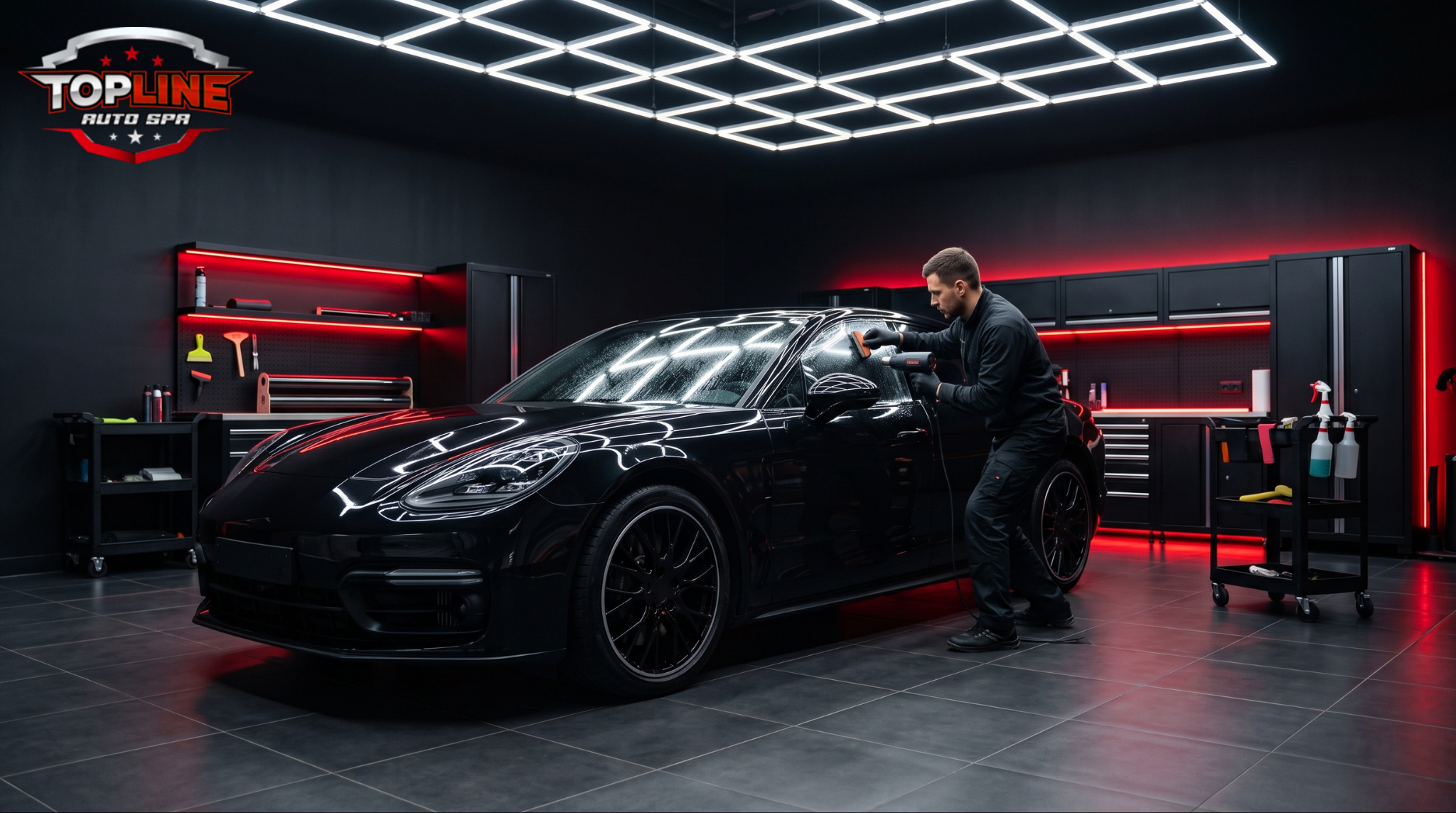
When looking to upgrade a vehicle’s appearance and enhance cabin comfort, a premium window tint installation is often one of the first choices a car enthusiast makes. Beyond giving your car a sleek, uniform visual aesthetic, installing high-durability automotive window film completely transforms your daily commute. It shields your skin from sun radiation, isolates the cabin from extreme ambient thermal energy, and protects valuable leather materials from drying out prematurely.
However, before scheduling an appointment at a professional studio, understanding the statutory restrictions surrounding automotive glass alterations is an absolute necessity. Navigating pennsylvania window tint laws can be notoriously challenging for local drivers. Pennsylvania enforces distinct legal limits depending on the specific type of automobile you drive, meaning a film darkness setup that is completely permissible on an SUV might result in an expensive vehicle equipment citation if applied to a standard four-door sedan.
Ignoring these legal thresholds not only risks roadside compliance issues with local law enforcement, but it can also cause your car to fail its mandatory annual safety inspection. By examining the precise percentages of Visible Light Transmission (VLT) mandated by the Commonwealth, local owners can easily enjoy all the functional advantages of high-performance automotive glass upgrades without inviting unnecessary legal complications.
Key Takeaways
- Pennsylvania window tint laws restrict standard passenger sedans to a minimum threshold of 70% visible light transmission across all side and rear glass panels.
- Multi-purpose vehicles, including premium SUVs and trucks, are allowed unrestricted darkness levels on all windows behind the front driver seat.
- Utilizing advanced nano-ceramic films allows you to maximize cabin heat rejection while remaining entirely compliant with state tint laws.
- Front windshield coatings are strictly prohibited under state regulations, except for a top specialized sun-shield strip along the AS-1 line.
Deciphering the Percentage Scale: What VLT Means for Your Film
To properly understand the operational framework of state regulations, you must first understand how window film darkness is measured. Film specifications rely on a metric known as Visible Light Transmission, or VLT. This percentage simply represents the total amount of clean ambient light that can pass directly through your vehicle’s glass panels.
A higher VLT percentage signifies an optically clear, transparent film sheet, whereas a low VLT rating indicates a highly darkened shade profile. For instance, a 70% VLT means that nearly three-quarters of oncoming sunlight passes cleanly into the vehicle interior. Conversely, a 5% VLT profile—commonly referred to in the automotive detailing industry as “limo tint”—blocks almost all incoming visibility, permitting a mere fraction of external light to cross into the cockpit.
When configuring a vehicle, calculating this balance is critical because state compliance relies on the total combined VLT of both your aftermarket film and the factory glass underneath. Because most factory automotive windows possess a slight built-in tint rating of roughly 75% to 85% straight from the assembly plant, stacking even a mild retail film sheet can inadvertently pull your vehicle’s overall metrics below the authorized state parameters.
Sedan Regulations vs. SUV and Multi-Purpose Vehicle Allowances
The primary area of confusion for most PA car owners lies in the stark legal separation the state places between traditional passenger cars and multi-purpose passenger vehicles. If you are modifying a standard sedan, the rules regarding legal tint in pa are strictly uniform across the entire body array.
For standard sedans, Pennsylvania law mandates that the windshield, the front driver and passenger side windows, the rear side windows, and the entire back windshield must allow at least 70% of light to pass through. This effectively blocks owners from applying dark, smoked-out shades across their sedans, limiting passenger cars to very light, optically clear protective upgrades.
If you own a multi-purpose passenger vehicle—such as a crossover, a full-size utility SUV, or a pickup truck—the rear window regulations change completely. While the front driver and passenger side windows must still maintain the same strict 70% VLT minimum, any rear side windows and the back window panel can be wrapped in any level of dark film you choose. This exception allows SUV owners to install heavy privacy shades to keep rear cargo safe and shield back-seat passengers from onlookers.
Windshield Restrictions and Medical Exemptions
When it comes to front windshield alterations, the Commonwealth maintains an absolute zero-tolerance policy for all vehicle categories. Applying a tint film completely across the entire span of front windshield glass is illegal. The single exception to this structural safety rule is the application of a targeted shade band along the absolute topmost edge of the front glass, positioned strictly above the manufacturer’s engraved “AS-1” line. This narrow top visor block cannot extend down past five inches from the roofline, and it is intended solely to protect the driver’s eyes from intense, blinding morning or evening sun glare.
For motorists who suffer from rare, documented physiological disorders that cause acute light sensitivity—such as systemic lupus, porphyria, or advanced xeroderma pigmentosum—the state does offer a formal application loop for a certified medical waiver.
If approved by the Pennsylvania Department of Transportation (PennDOT), a medical tint exemption certificate will be issued directly to the owner. This physical certificate must be carried inside the vehicle glovebox workspace at all times, granting the driver the legal authority to run specialized protective dark window treatments that would otherwise trigger an immediate traffic citation on public roadways.
Maximizing Thermal Defense Legally with Advanced Nano-Ceramic Films
Many drivers incorrectly assume that the only way to block oppressive solar heat and stop interior fading is by covering their glass in thick, pitch-black window film. While old-school dyed window treatments relied entirely on heavy carbon layers or dark pigments to trap inflowing solar energy, modern material science has completely solved this engineering limitation.
By investing in professional ceramic window tinting, you gain elite thermal defense without breaking any state laws. Advanced nano-ceramic matrices are packed with microscopic, non-conductive ceramic mineral particles that are completely invisible to the human eye. Instead of merely darkening your view, these advanced layers are engineered to selectively target and filter out up to 99% of destructive ultraviolet (UV) radiation and massive bands of invisible infrared heat waves.
This means you can choose an exceptionally clear, highly transparent 70% VLT ceramic film that remains completely legal on all sedan and SUV front windows, while enjoying a dramatic drop in interior cockpit temperatures. Your car cabin stays cool, your expensive leather seats are insulated from heat cracking, and you maintain complete nighttime visibility and legal compliance.
Choosing a Certified Local Installation Studio
Attempting to install window tint sheets at home using cheap, over-the-counter DIY kits frequently results in a sub-par outcome. Retail films lack advanced scratch-resistant topcoats and rely on cheap adhesives that rapidly break down under summer heat waves, leading to unsightly bubbling, visual distortion, and film discoloration. Furthermore, precise trimming around complex glass curves and dot-matrix window borders requires years of specialized mechanical experience.
By choosing a dedicated local studio for your window tinting allentown pa upgrades, you guarantee a flawless, dust-free installation that looks factory-original. Professional detailers use precision, computer-guided plotting software to cut film sheets to your car’s exact glass specifications, eliminating the risk of hand-blade cuts on window seals. Partnering with an elite local studio ensures your vehicle receives durable, lifetime-warranted ceramic protection that looks incredibly premium, stays fully compliant with state regulations, and delivers absolute thermal defense for every mile ahead.
Conclusion
Navigating the complexities of vehicle modifications in Pennsylvania doesn’t have to mean compromising on comfort or style. While the state enforces strict light transmission guidelines to protect drivers and road safety, modern film technologies ensure you can stay within legal parameters while achieving massive performance upgrades. By paying careful attention to whether your automobile is classified as a standard passenger vehicle or a multi-purpose SUV, you can plan your customization safely and protect yourself from roadside compliance checks.
Ultimately, maximizing the performance and legal standing of your window film installation comes down to premium component selection and professional craftsmanship. Opting for cutting-edge nano-ceramic film layers applied by factory-trained specialists guarantees that your vehicle functions as a superior thermal barrier, shielding your car interior from intense heat and blinding glare. Investing in professional care not only ensures your vehicle easily clears its yearly safety inspections, but it also elevates your driving experience, preserving your vehicle’s lasting value and showroom refinement.
Frequently Asked Questions (FAQ)
1. Can a vehicle pass Pennsylvania state inspection with a front door tint darker than 70% VLT?
Yes, a vehicle can fail a Pennsylvania safety inspection if the tint drops below the legal limit. According to PennDOT inspection guidelines, window tint below the legal 70% VLT threshold on the windshield or front side windows constitutes an equipment violation. While some stations might focus primarily on mechanical safety markers, a strict technician has the full legal authority to refuse a passing inspection sticker until non-compliant tint is removed.
2. Do Pennsylvania police officers use special tools to check window film darkness during a stop?
Yes, law enforcement officers throughout Pennsylvania carry calibrated handheld electronic testing devices called photometers or tint meters. During a routine roadside enforcement stop, an officer can clip this device over your partially rolled-down glass panel. The meter instantly measures light transmission properties and provides an immediate optical digital readout, acting as definitive evidence to issue an equipment violation fine if your window reads below 70% VLT.
3. Does ceramic window tint affect cell phone reception or GPS signals inside the cabin?
No, premium nano-ceramic window treatments will never interfere with internal cellular networks, satellite navigation grids, or onboard radio bands. Older metallic tint configurations relied on microscopic metal flecks that bounded solar heat away but simultaneously created an electronic shielding effect inside the cabin. Modern ceramic matrices avoid metal entirely, utilizing advanced non-conductive materials that optimize solar block efficiency while remaining completely invisible to incoming and outgoing signals.