



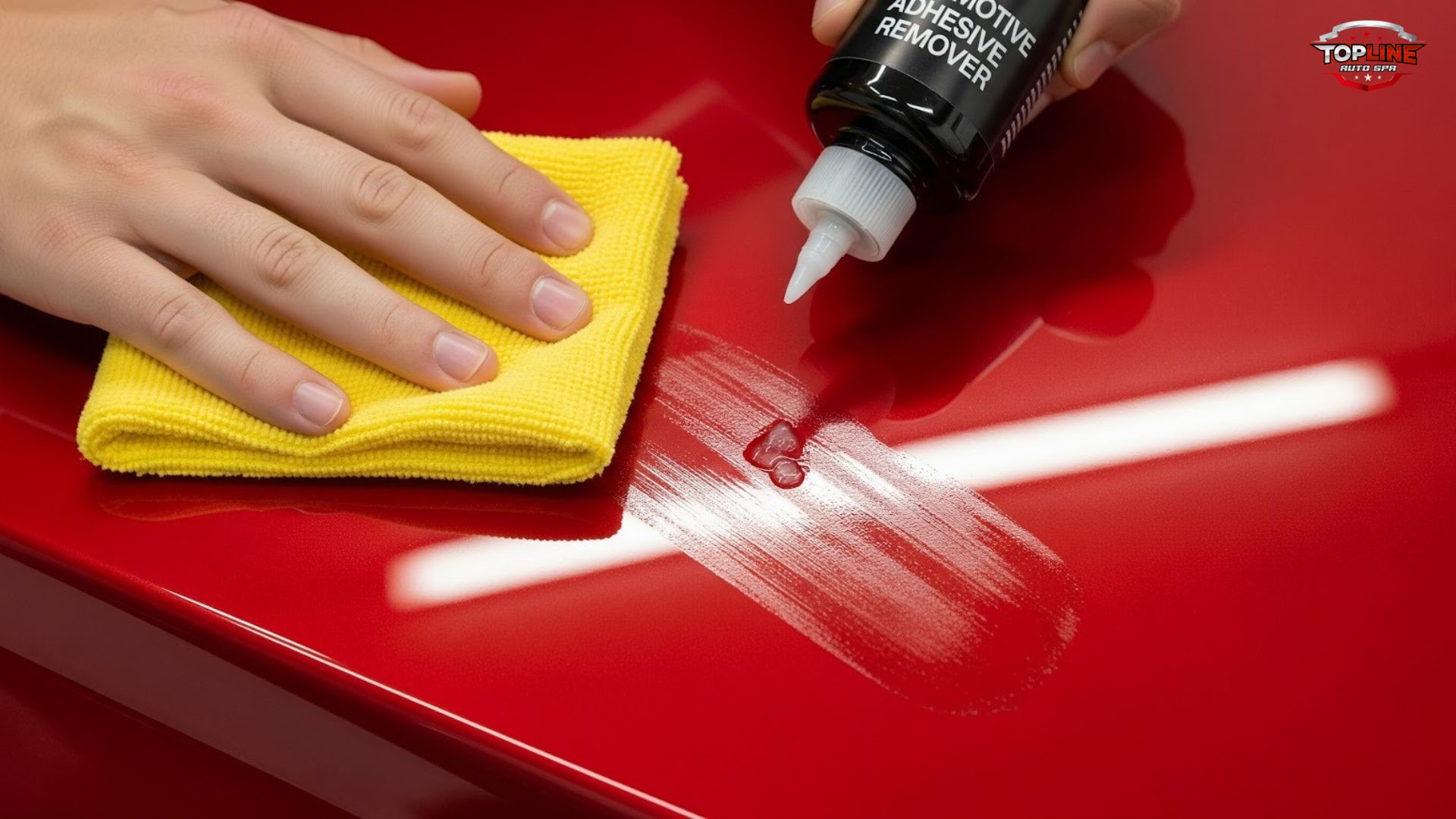
Auto detailing industry reports show that paint damage caused by DIY adhesive removal is one of the most common exterior issues seen by professionals. Many of these cases happen when drivers try getting glue off car paint without knowing how sensitive the clear coat is. What looks like a small glue spot can quickly turn into a costly repair.
Glue on car paint is more than a surface problem. It traps dirt and moisture. Over time, this can weaken the clear coat and make paint look dull or uneven. The risk increases when the glue sits under heat or direct sunlight.
Glue usually comes from stickers, decals, parking permits, vinyl wraps, and tape residue. These are common on daily driven cars. Some removal methods are safe when done correctly. Others can permanently damage the paint in minutes. Knowing the difference protects your car and saves money.
Why Removing Glue From Car Paint Is Risky
- Modern cars use layered paint systems.
- The clear coat is the top layer. It protects color and adds shine.
- Glue bonds strongly to the clear coat over time.
- Heat and sun make glue harder to remove.
- Old glue dries and sinks into the surface.
Before You Touch the Glue: Critical Things You Should Never Do
Before you try to remove glue from car paint, it is important to know what not to do. Many paint problems start with simple mistakes. Scraping glue with a razor blade or knife can cut into the clear coat in seconds. Even light pressure can leave deep scratches that are hard to fix.
Strong chemicals are another risk. Acetone, paint thinner, and brake cleaner can strip the clear coat and fade the paint. Scrubbing with abrasive pads or magic erasers may seem gentle, but they often dull the surface fast. Letting chemicals sit too long is also dangerous. Once they dry, they can stain or burn the paint.
These mistakes are common. They are also the reason many drivers later search for auto paint correction near me to repair avoidable damage.
What Actually Works for Getting Glue Off Car Paint
- Warm water helps soften fresh glue on car paint Warm water loosens fresh adhesive and makes it easier to remove. It softens the glue without harming the clear coat, which protects your paint. Using warm water first reduces the need for scraping or harsh chemicals.
- A clean microfiber cloth reduces scratch risk Microfiber cloths are gentle on paint. They lift glue without causing scratches or swirl marks. Always use a soft, clean cloth to prevent adding dirt or grit that could damage the surface.
- This method works best before glue dries Fresh glue is easier to remove. Once it dries or bakes in the sun, it bonds tightly to the paint. Removing dried glue requires more effort and can increase the risk of paint damage.
- Fresh glue lifts easier with light pressure Gentle pressure is all that’s needed. Rubbing too hard can scratch the clear coat. Light, steady motions lift the glue safely without harming the finish.
- Scrubbing damage often leads to paint correction lehigh valley PA Aggressive scrubbing or using harsh tools can cause scratches or dull spots. Many drivers later turn to paint correction to restore their car’s shine and fix avoidable damage.
What Doesn’t Work and Can Damage Your Paint?
Some DIY methods for getting glue off car paint can do more harm than good.
- Nail Polish Remover and Acetone These chemicals are too strong for car paint. They can strip the clear coat in seconds, leaving the paint unprotected. Using them on glue may remove the adhesive but can cause lasting damage.
- Razor Blades and Plastic Scrapers Even careful scraping can create tiny scratches. Over time, these scratches dull the paint and make the car look worn. They may also trap dirt, making the damage worse.
- Gasoline, Solvents, and Degreasers Harsh chemicals can eat into the paint and leave permanent marks. They may remove glue quickly, but the risk of staining or etching the paint is very high.
- Abrasive Pads and Sponges These tools may feel gentle, but they often leave swirl marks that show up days later. Even light scrubbing with the wrong pad can harm the clear coat and reduce shine.
- Using any of these methods can make a small glue spot into a bigger problem. Safe techniques are always better for protecting your car when getting glue off car paint.
Paint Correction vs Polishing: What’s Better for Restoring Your Car’s Shine?
What If Glue Has Already Damaged the Paint?
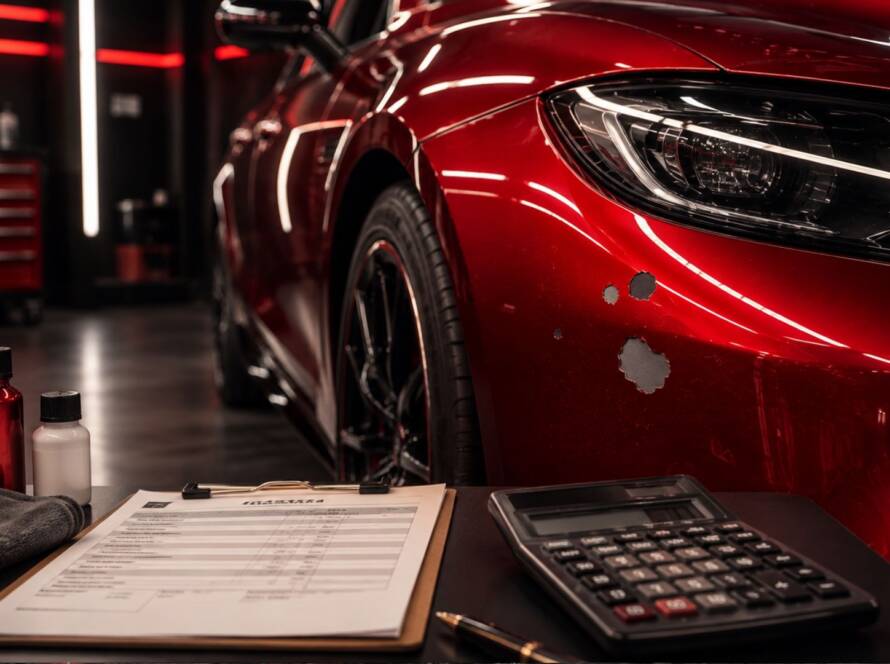
If glue removal scratches or dulls your car, it can damage the clear coat. You may notice hazy spots, swirl marks, or uneven shine. These are signs that the paint needs attention.
Light surface scratches can often be fixed with polishing. Polishing smooths the clear coat and restores gloss. However, deeper scratches or dull areas usually require professional paint correction.
Ignoring damage can make the problem worse. Over time, exposed areas can oxidize, causing fading or peeling. Many car owners turn to paint correction Allentown PA to restore their vehicle’s finish safely and prevent long-term damage.
Taking action quickly protects the paint and keeps your car looking new longer.
Frequently Asked Questions
- Is WD-40 safe for car paint? WD-40 can loosen glue, but it may leave oily residue. Test a small spot first to avoid damage.
- Can vinegar remove glue from car paint? Vinegar can soften some adhesives, but it may dull the clear coat if left too long. Use carefully.
- Is Goo Gone safe on clear coat? Goo Gone works on many adhesives, but always wipe off completely and rinse. Avoid letting it sit on the paint.
- How long does professional glue removal take? A trained detailer can remove glue in minutes, depending on size and age of the residue.
- Can glue permanently stain car paint? If left too long, glue can leave marks. Quick removal helps prevent stains and protects the clear coat.
At Last
Removing glue from your car requires care. Safe methods, like warm water, microfiber cloths, and automotive adhesive removers, protect the clear coat. Unsafe methods, such as scraping with blades or using harsh chemicals, can cause scratches, dull spots, or permanent damage.
DIY shortcuts may seem quick, but they often make the problem worse. Prevention is key. Avoid letting glue sit for long periods, and always test products on a small area first.
If glue has already damaged the paint, professional help is the safest choice. Trained detailers can restore your finish without harming the clear coat. Understanding what works and what doesn’t helps you protect your car and save money. Following safe steps ensures your vehicle stays glossy and damage-free when getting glue off car paint.
1 Comment