
Road paint on your car can be both annoying and alarming, especially when it shows up unexpectedly after driving through construction zones, parking lots, or freshly painted streets.
What many drivers don’t realize is that road paint is designed to dry quickly and resist wear, which makes it especially harmful when it bonds to a vehicle’s clear coat. If handled incorrectly, removing it can lead to scratches, dullness, or permanent paint damage.
Understanding how to get road paint off car safely is essential to maintaining your vehicle’s appearance and value. Using the wrong tools or harsh chemicals may seem like a quick fix, but they often cause more harm than good. This blog explains why road paint sticks so aggressively, which removal methods are safe, and when professional paint correction becomes the smartest option.
Key Takeaways
- Road paint hardens quickly and becomes harder to remove over time
- Scraping or harsh chemicals can damage the clear coat
- DIY methods work best for fresh, light paint splatter
- Professional paint correction is safer for dried or bonded paint
- Paint protection helps prevent future paint-related damage
Why Road Paint Is So Difficult to Remove
Road paint is engineered to survive extreme conditions such as heat, friction, rain, and constant traffic. When it splashes onto your car, it begins bonding with the clear coat almost immediately. Unlike dirt or mud, road paint doesn’t simply sit on the surface, it starts to harden and adhere as it dries.
Sun exposure and warm temperatures speed up this bonding process. Over time, the paint can partially embed itself into the clear coat, which is why regular car washing usually fails to remove it. The longer the paint remains untreated, the higher the risk of damage during removal.
Common Mistakes That Damage Car Paint
Many vehicle owners unintentionally worsen the situation by attempting quick, aggressive fixes. These methods may remove some paint but often damage the protective clear coat in the process.
Avoid the following mistakes:
- Scraping paint with blades, credit cards, or hard plastic
- Using strong solvents like acetone, brake cleaner, or paint thinner
- Scrubbing with abrasive pads or dry towels
These approaches frequently leave behind swirl marks, scratches, or dull patches that require professional repair.
Safe DIY Methods for Removing Road Paint
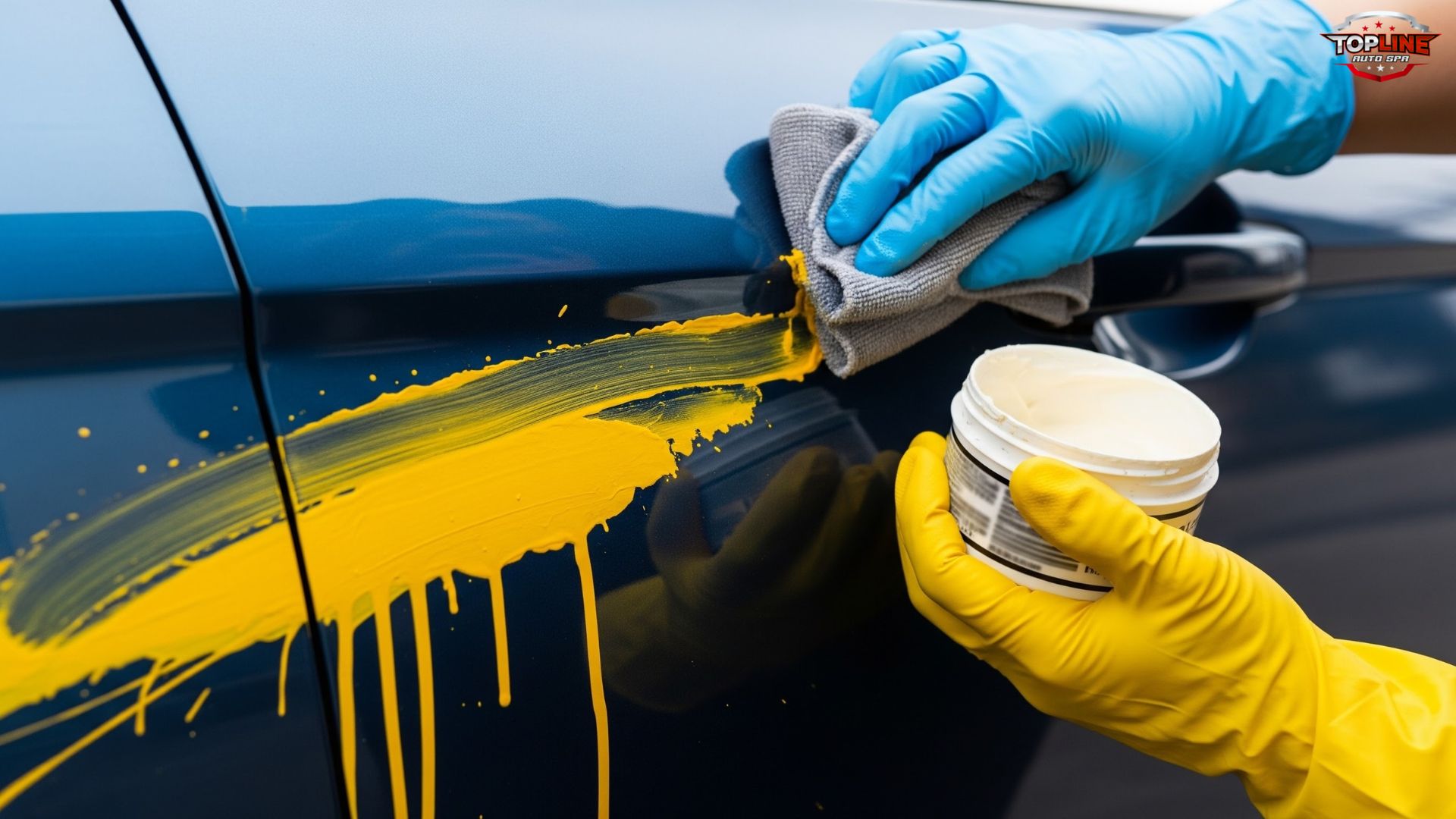
If the road paint is fresh and limited to small areas, careful DIY methods may work without damaging your car’s finish. The first step should always be a thorough wash using a pH-neutral car shampoo. This removes surface dirt and reduces the chance of scratching during the removal process.
For mild cases, the following methods are considered safe:
- Clay bar treatment, used with proper lubrication, to lift surface-level paint
- Automotive bug and tar removers formulated for clear coat.
- Diluted isopropyl alcohol, applied gently with a microfiber cloth
These techniques require patience and light pressure. If the paint does not come off easily, forcing the process can cause more damage than the paint itself.
When DIY Methods Are No Longer Enough?
DIY solutions have clear limitations. If the paint has been on the surface for several days, covers larger sections of the vehicle, or still feels rough after cleaning, further home attempts can be risky. At this stage, the paint is usually bonded beyond surface contamination.
This is often when car owners start searching for auto paint correction near me, as professional tools and expertise are required to remove the paint safely. Continuing aggressive DIY efforts at this point frequently leads to scratches or thinning of the clear coat.
How Professional Paint Correction Helps?
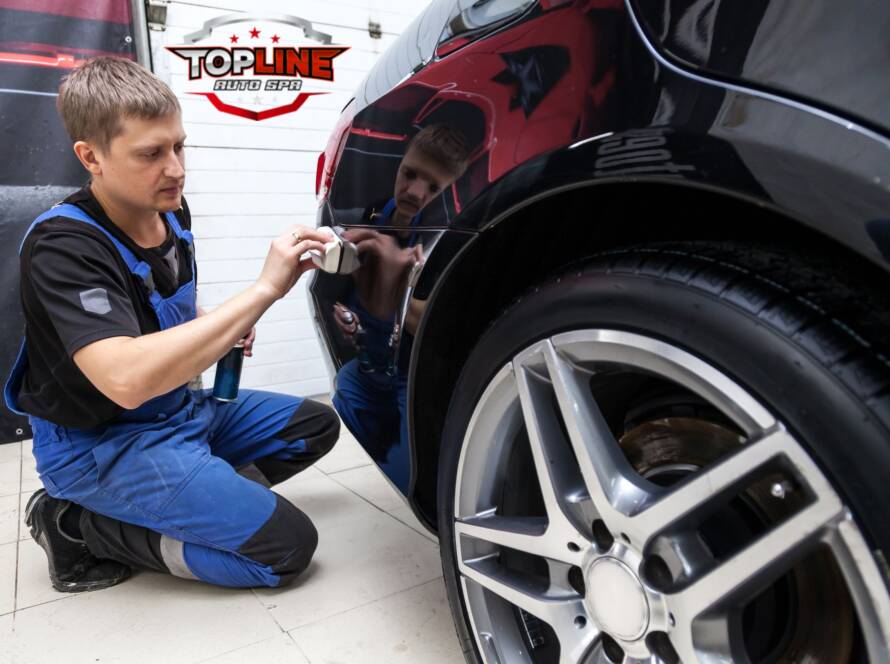
Paint correction is a specialized detailing process that uses controlled machine polishing to remove bonded contaminants and surface imperfections. A professional detailer evaluates how deeply the road paint has adhered and selects the appropriate polishing compounds and pads to remove it safely.
Key benefits of professional paint correction include:
- Complete removal of stubborn road paint
- Restoration of gloss, depth, and clarity
- Correction of light scratches caused by improper DIY attempts
For vehicle owners in Pennsylvania, paint correction Lehigh Valley PA services are particularly effective for restoring vehicles affected by road paint, oxidation, and surface defects.
Why Professional Removal Is Often the Safer Choice?
Professional paint correction is not just about removing paint, it’s about preserving the integrity of your vehicle’s finish. Trained technicians understand how much clear coat can be safely corrected and use precise techniques to avoid over-polishing.
This level of control ensures the paint is removed without compromising long-term durability. In many cases, professional correction also improves the overall appearance of the car, making it look better than it did before the paint incident.
Protecting Your Car After Road Paint Removal
Once the road paint is removed, protecting the surface is crucial to prevent future issues. Without protection, your car’s paint remains vulnerable to contaminants, stains, and environmental damage.
Common protection options include:
- Wax for short-term shine and defense
- Paint sealants for longer-lasting protection
- Ceramic coatings for maximum durability
These protective layers create a barrier that makes future paint splatter easier to remove and helps maintain your vehicle’s finish.
Conclusion
Road paint on your car may look like a minor cosmetic issue, but removing it the wrong way can lead to scratches, fading, or clear coat damage. Acting quickly and using paint-safe techniques is critical, especially when the paint is fresh. Delaying removal only increases the difficulty and risk involved.
While light splatter may sometimes be handled at home, dried or widespread paint requires professional care. Attempting aggressive DIY methods at this stage often causes more harm than good. Services like Paint correction Allentown PA ensure the paint is removed safely while restoring your vehicle’s original gloss and finish.
FAQs
Can road paint permanently damage my car?
Yes, road paint can permanently damage your car if it bonds to the clear coat or is removed aggressively. Over time, it can cause etching, scratches, or dull areas.
Is it safe to remove road paint at home?
It can be safe for fresh, light paint using automotive-approved products. If the paint resists removal, professional services are the safer option.
How long does professional paint correction take?
Most paint correction services take a few hours, depending on severity. More extensive cases may require a full day.