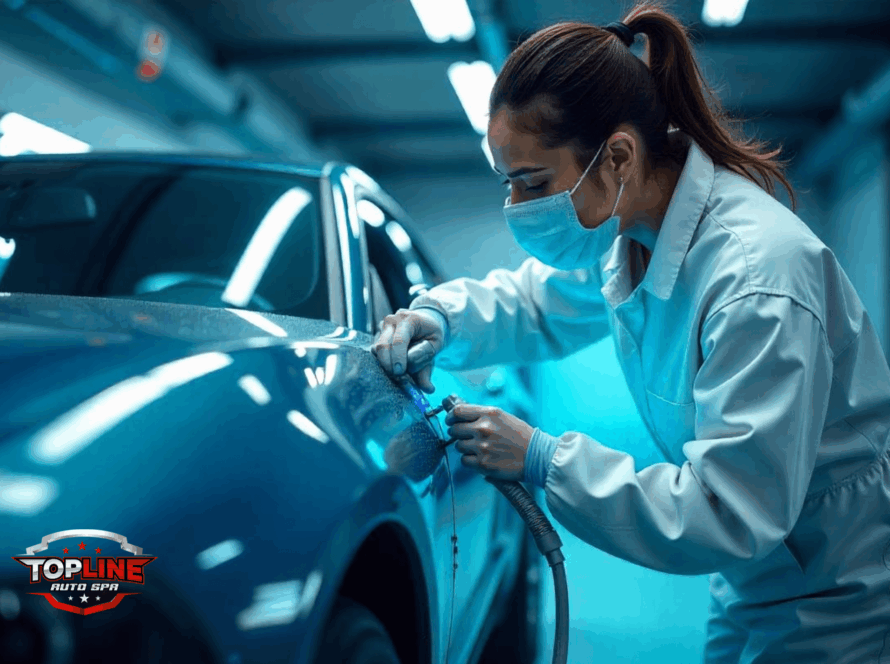

Car paint damage is more common than many drivers realize. Studies from the auto detailing industry show that most vehicles develop swirl marks, light scratches, and oxidation within the first few years of use. These issues often come from automatic car washes, improper drying, or daily exposure to sun and dirt.
That is why polishing plays a key role in keeping a vehicle looking clean and glossy. Many car owners wonder whether machine polishing or hand polishing gives better results. Both methods can improve paint, but they work very differently.
Professional car detailing services use polishing to restore shine and remove minor defects. Choosing the right method depends on the condition of the paint, the tools used, and the skill of the detailer.
This guide explains the differences so you can understand which polishing method works best for your vehicle.
What Is Car Paint Polishing?
Car paint polishing is a process that smooths the clear coat layer of a vehicle. It removes light scratches, swirl marks, and dull spots. The goal is to restore depth and gloss to the paint surface.
Polishing works by using fine abrasives that level out tiny imperfections. When done correctly, the surface reflects light more evenly. This makes the paint look brighter and clearer.
Professional detailers often polish paint after washing and decontaminating the vehicle. The process may include:
• Surface inspection under strong lighting
• Paint cleaning and clay bar treatment
• Light or moderate polishing depending on damage
Polishing is not the same as deep correction work. Many customers ask about polishing vs paint correction when they see scratches on their vehicle. Polishing improves appearance, while paint correction removes deeper defects.
How Machine Polishing Works
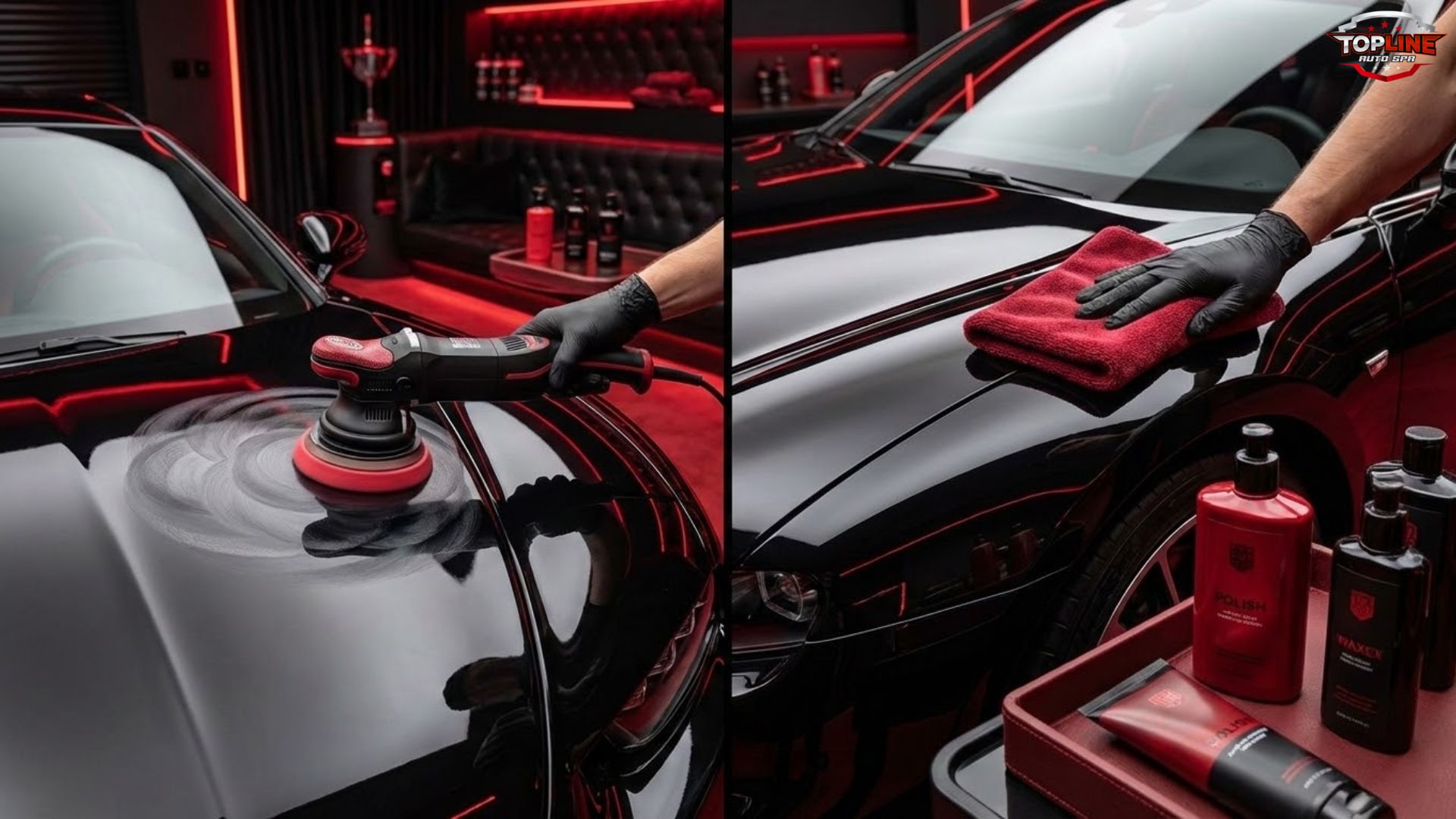
Machine polishing uses an electric polishing tool with foam or microfiber pads. These machines spin or oscillate while applying polishing compounds to the paint surface.
The machine creates consistent pressure and movement. This allows detailers to remove defects more effectively than polishing by hand.
Most professional detailers use two main types of machines:
• Dual action polishers for safe and controlled polishing
• Rotary polishers for stronger correction work
Machine polishing is effective because it works evenly across the paint surface. It can remove swirl marks, oxidation, and minor scratches faster.
Experienced detailers also adjust pad type, speed, and compound to match the paint condition. This level of control helps prevent damage while improving shine.
For vehicles with visible swirl marks or faded paint, machine polishing often produces the best results.
How Hand Polishing Works
Hand polishing uses microfiber or foam applicator pads to apply polishing compounds manually. The detailer works small sections of the paint using circular or back and forth motions.
This method requires patience and steady pressure. While it can improve shine, it usually cannot remove deeper defects.
Hand polishing is often used for:
• Small paint touch ups
• Tight areas around mirrors and trim
• Quick gloss enhancement
Because hand polishing relies on manual pressure, the results depend on the person performing the work. It also takes much longer than machine polishing.
For vehicles with light dullness or minor haze, hand polishing can still make the paint look brighter.
However, it is not ideal for correcting widespread swirl marks or scratches.
Understanding Polishing Compounds
Polishing compounds are products that contain tiny abrasives. These abrasives smooth out imperfections in the clear coat.
Two common products used during polishing are rubbing compound and polishing compound.
Here is the difference:
• Rubbing compound removes heavier scratches and oxidation
• Polishing compound refines the surface and boosts shine
Professional detailers often use both during multi step polishing. The stronger compound removes defects first. The finer polish then enhances gloss and clarity.
Using the wrong product can damage paint or leave hazy marks. That is why experienced detailers carefully choose the correct compound for each vehicle.
The goal is always to remove as little clear coat as possible while improving the paint’s appearance.
When Machine Polishing Is the Better Choice
Machine polishing is usually recommended when paint damage is more noticeable. It allows detailers to correct defects that hand polishing cannot remove.
It is often the better option for:
• Swirl marks from automatic car washes
• Light scratches from improper washing
• Oxidized or faded paint
• Vehicles that have never been polished
The controlled movement of polishing machines ensures consistent results across the entire vehicle.
Detailers also use paint depth gauges and inspection lights to avoid removing too much clear coat. This protects the paint while restoring shine.
Many vehicles that look dull or scratched can look dramatically better after proper machine polishing.
When Hand Polishing Still Makes Sense
Although machine polishing is powerful, hand polishing still has a place in detailing.
Some situations where it works well include:
• Very delicate paint surfaces
• Small spot treatments
• Maintenance polishing between major detailing sessions
Hand polishing also helps reach tight areas where machines cannot fit. This includes:
• Around door handles
• Near emblems
• Close to trim pieces
For cars that already have good paint condition, hand polishing can refresh gloss without aggressive correction.
It is also a safer option for beginners who do not have experience using power polishers.
Modern Technology Changing Paint Polishing
The detailing industry has improved greatly in recent years. Tools and products continue to evolve to make polishing safer and more effective.
Many professionals now rely on the latest inventions in car detailing to achieve better paint results.
Some examples include:
• Advanced dual action polishers with smoother movement
• Microfiber cutting pads that reduce polishing time
• Smarter polishing compounds that break down evenly
• Paint inspection lights that reveal hidden swirl marks
These improvements help detailers deliver more precise polishing without risking paint damage.
Modern technology also allows detailers to work faster while maintaining high quality results.
How Professional Detailers Protect Paint After Polishing
Polishing improves the paint surface, but protection is the next important step.
After polishing, detailers usually apply a protective layer such as:
• Paint sealant
• Ceramic coating
• High quality wax
These products protect the polished surface from UV rays, dirt, and water spots.
Protection also helps maintain the shine created during polishing. Without it, the paint may dull again quickly.
A professional detailer will recommend the best protection based on how the vehicle is used and stored.
Conclusion
Machine polishing and hand polishing both improve the appearance of car paint, but they serve different purposes. Hand polishing works best for small areas and light shine enhancement, while machine polishing is more effective for removing swirl marks, oxidation, and light scratches across the entire vehicle. Professional detailers evaluate paint condition before choosing the safest method so the clear coat remains protected. With the right tools, compounds, and experience, polishing can restore depth, gloss, and clarity to your vehicle’s finish. If your paint looks dull, scratched, or faded, professional car detailing services can make a noticeable difference. At TopLine AutoSpa, our team uses modern polishing techniques and professional equipment to safely restore your vehicle’s shine and protect the finish for long lasting results. Schedule an appointment today and let your car look its best again.
Frequently Asked Questions
Is machine polishing safe for car paint?
Yes. Machine polishing is safe when performed by trained detailers. Modern dual action polishers are designed to minimize the risk of damaging the paint. Professionals also inspect the paint condition before polishing to ensure the clear coat stays protected.
Can hand polishing remove scratches?
Hand polishing can improve very light swirl marks and minor surface haze. However, it usually cannot remove deeper scratches. When scratches are more visible, machine polishing is often required to properly restore the paint surface.
How often should a car be polished?
Most vehicles only need polishing every 12 to 24 months. Polishing too often can remove unnecessary clear coat. Proper washing techniques and paint protection help maintain the finish for longer periods.
Does polishing damage the clear coat?
Polishing removes a very small amount of clear coat to smooth imperfections. When done by experienced professionals, the process is controlled and safe. The goal is always to improve the paint while preserving as much clear coat as possible.