
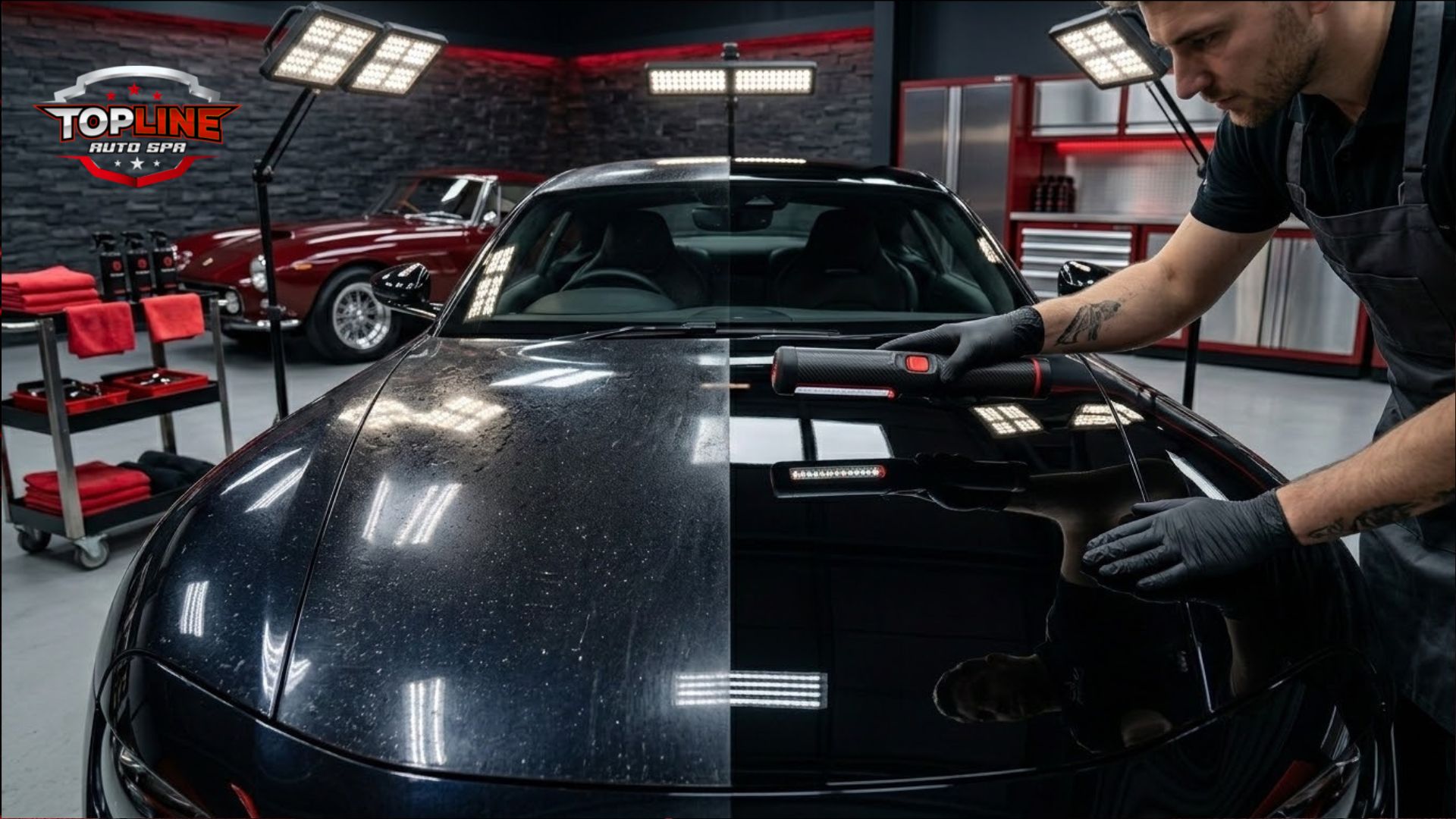
Many car owners notice rough spots, dullness, or marks on their vehicle and immediately assume the paint is damaged. In reality, not every imperfection means your paint is ruined. Sometimes the issue is simply surface contamination—something sitting on top of the paint rather than damaging it permanently.
Understanding the difference between contamination and actual paint damage is important because the solution for each is completely different. Treating contamination like damage can lead to unnecessary repairs, while ignoring real damage can make the problem worse over time.
Key Takeaways
- Surface contamination sits on top of the paint, while paint damage affects the paint itself
- Rough texture doesn’t always mean permanent damage
- Environmental exposure is a major cause of contamination buildup
- Proper inspection helps determine the right treatment approach
- Long-term protection helps reduce both contamination and paint deterioration
What Is Surface Contamination?
Surface contamination refers to particles or substances that bond to the outer layer of your car’s paint. These contaminants may not always be visible, but they affect how the surface feels and looks.
Common examples include:
- Brake dust
- Industrial fallout
- Tree sap
- Road grime
- Hard water minerals
- Bird droppings residue
Even after washing your car, these contaminants can remain attached to the surface, leaving the paint feeling rough or looking dull.
What Is Paint Damage?
Paint damage happens when the actual paint layers or clear coat are physically or chemically affected. Unlike contamination, this problem cannot simply be washed away.
Paint damage can include:
- Scratches
- Swirl marks
- Oxidation
- Fading
- Etching from chemicals or bird droppings
- Paint chips
Over time, untreated damage weakens the appearance and protection of your vehicle’s finish.
How to Tell the Difference
Understanding a few key signs can help you identify whether you’re dealing with contamination or actual damage.
Signs of Surface Contamination
- Paint feels rough or gritty
- Surface looks dull after washing
- Tiny particles seem stuck on the paint
- Water doesn’t glide smoothly off the surface
In many cases, contamination affects texture more than appearance.
Signs of Paint Damage
- Visible scratches or swirl marks
- Faded or cloudy paint
- Paint chips exposing lower layers
- Permanent stains or etching
Damage usually changes how the paint reflects light and often remains visible even after cleaning.
Why Surface Contamination Is Often Ignored
Most contamination builds up gradually, so many drivers don’t notice it until the paint starts losing smoothness and shine.
The problem is that contamination doesn’t just affect appearance—it can eventually contribute to long-term paint deterioration if left untreated. Embedded particles can create friction, trap moisture, and slowly weaken the surface over time.
How Professionals Treat Each Problem
Since contamination and paint damage are different issues, they require different solutions.
For contamination, deep cleaning and decontamination methods are used to safely remove embedded particles from the surface.
For actual paint defects, paint correction helps restore clarity and remove imperfections like swirl marks, oxidation, and minor scratches.
Using the wrong treatment can either waste time or potentially worsen the condition of the paint.
Why Protection Matters After Correction
Once the surface is cleaned and restored, protecting it becomes important. Without protection, contaminants and environmental exposure can quickly affect the paint again.
Applying ceramic coating helps create a protective barrier that makes the surface easier to clean while reducing the buildup of dirt, water spots, and contaminants.
The Biggest Mistake Car Owners Make
One of the most common mistakes is assuming every surface issue needs aggressive polishing or repair. In many cases, the paint itself is still healthy—the surface is simply contaminated.
On the other hand, some people repeatedly wash or scrub damaged paint hoping the issue disappears, which can actually create more scratches and worsen the condition.
The key is proper diagnosis. Knowing whether the issue is on the surface or within the paint helps you choose the right solution and avoid unnecessary damage or expense.
Conclusion
Surface contamination and paint damage may look similar at first, but they are very different problems. Contamination affects the outer surface and is usually removable, while paint damage impacts the paint layers themselves and often requires correction.
Understanding the difference helps you make smarter decisions about maintenance, protection, and restoration. Instead of guessing or over-treating the problem, identifying the real issue early allows you to protect your car more effectively and maintain its appearance long-term.
For ongoing maintenance and safer cleaning practices, combining proper care with professional auto detailing services can help keep your vehicle in excellent condition while preventing future issues.
FAQs
1. Does rough paint always mean paint damage?
No, rough paint is often caused by surface contamination like industrial fallout or brake dust that has bonded to the surface.
2. Can surface contamination be removed completely?
Yes, professional decontamination methods can safely remove most embedded contaminants from the paint surface.
3. How can I prevent contamination and paint damage?
Regular washing, safe maintenance practices, and protective solutions help reduce contamination buildup and long-term paint deterioration.