
Introduction
Most car owners focus on washing, waxing, or occasional detailing—but overlook one major factor: how they drive daily.
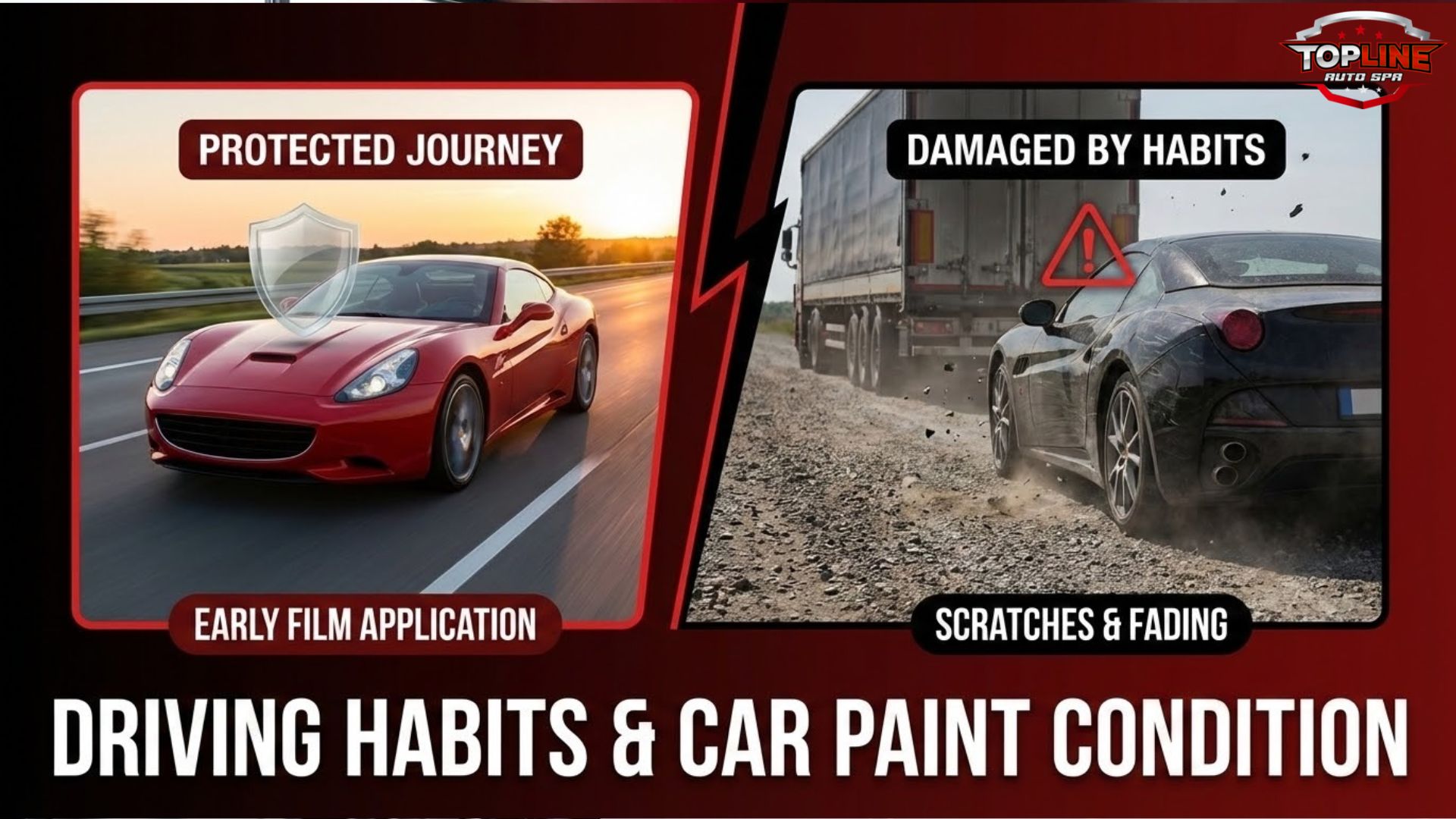
Your driving habits directly impact your vehicle’s paint condition, often more than weather or time. From tailgating to poor parking choices, small actions can lead to scratches, fading, and long-term damage.
Many drivers only start thinking about protection after damage appears—but options like automotive paint protection film are actually most effective when applied early, before your paint starts taking hits.
Key Takeaways
- Driving too close to other vehicles increases the risk of rock chips
- Highway driving exposes your car to debris, bugs, and contaminants
- Parking habits significantly affect paint fading and surface damage
- Smooth driving reduces unnecessary wear on your car’s exterior
- Preventive care is easier and cheaper than paint repair
How Your Driving Habits Impact Car Paint
1. Tailgating Increases Rock Chip Damage
Driving too close to the vehicle in front exposes your car to loose gravel, sand, and road debris.
At high speeds, even tiny particles can chip your paint, create micro-scratches, and weaken the clear coat—especially on the front bumper and hood.
2. Frequent Highway Driving = More Exposure
Highway driving puts your car in constant contact with harmful elements like bug splatter, road tar, and airborne debris.
These contaminants don’t just sit on the surface—they can slowly break down your paint if not removed properly. That’s why regular maintenance, including professional car detailing services, plays a key role in keeping the finish clean and protected.
3. Aggressive Driving Leads to Faster Wear
Sudden acceleration, hard braking, and quick lane changes increase your car’s exposure to road grime and debris impact.
Over time, this leads to subtle but consistent surface wear. Driving smoothly may seem like a small change, but it helps reduce unnecessary stress on your car’s exterior.
4. Poor Parking Habits Cause Fading & Scratches
Where you park every day can quietly damage your paint.
Leaving your car under direct sunlight leads to oxidation and fading, while parking under trees exposes it to bird droppings and sap—both of which can stain or etch the surface. Tight parking spaces also increase the chances of accidental scratches and door dings.
5. Driving in Harsh Conditions Without Protection
If your car is regularly exposed to rain, dust, or rough road conditions, contaminants can stick to the paint and slowly degrade its finish.
Without protection, this buildup often results in rough texture, dullness, and long-term damage that’s harder to reverse.
How to Minimize Paint Damage from Driving
Protecting your car’s paint doesn’t require drastic changes—just smarter habits and timely care.
Maintain Safe Distance
Keeping space between vehicles reduces the chances of debris hitting your car.
Be Mindful of Where You Park
Whenever possible, choose shaded or low-risk areas to avoid unnecessary exposure.
Stay Consistent with Cleaning
Routine washing helps remove contaminants before they cause damage. Many car owners combine this with occasional professional care to maintain long-term results.
Drive Smoothly
A more controlled driving style reduces exposure to road particles and friction.
Add a Protective Layer
For drivers who are frequently on highways or exposed to harsh conditions, getting protection installed by experienced paint protection film installers near me can make a noticeable difference in preventing daily wear.
And if you’re looking for practical ways to prevent chips and scratches from everyday driving, this breakdown on Best Ways to Protect Your Car Paint from Chips and Scratches explains it in more detail without overcomplicating things.
Insight: It’s Not Just Mileage—It’s Exposure
A common misconception is that more driving automatically means more damage. In reality, it’s about exposure, not just distance.
A car driven occasionally in harsh environments can suffer more than one driven daily in controlled conditions.
Understanding this helps shift the focus from reacting to damage → to preventing it early.
Conclusion
Your driving habits have a direct and lasting impact on your car’s paint condition. Small choices—like how closely you follow other vehicles or where you park—can either preserve your paint or slowly wear it down.
By driving more mindfully, maintaining your vehicle regularly, and considering preventive options like automotive paint protection film, you can keep your car looking newer for much longer without constant repairs.
FAQs
1. Does highway driving damage car paint faster?
Yes, highway driving increases exposure to debris, bugs, and contaminants, which can accelerate paint wear over time.
2. Can driving habits really cause scratches?
Yes, habits like tailgating and aggressive driving increase the chances of debris hitting your car and causing surface damage.
3. What is the best way to protect car paint from daily driving?
Maintaining distance, regular cleaning, and adding protective layers like paint protection film are the most effective approaches.