
Paint oxidation is one of the most common yet preventable threats to your vehicle’s appearance and value. If you’ve noticed your car’s paint looking dull, chalky, or discolored, oxidation might be the culprit. Understanding what causes it, recognizing the early warning signs, and knowing how to prevent it can save you thousands in repair costs down the road.
This comprehensive guide walks you through everything you need to know about paint oxidation—from the science behind it to practical steps for keeping your car’s finish protected and looking showroom-fresh. Whether you’re in Allentown, Lehigh Valley, or anywhere else experiencing harsh weather conditions, this guide applies to your vehicle’s paint protection needs.
Key Takeaways
- Paint oxidation occurs when clear coat breaks down due to UV exposure, moisture, and environmental contaminants over time
- Early signs include dull finish, chalky residue, and loss of paint clarity that you can catch before major damage occurs
- Regular maintenance and protective treatments are far more cost-effective than restoring heavily oxidized paint
- Professional paint correction services can remove oxidation and restore your car’s shine effectively
- UV damage on car paint is largely preventable through ceramic coatings and proper detailing habits
- Catching oxidation early makes prevention strategies significantly more effective and affordable
- Climate plays a major role, with humid areas like Allentown experiencing faster oxidation rates
What Exactly Is Paint Oxidation? A Complete Explanation
Paint oxidation is a chemical process where your vehicle’s paint breaks down when exposed to oxygen, UV rays, and environmental elements. Think of it like rust on metal—it’s a gradual deterioration that happens naturally over time, regardless of how well you care for your car.
Your car’s paint has multiple layers: the basecoat (the color you see) and the clear coat (the protective layer on top). The clear coat is what keeps your paint shiny and protects it from the elements. When UV rays, moisture, and pollutants attack this clear coat, it starts to oxidize. The clear coat essentially begins to lose its protective properties, exposing the layer beneath it to further damage.
This process doesn’t happen overnight. It’s gradual and subtle at first, which is why many car owners don’t notice oxidation until it’s already advanced. The longer you leave it untreated, the more severe the damage becomes—and the more expensive the fix. In regions like Allentown where we experience significant seasonal changes, UV exposure, and humidity, oxidation develops faster than in milder climates.
The Chemistry Behind Oxidation
At a molecular level, oxidation is a reaction where paint pigments lose electrons when exposed to oxygen. UV radiation accelerates this reaction dramatically. The clear coat contains polymer chains that break down when exposed to UV energy, weakening the protective barrier. Once the clear coat begins breaking down, it becomes porous, allowing water and contaminants to penetrate deeper into the paint layers.
This is why you see progression in oxidation: early stage oxidation is subtle, but once it starts, it accelerates. The damaged clear coat allows more UV to penetrate, which causes more damage, which allows even more UV penetration. It’s a cascading effect that underscores why early prevention is so critical.
Understanding the Root Causes of Paint Oxidation
Several factors contribute to paint oxidation. Knowing what causes it helps you take preventive action and understand your risk level.
UV Radiation: The Primary Culprit
This is the biggest culprit by far. Ultraviolet rays break down the bonds in your car’s clear coat, weakening it over time. If your car spends most of its time in direct sunlight, your paint is under constant attack. Even on cloudy days, UV rays penetrate clouds and damage your paint.
The intensity of UV exposure varies by location. In Allentown and the Lehigh Valley, we experience strong summer UV exposure combined with significant seasonal temperature swings. This combination accelerates oxidation compared to regions with more consistent weather patterns.
Black, dark blue, and dark red vehicles are particularly vulnerable because darker pigments absorb more UV energy. Light-colored cars oxidize too, but it’s less visible, which sometimes leads owners to neglect prevention.
Environmental Contaminants Accelerating Damage
Road salt, industrial pollutants, bird droppings, tree sap, and bug splatter all contribute to oxidation. These contaminants stick to your paint and create a chemical reaction that accelerates breakdown. In winter months, road salt used to manage ice conditions is especially harmful to paint in areas like Allentown.
Each of these contaminants works differently. Bird droppings are acidic and eat through clear coat. Tree sap hardens and traps moisture against the paint. Road salt creates an electrochemical reaction that degrades paint faster. Bug splatter contains acidic proteins that damage clear coat.
The cumulative effect matters. A single contaminant won’t destroy your paint, but repeated exposure without removal accelerates oxidation significantly.
Moisture and Humidity’s Compound Effect
Water doesn’t just wash away dirt—it can trap contaminants against your paint surface. Combined with heat and oxygen, moisture speeds up the oxidation process significantly. In humid climates like ours in Lehigh Valley, this is a constant challenge.
Moisture also gets trapped beneath damaged clear coat, creating an environment where oxidation accelerates exponentially. This is why even covered cars in humid garages can develop oxidation—the moisture does the damage.
Heat Cycles and Thermal Stress
Temperature fluctuations cause your paint to expand and contract. Over time, this stress weakens the clear coat, making it more susceptible to UV damage and oxidation. Pennsylvania’s weather swings—from hot summer days to cold winter nights—create significant thermal stress on paint.
When paint expands and contracts repeatedly, microscopic cracks form in the clear coat. These cracks allow UV and moisture to penetrate deeper, accelerating oxidation progression.
Age and Natural Paint Degradation
Even with minimal use, paint naturally oxidizes over time. The clear coat has a lifespan, typically 5-7 years in ideal conditions, less in harsh climates. However, regular washing, maintenance, and protective treatments can slow this process dramatically, extending your paint’s life by years.
7 Early Signs of Paint Oxidation Every Car Owner Should Know
Catching oxidation early is crucial. The sooner you notice these signs, the easier and cheaper the solution. Here are seven warning indicators that should prompt immediate action.
Sign 1: Loss of Gloss and Shine
Your car’s paint looks dull or matte instead of shiny. This is one of the earliest and most obvious signs. If your car used to gleam in the sunlight and now looks flat, oxidation has likely begun attacking the clear coat.
You’ll notice this most when comparing your car to newer vehicles. When the gloss is gone, it’s not a cosmetic issue—it’s a warning that protective layers are compromised.
Sign 2: Chalky or Powdery Residue
Run your hand across your car’s paint. If you feel a chalky texture or see white powder on your hand afterward, oxidation has progressed beyond the surface. This powder is the deteriorated clear coat breaking down into particles.
This is a critical warning sign. When you see chalky residue, the clear coat is actively failing. This is the stage where professional intervention can prevent major damage.
Sign 3: Discoloration or Fading
The paint looks lighter or washed out compared to how it looked when new. Oxidation causes the color to lose its vibrancy and depth. Black cars are particularly vulnerable to this, as they show discoloration more easily.
If you notice your car’s color looks faded on horizontal surfaces (hood, roof) but still vibrant on vertical surfaces (doors, sides), oxidation is uneven—typically worse where UV exposure is strongest.
Sign 4: Hazy or Cloudy Appearance
Your car’s paint appears cloudy or hazy, especially noticeable when looking at the paint from an angle. This happens when the clear coat becomes uneven and loses transparency. The haziness is light refracting through a compromised clear coat rather than reflecting off a smooth surface.
This stage represents significant oxidation damage. The clear coat’s protective function is substantially compromised.
Sign 5: Difficulty with Water Beading
If water used to bead up nicely on your paint and now it just sheets flat across the surface, your protective clear coat is compromised. The hydrophobic properties are gone. This is a simple but powerful indicator.
Test this by spraying your car with water. If water beads form, your clear coat is still intact. If water runs flat, oxidation has progressed significantly.
Sign 6: Orange Peel Texture
The paint surface feels rough or looks dimpled, similar to an orange peel. This texture develops when oxidation causes the paint to lose its smooth finish. You’ll notice this especially under direct sunlight or when running your hand across the surface.
This texture indicates the clear coat is severely compromised. At this stage, professional paint correction becomes necessary to restore the finish.
Sign 7: Color Inconsistency Across Panels
Different panels show different levels of fading or discoloration. Panels that receive more sun exposure (roof, hood, trunk) may look more oxidized than sheltered areas (door bottoms, under spoilers). This uneven oxidation pattern is a strong indicator that UV damage is the primary cause.
If horizontal surfaces show advanced oxidation while vertical surfaces show minimal damage, you can be confident UV exposure is your main issue and prevention strategies should focus on shade and protective coatings.
Why Early Detection Matters: The Cost of Waiting
The difference between treating oxidation early and letting it progress is dramatic—both in effectiveness and cost.
Caught early, a simple polish or light paint correction can restore your car’s finish. The cost at this stage might be $300-500 and takes a few hours. Wait too long, and you might need multi-stage paint correction costing $1,000-2,000 or even repainting entire panels at $2,000-5,000 per panel.
Early intervention also saves your car’s resale value. A car with clear coat damage loses value quickly—potential buyers see oxidation as evidence of neglect. Your car maintains its resale value better when paint is well-maintained throughout its life.
From a practical perspective, preventive action is almost always cheaper than corrective action. The question isn’t whether to invest in paint protection—it’s whether you invest early when it’s affordable or late when damage is severe.
Prevention: Your Best Defense Against Paint Oxidation
Prevention is always better than cure. Here are proven strategies to protect your car’s paint, tailored to different climates and situations.
Strategy 1: Regular Washing and Drying Protocol
Wash your car every two weeks with a pH-neutral car soap. Hand-dry immediately after to prevent water spots and mineral deposits. This removes contaminants before they can damage your paint. In dusty or polluted environments, wash every 7-10 days.
The key is removing contaminants regularly before they bond to the paint surface. Contaminants that sit on paint for days or weeks cause more damage than those removed quickly.
Use microfiber towels for drying—they’re gentler on paint than terry cloth. Never use the same towel for multiple areas; this spreads contaminants around. High-quality car wash soap costs a bit more but protects your paint—avoid dish soap which strips protective wax.
Strategy 2: Park Smart to Minimize UV Exposure
Park in a garage or under cover when possible. If you must park outside, consider a car cover. Even a few hours of UV exposure daily adds up over time. A shaded parking spot cuts UV exposure in half compared to direct sun.
If a garage isn’t available, look for alternative shade: covered parking, trees, parking in shade of buildings. These simple changes reduce oxidation risk significantly.
For those in areas with strong summer sun like Allentown, strategic parking becomes a key part of paint protection strategy.
Strategy 3: Apply Protective Coatings—The Game-Changer
This is where UV damage on car paint gets serious—professional ceramic coatings create a barrier between your paint and environmental threats. A ceramic coating can last 2-5 years depending on the product and conditions. Many car owners find ceramic coatings to be the most cost-effective long-term investment in paint protection.
Unlike wax which lasts a few months, ceramic coatings create a semi-permanent protective layer. They bond to the clear coat and provide UV protection, water beading, and contamination resistance. The investment ($500-1,500) pays for itself through reduced detailing needs and extended paint life.
Strategy 4: Waxing and Sealants for Ongoing Protection
Regular waxing (every three months) provides a temporary protective layer. While not permanent, it’s an affordable way to add extra protection between professional treatments. Sealants last longer than wax (6-8 months) but require professional application.
Think of wax as an interim solution. It’s cheap insurance between ceramic coating reapplications or between professional detailing services. Combined with regular washing, waxing significantly slows oxidation progression.
Strategy 5: Avoid Automatic Car Washes
Automatic brushes can scratch your clear coat and actually accelerate oxidation. Hand washing or touchless washes are gentler on your paint. If automatic washes are your only option, use brushless (soft cloth) models rather than brush models.
The scratches from automatic washes create entry points for UV and moisture, accelerating oxidation precisely where you’re trying to prevent it. This is a false economy—spending slightly more on hand washing saves significantly in damage prevention.
Strategy 6: Address Damage Quickly
Scratches, chips, and swirl marks expose the clear coat and basecoat, accelerating oxidation in those areas. Get minor damage addressed before it worsens. A $50 scratch fix prevents $500 in oxidation damage.
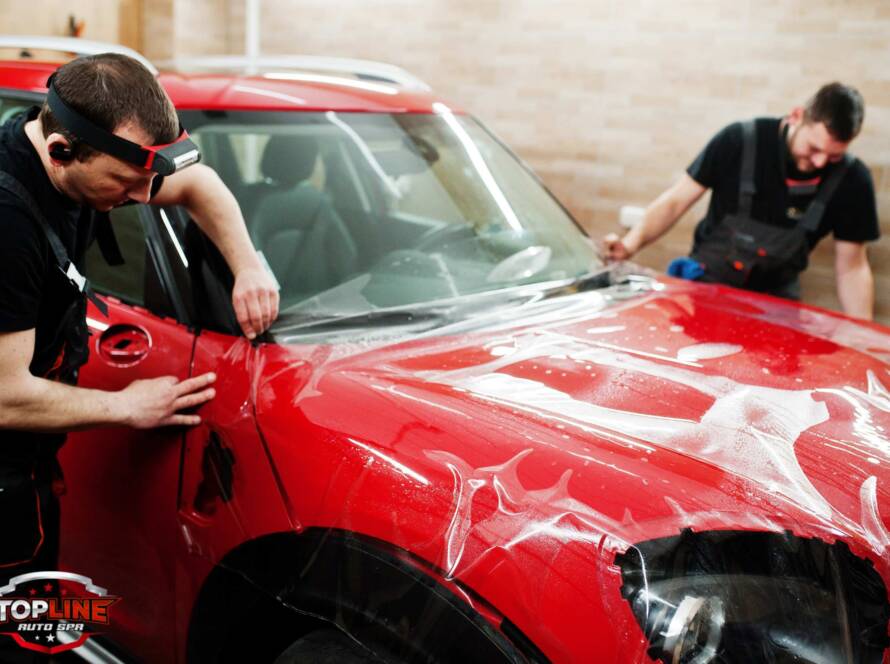
Paint protection film on high-impact areas (front bumper, hood, headlights) prevents chips that expose paint and accelerate oxidation. This is especially valuable for vehicles that see highway miles regularly.
The Professional Solution: Paint Correction Removes Oxidation
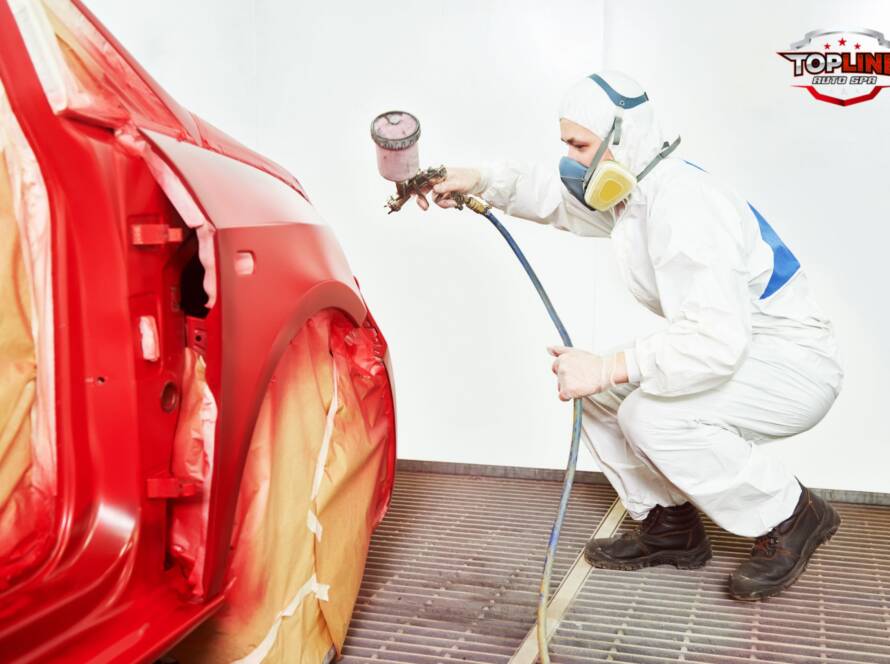
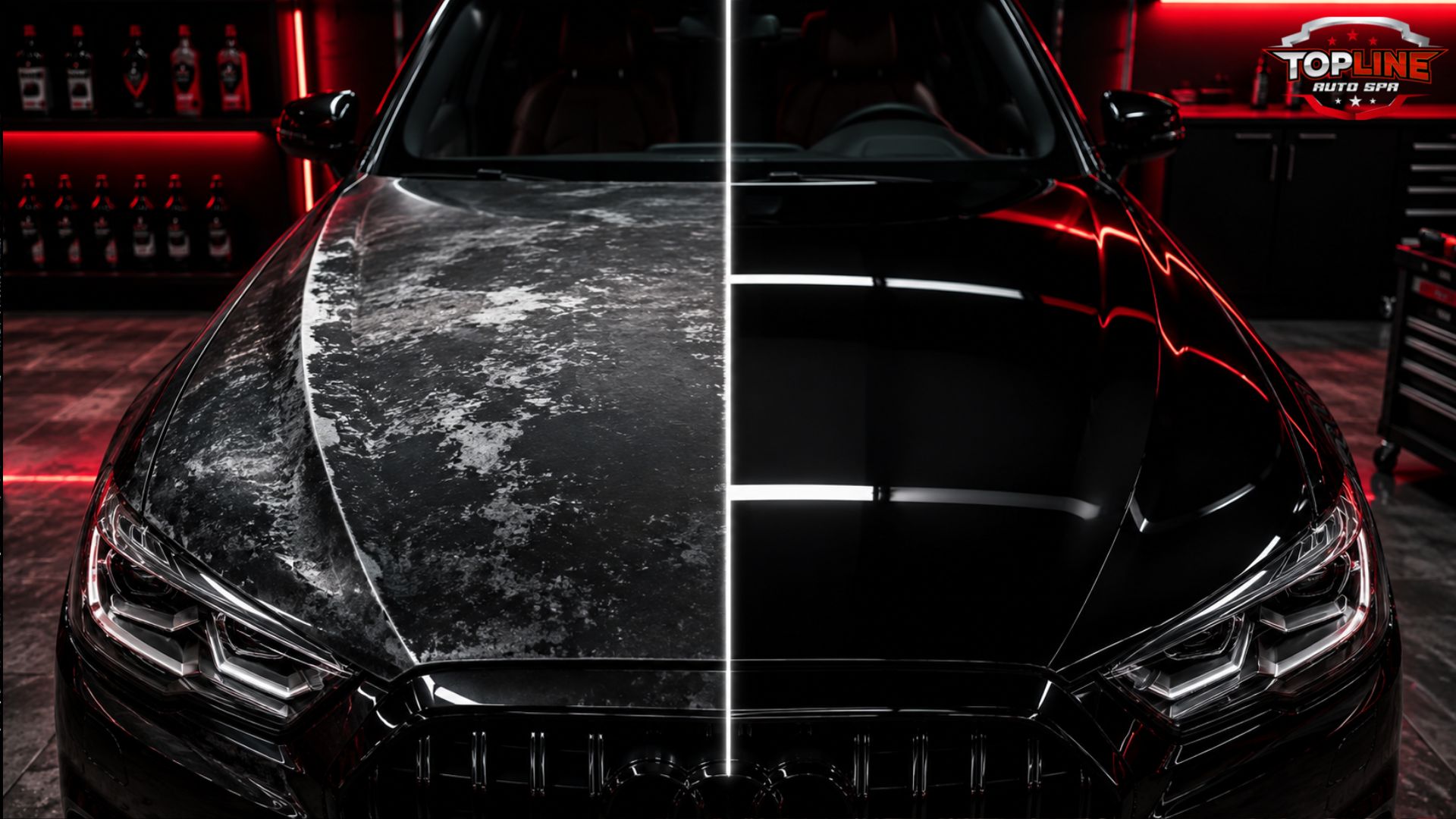
If oxidation has already begun showing signs on your vehicle, professional paint correction can restore your car’s finish. Paint correction removes the oxidized layer and polishes the paint back to clarity. Depending on the severity, a technician might use one-step correction for light oxidation or multi-stage correction for advanced damage.
A professional paint correction service handles what washing and waxing cannot. It removes deep oxidation, swirl marks, and UV damage that have compromised your clear coat, bringing back that showroom shine your car once had.
Light Oxidation: Enhancement Polish
For early-stage oxidation with minor dullness, enhancement polish removes light oxidation and restores gloss. This is the least invasive option and takes 2-3 hours. Cost: $300-500. Results last 6-12 months with proper maintenance.
This stage is ideal for catching oxidation because the work is straightforward and results are excellent.
Moderate Oxidation: One-Step Correction
When oxidation is visible across multiple panels with significant dullness and some chalky residue, one-step correction is appropriate. This process removes 60-75% of oxidation imperfections and restores significant gloss. Time: 4-6 hours. Cost: $500-900.
At this stage, oxidation has progressed noticeably but the damage is still reversible without major effort. Catching it here is still cost-effective.
Advanced Oxidation: Multi-Stage Correction
When oxidation is severe with significant color fading, heavy chalking, and extensive dullness, multi-stage paint correction becomes necessary. This involves multiple polishing steps targeting different levels of damage. Time: 8-12 hours. Cost: $1,000-2,000+.
At this stage, the clear coat is substantially compromised and requires aggressive correction to restore. This is significantly more expensive than early intervention but still cheaper than repainting.
Combining Correction with Long-Term Protection
The smart approach is combining paint correction with preventive measures. After professional paint correction restores your finish, adding a ceramic coating provides lasting protection against future oxidation. This one-two strategy addresses existing damage while preventing new damage from forming.
The ceramic coating locks in the excellent results of paint correction, keeping your paint protected for years. Many car owners who invest in paint correction immediately follow with ceramic coating to maximize their investment’s longevity.
Regular professional detailing also helps. A thorough detailing removes contaminants that accelerate oxidation, maintaining your paint’s condition between major treatments. Monthly or quarterly detailing keeps oxidation from redeveloping after correction.
Understanding Paint Oxidation Prevention by Climate
Your location significantly impacts oxidation risk. Allentown and Lehigh Valley residents face specific challenges.
Oxidation in Pennsylvania’s Climate
Lehigh Valley experiences:
- Strong summer UV exposure (June-August especially harsh)
- High humidity from spring through fall (accelerates oxidation)
- Winter road salt (chemical damage to paint)
- Significant temperature swings (thermal stress on clear coat)
- Industrial pollutants in some areas (additional contaminants)
Vehicles in our region typically show oxidation faster than national averages. This makes preventive paint protection particularly valuable here.
Regional Oxidation Acceleration Factors
The combination of humidity plus UV plus road salt creates a perfect storm for paint oxidation. A car in Allentown might oxidize in 18-24 months without protection, while the same car in Arizona might take 3-4 years.
This means Lehigh Valley residents should prioritize paint protection more aggressively than residents in drier climates.
Long-Term Paint Care Strategy: Building a Sustainable System
Your car’s paint requires ongoing attention. Think of it like maintaining your home—regular maintenance prevents expensive problems later. Here’s a practical maintenance timeline.
Monthly Maintenance
Wash your car to remove contaminants. Monthly washing costs nothing but pays huge dividends in paint protection. This is non-negotiable if you want to prevent oxidation.
In harsh seasons (winter with road salt, summer with pollen and bug splatter), wash every 2 weeks. In mild seasons, monthly suffices.
Quarterly Maintenance
Apply wax or sealant for additional UV protection between professional treatments. This takes 2-3 hours but significantly slows oxidation progression.
Additionally, inspect your paint for early signs of oxidation. Catch problems early while solutions are affordable.
Semi-Annual Inspection
Have your paint inspected by a professional. Catch oxidation early before it spreads. A professional can see early-stage oxidation you might miss visually.
This inspection also identifies other paint issues: swirl marks, water spots, contaminant etching. Addressing these prevents them from becoming oxidation entry points.
Annual Professional Detailing
Schedule professional detailing to maintain your paint’s condition and remove embedded contaminants. Detailing removes oxidation precursors before they become problems.
This is your opportunity for professional assessment. Ask the detailer about your paint’s condition and whether correction might be beneficial.
Every 2-3 Years or As Needed
Consider professional paint correction if oxidation appears. The sooner you address it, the less expensive and intensive the treatment. Don’t wait until oxidation is severe.
After correction, consider ceramic coating for multi-year protection.
Building Your Paint Protection Strategy
Your strategy should account for:
- Your climate (Lehigh Valley residents need aggressive protection)
- Your vehicle’s use (highway miles = more UV exposure)
- Your vehicle’s age (older cars need more protection)
- Your budget (prevention is cheaper than correction)
- Your time availability (professional services if you’re busy)
The combination of monthly washing, quarterly waxing, semi-annual inspection, annual detailing, and professional correction when needed creates a sustainable paint protection system.
Real-World Examples: Oxidation Progression Without Protection
Let’s look at three scenarios showing why prevention matters.
Example 1: Daily Driver with No Protection
A 2015 sedan parked outside, driven daily in Allentown. No regular washing, no wax, no protective coating.
Year 1-2: No visible oxidation, but clear coat begins showing microscopic damage from UV.
Year 2-3: First signs appear—slight dullness, loss of gloss. Owner notices but doesn’t address.
Year 3-4: Oxidation visible on hood and roof (horizontal surfaces getting most sun). Chalky residue appears. Now professional correction needed: $1,200-1,500.
Year 4-5: Oxidation spreads despite owner finally trying car washes. Paint fading obvious. Some panels may need repainting: $2,000-4,000.
Total cost of negligence: $3,200-5,500 plus time and stress.
Example 2: Same Vehicle with Basic Prevention
Same 2015 sedan, same location. Owner washes monthly and waxes quarterly.
Year 1-2: Monthly washing removes contaminants before damage. Wax adds protective layer. Clear coat remains intact longer.
Year 2-3: No visible oxidation despite UV exposure. Paint still glossy and vibrant.
Year 3-4: Slight dullness appears. Owner notices and schedules enhancement polish: $400-600. Paint restored to nearly new condition.
Year 4-5: With continued monthly washing and quarterly wax, paint remains in excellent condition.
Total cost of prevention: $600-800 plus 30 minutes monthly (washing) and 2-3 hours quarterly (waxing).
The difference: $2,400-4,700 savings plus significantly better paint condition.
Example 3: Same Vehicle with Professional Protection
Same 2015 sedan, same location. Owner gets ceramic coating applied ($800), maintains with monthly washing and semi-annual detailing ($300/year).
Year 1-2: Ceramic coating provides maximum UV protection and water beading. Monthly washing and detailing prevent contaminant buildup. Paint in excellent condition.
Year 2-3: Ceramic coating still protecting. Paint remains glossy and vibrant with no signs of oxidation.
Year 3-4: Ceramic coating degradation begins. Paint still looks excellent due to protective layer. No correction needed yet.
Year 4-5: Ceramic coating nearly worn. Paint underneath remains in great condition from the protection it provided. Owner reapplies coating if desired ($800) or adds wax for short-term protection.
Total cost: $1,400-2,000 for full protection over 4-5 years. Paint condition excellent throughout.
Why Professional Paint Correction Outperforms DIY Solutions
DIY oxidation removal attempts using household polishes, compound, or machine polishers often creates more problems.
DIY polishing risks:
- Using wrong compound for your paint type
- Applying too much pressure and burning through clear coat
- Leaving buffer swirl marks while trying to remove oxidation
- Creating uneven correction across panels
- Damaging good clear coat while targeting oxidized areas
Professional correction eliminates these risks through:
- Proper diagnosis of oxidation severity
- Correct product and technique selection
- Professional-grade equipment
- Experience handling different paint types
- Ability to spot-correct problem areas without affecting the rest
- Guarantees on work quality
The cost difference ($400-1,500 professional vs. $50-200 DIY materials) is quickly offset by avoiding repairs for DIY mistakes.
Conclusion: Paint Oxidation Is Preventable
Paint oxidation doesn’t have to happen. It’s not an inevitable part of car ownership—it’s a preventable consequence of inaction.
The science is clear: your car’s paint deteriorates when exposed to UV, moisture, and contaminants without protection. But this deterioration isn’t fate. It’s a process you can slow dramatically with proper care, and reverse completely with professional intervention.
The key insight is this: oxidation prevention compounds over time. Every month you go without washing, you’re extending oxidation risk by 30 days. Every quarter you skip waxing, you’re removing temporary protection. Every year you neglect professional inspection, you’re letting early-stage oxidation progress.
Conversely, every month you wash your car, you’re removing oxidation precursors. Every quarter you wax, you’re adding protective layers. Every professional detailing, you’re removing contaminants before they cause damage.
The most cost-effective approach starts with prevention: monthly washing, quarterly waxing, professional inspection, and protective coatings. If oxidation appears despite prevention efforts, professional paint correction restores your finish and ceramic coatings prevent recurrence.
For Lehigh Valley residents, this approach is essential. Our climate accelerates oxidation compared to many regions. The humidity, UV intensity, road salt, and thermal stress all conspire against your paint. But this makes prevention strategies even more valuable—they work harder here because they’re fighting tougher conditions.
Start now. The investment is small compared to the protection you’ll receive. Regular washing takes an hour per month. Quarterly waxing takes an afternoon. Professional detailing once a year costs less than a single paint correction. Combined, these investments extend your paint’s life by years and maintain your car’s appearance and value.
In six months of consistent care, you’ll notice your paint looks better than cars around you that receive no care. In a year, the difference is dramatic. In two years, you’ll wish everyone knew this—they’d avoid thousands in unnecessary paint damage.
Your car’s paint is worth protecting. It’s not just about aesthetics. Paint protection is investment protection. It preserves your vehicle’s value, maintains its appearance, and prevents expensive damage. Paint oxidation is preventable. The question is whether you’ll take action now or regret it later.
Frequently Asked Questions
1. How can I tell if my car has paint oxidation or just needs a wash?
This is a common question. Here’s how to tell: Wash your car with soap and water. Dry it completely. If your paint looks dull even after washing, that’s likely oxidation, not dirt. Run your hand across the paint surface. If it feels smooth, that’s normal paint. If it feels chalky or rough, that’s oxidation breaking down the clear coat. Look at water beading: if water still beads up after washing, your clear coat is intact. If water sheets flat, oxidation has compromised the protective layer. When in doubt, have a professional inspect—they can diagnose with certainty in minutes.
2. How long does paint oxidation take to develop, and can it happen to new cars?
This depends entirely on environmental exposure, car color, and care. In harsh climates with intense sun, oxidation can become visible within 12-24 months on unprotected paint. In milder climates with proper protection, it might take several years. Black and dark colors show oxidation more obviously than lighter colors. Yes, new cars can get oxidation if left unprotected. That’s why manufacturers recommend protective treatments immediately—not because the paint is defective, but because UV and environmental damage start immediately. The difference between a well-maintained new car and an unprotected one becomes obvious within one year.
3. Will paint oxidation spread if I leave it untreated?
Yes, absolutely. Oxidation accelerates once the clear coat begins breaking down. Untreated oxidation will spread across larger areas and become progressively worse over time. Early-stage oxidation that could be fixed with a simple polish becomes advanced oxidation requiring multi-stage correction. The contaminated area becomes an entry point for moisture and UV, accelerating damage in surrounding areas. Waiting is almost always a mistake—problems compound faster than they’d resolve through any natural process. Treat oxidation as soon as you notice it.