
Your vehicle’s leather seats represent a significant investment in comfort and luxury. Yet many car owners struggle with proper leather cleaning techniques, inadvertently damaging their seats or failing to remove stubborn stains and odors. Leather seats require specific care different from fabric upholstery. Understanding proper leather cleaning techniques helps you maintain your seats’ appearance, extend their lifespan, and preserve their value.
Leather seats experience constant exposure to dirt, spills, body oils, and environmental contaminants. Over time, this buildup creates stains, discoloration, and deterioration that diminishes your vehicle’s interior appeal. Many car owners attempt cleaning with incorrect products or techniques, causing damage that’s difficult to reverse. Proper leather cleaning requires understanding leather’s specific needs and using appropriate products and methods designed for automotive leather care.
For Lehigh Valley residents, leather seat cleaning takes on additional importance. Our region’s road salt exposure creates corrosive environments affecting interior materials. Temperature swings from summer heat to winter cold stress leather. Industrial pollution settles on vehicle interiors. Proper leather cleaning and conditioning protects against these regional environmental challenges.
This comprehensive guide walks you through every aspect of leather seat cleaning, from understanding leather care fundamentals to mastering step-by-step cleaning techniques to maintaining conditioning and protection. Whether you’re addressing stubborn stains, dealing with general dirt accumulation, or seeking to restore leather seats to like-new condition, this guide provides the knowledge needed for successful leather care.
Key Takeaways
- Leather seats require specific cleaning products and techniques different from fabric upholstery to prevent damage
- Identifying leather type—full-grain, top-grain, or bonded leather—determines appropriate cleaning and conditioning methods
- Vacuum removal of loose debris before wet cleaning prevents grinding particles into leather
- pH-neutral leather cleaning products prevent damage that harsh soaps or acidic cleaners cause
- Microfiber cloths and soft-bristled brushes protect leather surface during cleaning
- Leather conditioning after cleaning restores protective oils and maintains suppleness
- Professional detailing provides expertise and products ensuring optimal leather care
- Regular maintenance cleaning prevents stain buildup requiring intensive restoration
- Lehigh Valley’s climate challenges—road salt, temperature swings, pollution—make proper leather care particularly important
- Leather damage prevention through proper care costs far less than professional restoration of neglected leather
Understanding Leather Seats: Foundation for Proper Care
Before cleaning leather seats, understanding leather’s composition and characteristics helps you appreciate why specific care is necessary.
Leather is a natural material made from animal hides processed through tanning. This processing creates a durable, supple material ideal for automotive seating. However, leather retains characteristics of natural material—it requires hydration, protection from excessive heat and cold, and protection from harsh chemicals.
Full-grain leather represents the highest quality automotive leather. This leather retains the complete hide surface including natural grain patterns and characteristics. Full-grain leather develops patina over time, with proper care enhancing its appearance as it ages. Full-grain leather is expensive, durable, and increasingly common in luxury vehicles.
Top-grain leather has the grain surface sanded and treated, removing imperfections but losing some natural characteristics. Top-grain leather is more uniform in appearance than full-grain, more affordable, and very durable. Most automotive leather seats are top-grain quality.
Bonded leather consists of leather scraps adhered to fabric backing. This least expensive option appears as leather but contains less leather material. Bonded leather requires gentler care to prevent peeling or separation at seams. Some lower-cost vehicles use bonded leather instead of true leather.
Leather’s natural composition includes oils that provide suppleness and protection. Manufacturing processes remove some of these oils. Conditioning replaces lost oils, maintaining leather’s flexibility and protective barrier. Without conditioning, leather becomes stiff, cracks, and deteriorates.
Leather’s porous nature means it absorbs liquids readily. Spilled drinks, sweat, and other moisture penetrate leather if not promptly cleaned. This absorption is why quick response to spills prevents permanent staining.
Understanding these leather characteristics helps you appreciate why leather seats need specific care—not the same products or techniques used for fabric upholstery.
Types of Leather Damage: Identifying What You’re Dealing With
Proper cleaning begins with identifying what type of damage your leather seats have. Different damage types require different treatment approaches.
Dust and dirt accumulation appears as general dullness and graying of leather surfaces. Light dust sits on the surface and can be removed through gentle vacuuming and brushing. Heavy dust embedded in leather requires more thorough cleaning to remove completely.
Stains from spills, foods, or fluids appear as discolored patches on leather. Fresh stains are easier to remove than aged stains that have penetrated leather’s porous structure. Identifying stain type—oil-based, water-based, or protein-based—helps determine appropriate cleaning approach.
Scuff marks and scratches appear as surface damage from contact with objects or abrasion. Light scuffs often remove through gentle cleaning. Deeper scratches that break through protective coating require professional restoration.
Discoloration from sun exposure appears as fading or color changes. UV exposure gradually breaks down leather’s color. Discoloration prevention through UV protection is more effective than attempting to restore faded color.
Mold and mildew growth appears as dark spots or musty odors. Damp interior conditions promote mold growth particularly in vehicles with interior moisture issues. Mold requires immediate attention before it spreads.
Cracking and peeling appears as deteriorated leather separating from underlying material. This damage typically results from prolonged neglect, excessive heat exposure, or damage from harsh cleaning products. Cracking requires professional restoration.
Greasy buildup from body oils appears as darkened areas where passengers regularly sit. Body oils penetrate leather and accumulate over time. Regular cleaning prevents buildup but established accumulation requires intensive cleaning to remove.
Honest assessment of damage type helps you select appropriate cleaning approach and determine whether professional restoration is necessary.
Tools and Materials Needed for Leather Seat Cleaning
Proper leather cleaning requires specific tools and materials designed for leather care. Incorrect products can damage leather severely.
Soft-bristled brush designed for leather cleaning helps loosen embedded dirt without damaging leather surface. Stiff brushes scratch leather. Avoid wire brushes or hard plastic brushes that damage leather. Dedicated leather brushes are inexpensive and essential for proper cleaning.
Microfiber cloths are ideal for leather cleaning and drying. Microfiber’s soft texture doesn’t damage leather. Microfiber’s absorbency prevents water spotting. Avoid rough towels or paper products that scratch leather. Multiple microfiber cloths prevent spreading dirt during cleaning.
Vacuum with upholstery attachment removes loose dirt before wet cleaning. The upholstery attachment provides appropriate suction without damaging leather. Vacuuming prevents dirt grinding into leather during wet cleaning.
pH-neutral leather cleaner is essential for safe cleaning. pH-neutral products clean effectively without damaging leather’s natural pH balance. Avoid harsh soaps, acidic cleaners, or all-purpose degreasers that damage leather. Leather-specific cleaners are worth the investment.
Distilled water prevents mineral deposits from hard water. Hard water spotting compromises leather appearance. Distilled water rinsing ensures clean results without mineral residue.
Leather conditioner replenishes protective oils after cleaning. Quality conditioner is essential for leather maintenance. Conditioner prevents cracking and maintains suppleness. Leather-specific conditioners work better than generic moisturizers.
Soft sponge or applicator pad applies leather conditioner evenly. Avoid cotton balls that leave fibers in leather. Dedicated applicators ensure even coverage without waste.
Optional materials include leather protectant spray providing UV and water protection, and specialty cleaners for specific stain types. These products enhance leather care but aren’t essential for basic cleaning.
Investing in proper materials prevents damage and ensures successful cleaning results. professional interior detailing services use premium materials and products specifically formulated for optimal leather care.
Step-by-Step Leather Seat Cleaning Process
Proper cleaning technique is as important as correct materials. Following proper sequence prevents damage while achieving optimal cleaning results.
Begin by vacuuming seats thoroughly with upholstery attachment. Use the soft brush attachment or fabric tool rather than the hard floor tool. Vacuum all surfaces including seams, crevices, and between cushions. Vacuuming removes loose dirt preventing it from grinding into leather during wet cleaning.
Inspect seats for stains or spots requiring pre-treatment. Identify stain type and note location. Some stains benefit from pre-treatment before general cleaning. Setting these aside prevents overlooking them during cleaning process.
Mix leather cleaner with distilled water according to product instructions. Proper dilution is important—concentrated cleaner might damage leather. Most leather cleaners require dilution for safe use. Follow manufacturer recommendations for proper ratio.
Test leather cleaner on inconspicuous seat area before applying to visible areas. Testing identifies potential color changes or damage before treating prominent areas. Leather varies in treatment and response to products—testing prevents mistakes on valuable seating.
Apply diluted cleaner to small section of seat using soft brush or applicator pad. Work the cleaner into leather using gentle, circular motions. Avoid aggressive scrubbing that damages leather. Let cleaner sit briefly—typically 30 seconds to 1 minute—allowing dirt to loosen.
Wipe cleaned section with damp microfiber cloth. Use clean section of cloth for each wipe preventing dirt redeposition. Multiple wipes ensure complete cleaner removal. Residual cleaner can leave film or spots.
Repeat process for next section, working methodically across entire seat. Consistency in technique ensures even results. Complete one seat before moving to next preventing product drying between sections.
Address stubborn stains through multiple gentle cleanings rather than aggressive single treatment. Repeated gentle cleaning removes stains more safely than forceful cleaning. Patience prevents damage while achieving results.
For stuck-on debris or dried stains, slightly longer soaking time allows cleaner to penetrate. Extended contact time works better than aggressive scrubbing. Most leather cleaners are formulated to work effectively with reasonable contact time.
Final rinse with distilled water removes all cleaner residue. Residual cleaner creates film affecting appearance and can damage leather over time. Multiple rinses with clean cloths ensure complete cleaner removal.
Dry seats thoroughly with clean microfiber cloths after cleaning. Remaining moisture can promote mold growth or water spotting. Pat dry rather than rubbing. Some moisture remaining is acceptable—leather needs slight hydration for conditioning.
Leather Conditioning: Restoring Protection and Suppleness
After cleaning, leather conditioning is essential to restore protective oils and maintain leather’s health.
Allow seats to dry partially—they should be slightly damp but not wet before conditioning. Damp leather accepts conditioner better than completely dry leather. Waiting 30-60 minutes after cleaning typically provides appropriate dampness level.
Apply leather conditioner according to product instructions. Most conditioners require small amounts applied in thin layers. Excessive conditioner creates greasy appearance or attracts dirt. Start with small amounts, adding more if needed.
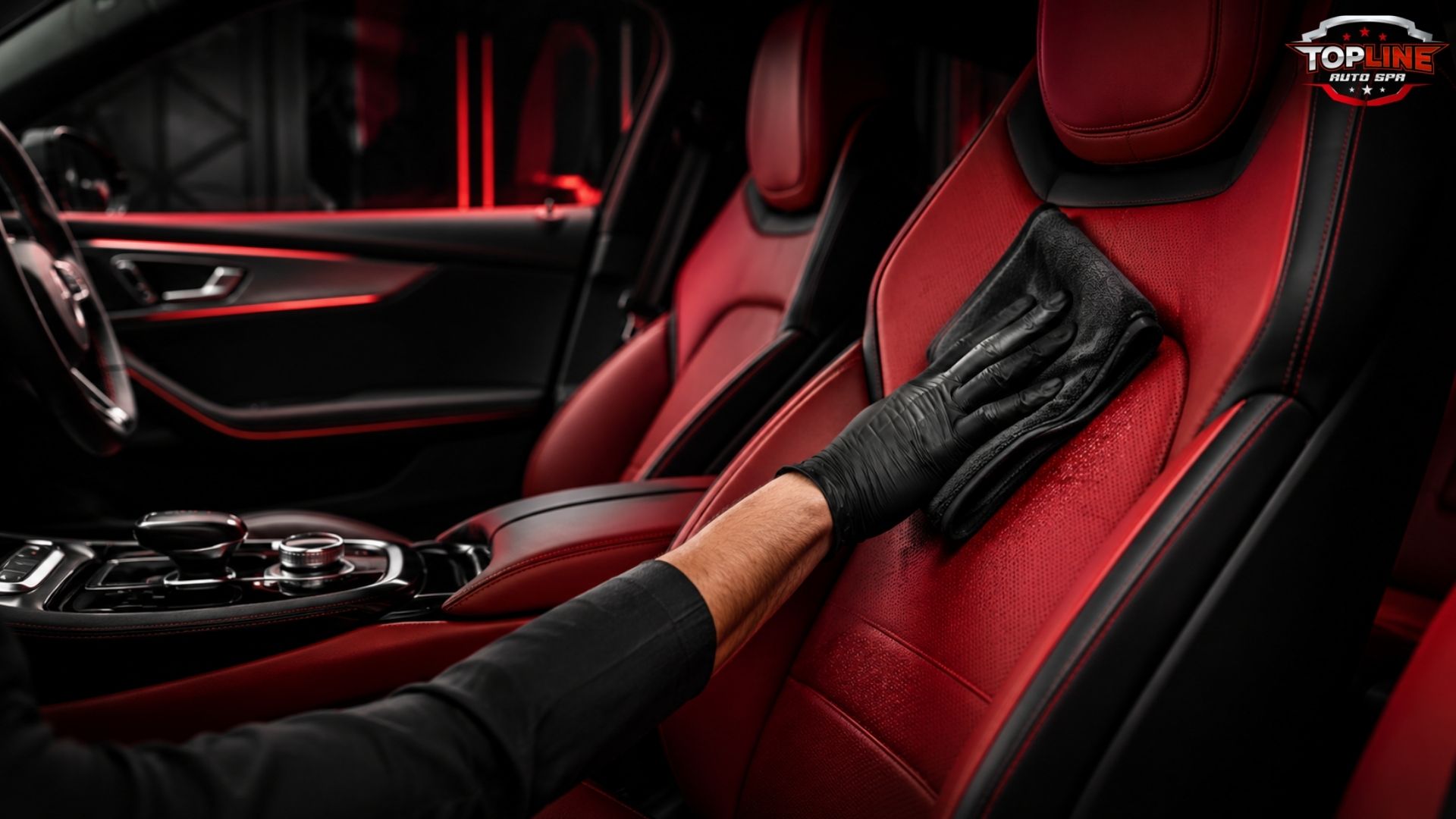
Use soft applicator pad or clean microfiber cloth to apply conditioner in circular motions. Work conditioner into leather thoroughly ensuring even coverage. Pay attention to high-use areas that see more wear and require more protection.
Allow conditioner to absorb—typically 15-30 minutes depending on product. Conditioner should be absorbed into leather, not sitting on surface. Some excess can be buffed away with clean cloth after absorption period.
Buff excess conditioner from surface using clean microfiber cloth. Buffing removes excess product creating shiny appearance. Proper buffing prevents greasy appearance while maintaining conditioning benefits.
Repeat conditioning annually or more frequently in harsh climates. Conditioning replenishes protective oils lost to exposure. Regular conditioning prevents cracking and deterioration. Harsh climates like Lehigh Valley benefit from semi-annual conditioning addressing accelerated oil loss.
Premium leather protection and conditioning services are available through professional detailing shops offering specialty leather products and application expertise.
Conditioning maintains leather’s investment value and prevents costly restoration later.
Addressing Specific Leather Stains: Targeted Treatment
Different stain types require different treatment approaches for optimal removal.
Oil-based stains from food, grease, or body oils require degreasing. Leather cleaners with degreasing properties work well for these stains. Multiple gentle cleanings often prove more effective than single aggressive treatment. Allowing extra contact time helps break down oil before wiping.
Water-based stains from spills, sweat, or rain require thorough cleaning and drying. These stains often don’t penetrate deeply and respond well to standard cleaning. Quick response to water-based spills prevents them from becoming stubborn stains.
Protein-based stains from blood, vomit, or biological material require enzyme-based cleaners. Standard leather cleaners might not fully remove these stains. Specialty products designed for protein stain removal work more effectively. These stains require professional handling if home cleaning is unsuccessful.
Ink or dye stains from pens or dark materials require immediate attention. Fresh ink can sometimes be removed through quick cleaning. Aged ink becomes permanent and requires professional restoration. Quick response is critical for ink stains.
Tannin stains from tea or coffee require gentle, repeated cleaning. Tannin stains sometimes lighten with proper cleaning but might not completely disappear. Multiple treatment cycles often provide best results.
Rust stains from metal objects require specific rust removal products. Standard leather cleaners don’t address rust effectively. Professional rust removal ensures proper treatment preventing damage from rust-removal chemicals.
For stubborn or uncertain stains, professional detailing expertise provides effective solutions. Professional detailers have specialty products and experience with various stain types. Professional treatment prevents damage from inappropriate home cleaning attempts.
Leather Seat Maintenance: Preventing Future Problems
Consistent maintenance prevents major cleaning needs and preserves leather seat condition.
Weekly vacuuming removes dust and dirt preventing accumulation. Regular vacuuming maintains cleanliness and prevents debris embedding in leather. This routine maintenance is the easiest prevention step.
Monthly leather cleaning maintains freshness and addresses spills or stains before they set. Monthly cleaning prevents stain accumulation requiring intensive restoration. Light monthly cleaning takes minimal time and prevents major problems.
Immediate spill response prevents staining. Blot spills with microfiber cloth immediately after occurrence. Don’t rub—blotting prevents spreading spill into larger area. Quick action prevents many permanent stains.
Sun protection through window tinting or sun shades prevents UV damage and fading. UV exposure degrades leather and fades color. Sun protection is most effective prevention against discoloration. Professional window tinting for UV protection provides both privacy and protection against sun damage affecting leather.
Temperature control through climate-adjusted parking or garage storage prevents thermal stress. Extreme heat causes leather to dry and crack. Cold causes stiffness. Moderate temperatures preserve leather condition.
Humidity control prevents mold growth and excessive moisture absorption. Very humid conditions promote mold. Extremely dry conditions cause cracking. Moderate humidity around 40-60% is ideal for leather preservation.
To better understand interior challenges and odor issues affecting leather seat freshness, review our guide on Why Your Car Still Smells Bad After Interior Cleaning, which explains common interior problems and how to address them comprehensively.
Protective products after cleaning—such as leather protectant sprays—provide UV and water resistance. These products add another layer of protection between leather and environmental threats.
Regular professional detailing addresses leather care comprehensively, using professional products and expertise for optimal maintenance.
Common Leather Cleaning Mistakes: What to Avoid
Understanding common mistakes helps you avoid damaging your leather seats during cleaning.
Using harsh soaps or all-purpose cleaners damages leather’s natural pH balance. These products dry leather and cause cracking. Leather-specific pH-neutral cleaners are essential for safe cleaning.
Aggressive scrubbing with stiff brushes scratches and damages leather surface. Gentle cleaning with soft brushes prevents damage. Patience with gentle multiple cleanings outperforms aggressive single cleaning.
Excessive water application causes over-saturation promoting mold growth and water damage. Damp cleaning is appropriate but not soaking. Proper drying after cleaning prevents moisture problems.
Mixing different cleaning products creates chemical reactions potentially damaging leather. Use one product system at a time. Thorough rinsing between different products prevents mixing.
Applying conditioner to dirty leather traps dirt under protective layer. Always clean before conditioning. Conditioning dirty leather prevents proper conditioning effectiveness.
Using high heat for drying causes leather to crack. Air drying or low heat is appropriate. Avoiding excessive heat prevents thermal damage.
Ignoring spills until they set creates permanent stains. Immediate response to spills prevents staining. Prompt action prevents most permanent damage.
Neglecting maintenance for extended periods allows dirt accumulation requiring intensive restoration. Regular light maintenance prevents major problems. Consistent care is more effective than occasional deep cleaning.
Lehigh Valley-Specific Leather Seat Considerations
Lehigh Valley’s climate creates specific challenges affecting leather seat care and maintenance frequency.
Road salt from winter road maintenance penetrates vehicle interiors. Salt spray settles on leather and causes degradation. Winter detailing with attention to salt removal protects leather from salt damage. More frequent cleaning during winter addresses salt exposure.
Hard water spotting from mineral-rich local water sources affects leather appearance. Using distilled water for final rinses prevents mineral deposits. Professional detailing with distilled water rinses prevents hard water spotting.
Temperature swings from summer heat exceeding 90°F to winter cold below freezing stress leather. Thermal expansion and contraction cycles cause cracking without proper conditioning. Semi-annual conditioning addresses accelerated wear from temperature extremes.
Industrial pollution from manufacturing facilities deposits contaminants on vehicles including interiors. Regular cleaning removes pollutants before they damage leather. Leather protection products provide additional defense against environmental pollution.
Spring humidity from rain and plant growth promotes mold growth. Moisture control through ventilation or dehumidification prevents mold. Professional detailing addresses any mold development promptly.
Pollen and tree sap in spring create seasonal interior contamination. Regular cleaning during high-pollen season prevents accumulation. Interior vacuuming removes pollen before it settles on leather.
For Lehigh Valley residents, professional detailing services addressing regional environmental challenges ensure optimal leather care. Quarterly detailing helps manage regional climate impacts on leather seats.
Professional Leather Detailing vs. DIY Care
Deciding between professional detailing and DIY leather cleaning depends on several factors.
Professional detailing provides expertise, specialized products, and equipment ensuring optimal leather care. Professional detailers understand leather characteristics and appropriate care for different leather types. Professional results often exceed DIY attempts through superior products and technique.
Professional detailing costs typically range from $150-$400 for comprehensive interior detailing including leather seat cleaning. This investment ensures professional care while saving your time. Professional warranty on workmanship provides assurance.
DIY leather cleaning costs less in materials—$30-$100 for cleaners and conditioners. DIY approach saves on labor if you invest time in learning proper technique. Satisfaction from personally caring for your vehicle appeals to some owners.
Successful DIY cleaning requires patience, proper materials, and attention to technique detail. Mistakes can damage valuable leather requiring expensive professional restoration. Professional restoration of DIY damage costs more than professional cleaning would have.
Hybrid approach of professional detailing annually combined with DIY maintenance cleaning balances cost and professional quality. Annual professional service ensures comprehensive care while DIY maintenance preserves condition between professional services.
For luxury vehicles with high-value leather, professional detailing’s expertise justifies cost through optimal care. For standard leather interiors, competent DIY care supplemented with occasional professional service provides adequate protection.
Conclusion: Proper Leather Seat Care Preserves Vehicle Value
How to clean leather seats properly involves understanding leather’s unique characteristics and using appropriate products and techniques. Leather requires specific care different from fabric upholstery. Proper cleaning using pH-neutral products, soft brushes, and microfiber cloths preserves leather without damage. Conditioning after cleaning restores protective oils maintaining leather’s suppleness and protection.
Consistent maintenance through regular vacuuming, monthly cleaning, and immediate spill response prevents major problems requiring intensive restoration. Protecting leather from UV exposure, excessive heat, and moisture extends lifespan and preserves appearance. Professional detailing services provide expertise and products ensuring optimal care.
For Lehigh Valley residents facing road salt exposure, temperature swings, and environmental pollution, proper leather care is particularly important. Our regional climate accelerates leather deterioration without appropriate protection. Regular cleaning and conditioning address regional challenges preserving leather through harsh conditions.
Whether you choose professional detailing for comprehensive care or DIY maintenance with occasional professional service, committing to consistent leather care preserves your vehicle’s interior investment. Quality leather seats represent significant value deserving appropriate care. Proper cleaning and conditioning maintain this value while ensuring comfortable, attractive seating for years of vehicle ownership.
Your vehicle’s leather seats reflect your vehicle’s overall condition and your personal care commitment. Investing time or resources in proper leather care demonstrates pride in vehicle ownership. Comprehensive interior protection through professional services ensures your leather seats—and your entire vehicle—remain in pristine condition. Your vehicle’s leather seats deserve professional-quality care that preserves this valuable investment.
Frequently Asked Questions
1. What’s the best product for cleaning leather car seats?
pH-neutral leather-specific cleaners designed for automotive applications work best. These products clean effectively without damaging leather’s natural pH balance. Brands like Lexol, Chemical Guys, and manufacturer-specific leather cleaners are popular choices. Test any product on inconspicuous area before treating visible leather to ensure compatibility.
2. How often should I clean my leather car seats?
Monthly light cleaning maintains leather condition. Weekly vacuuming removes loose debris. Professional detailing annually or semi-annually addresses deep cleaning. Increase frequency in harsh climates like Lehigh Valley where road salt and environmental pollution require more frequent cleaning.
3. Can I use household products to clean leather seats?
No, avoid household products like dish soap, vinegar, or all-purpose cleaners. These damage leather’s pH balance and protective coatings. Leather-specific cleaners are worth the investment compared to risk of damage from household products that cost far less but damage valuable leather.
4. What should I do if I spill something on leather seats?
Blot immediately with clean microfiber cloth—don’t rub. Remove as much liquid as possible quickly. Allow to air dry, then clean with leather cleaner if stain remains. Immediate response prevents permanent staining. Most spills don’t permanently stain if addressed promptly.
5. Is leather conditioner necessary after cleaning?
Yes, conditioning after cleaning restores protective oils and maintains leather suppleness. Without conditioning, leather becomes stiff and cracks. Conditioning also prevents water spotting and maintains protective barrier. Annual conditioning at minimum is essential for leather health.
6. How do I remove set-in stains from leather seats?
Set-in stains require multiple gentle cleanings rather than aggressive treatment. Allow cleaner extra contact time before wiping. Repeat process several times before concluding stain is permanent. Professional detailing can address stubborn stains using specialty products and techniques unavailable to consumers.
7. Can water spotting be removed from leather seats?
Water spotting from hard water can often be reduced through proper cleaning and conditioning. Using distilled water for rinsing prevents new spotting. Professional detailing with distilled water final rinses removes stubborn water spots. Prevention through distilled water use is more effective than removal of established spotting.
8. What’s the difference between leather cleaning and conditioning?
Cleaning removes dirt, grime, and stains from leather surface. Conditioning replenishes protective oils and maintains leather’s suppleness and protective barrier. Both are necessary—cleaning without conditioning leaves leather unprotected and prone to cracking. Proper care includes both processes.
9. Should I use leather protectant spray after conditioning?
Leather protectant spray adds UV and water protection after cleaning and conditioning. These products create additional protective layer. Protectants are optional but beneficial in harsh climates. Use quality leather protectants—cheap alternatives might leave residue or attracting dirt.
10. How do I prevent mold growth on leather seats?
Control moisture through ventilation and climate control. Open windows for air circulation when weather permits. Use air conditioning to control humidity. Professional detailing addresses any mold development promptly. Store vehicles in climate-controlled areas when possible. Prevent mold through moisture control rather than treating established mold.