
Cloudy headlights are more than just a cosmetic issue—they can significantly reduce nighttime visibility, compromise driving safety, and make your vehicle look older than it really is. Over time, exposure to sunlight, road debris, pollution, and harsh weather causes the clear plastic lens on your headlights to become dull, yellow, or hazy.
The good news is that cloudy headlights can often be restored before permanent damage occurs. Whether you’re dealing with mild oxidation or severe discoloration, understanding what causes the problem can help you choose the right solution and prevent it from happening again.
In this guide, we’ll explain the most common causes of cloudy headlights, how to restore them safely, and the best ways to keep them clear for years to come.
Key Takeaways
- Cloudy headlights are usually caused by UV damage, oxidation, and environmental exposure.
- Reduced headlight clarity can decrease nighttime visibility and driving safety.
- Mild oxidation can often be restored, while severe damage may require professional treatment or replacement.
- Regular maintenance helps extend the life of your headlights and preserves your vehicle’s appearance.
- Preventive care is more affordable than replacing damaged headlight assemblies.
Why Do Headlights Become Cloudy?
Modern vehicle headlights are made from durable polycarbonate plastic instead of glass. While this material is impact-resistant and lightweight, it is also vulnerable to long-term exposure to ultraviolet (UV) rays and environmental contaminants.
Manufacturers apply a protective UV coating to new headlights, but this coating gradually wears away over time. Once it begins to deteriorate, the plastic underneath becomes exposed to oxidation, causing the lens to appear cloudy, yellow, or hazy.
Several factors accelerate this process, including:
- Constant sunlight exposure
- Road salt and winter chemicals
- Air pollution
- Acid rain
- Bird droppings and bug residue
- Automatic car washes with abrasive brushes
- Improper cleaning products
The longer these contaminants remain on the surface, the faster oxidation develops.
Common Signs Your Headlights Need Restoration
Cloudy headlights rarely happen overnight. The deterioration usually develops gradually, making it easy to overlook until visibility becomes noticeably worse.
Some common warning signs include:
Yellow or Brown Discoloration
The protective coating begins breaking down, leaving behind a yellow or brown tint that reduces light output.
Hazy or Milky Appearance
Instead of looking crystal clear, the lens develops a cloudy finish that scatters light rather than projecting it effectively.
Reduced Nighttime Visibility
If your headlights don’t seem as bright as they once were—even after replacing the bulbs—the lens itself may be restricting light.
Uneven Light Distribution
Oxidized headlights often create inconsistent beam patterns, making it harder to see road signs, pedestrians, and lane markings.
Surface Roughness
When you run your fingers across the lens, it may feel rough or chalky due to oxidation and embedded contaminants.
Ignoring these signs can eventually lead to permanent damage that is much more expensive to correct.
What Causes Headlight Oxidation?
Understanding the root causes helps you prevent the problem from returning after restoration.
UV Radiation
Sunlight is the biggest contributor to cloudy headlights. Continuous UV exposure slowly breaks down the protective coating applied by the manufacturer.
Vehicles parked outdoors every day typically experience oxidation much sooner than those kept inside garages.
Environmental Contaminants
Road grime, dust, industrial fallout, insect residue, tree sap, and bird droppings gradually attack the protective layer.
If these contaminants aren’t removed regularly, they speed up the oxidation process.
Harsh Cleaning Methods
Using abrasive pads, strong household cleaners, or improper chemicals can scratch the lens and strip away the remaining protective coating.
This makes the headlights even more susceptible to future damage.
Weather Conditions
Extreme heat, freezing temperatures, heavy rain, snow, and road salt all contribute to faster deterioration of plastic headlight lenses.
Vehicles exposed to changing weather conditions throughout the year typically require more frequent maintenance.
Can You Restore Cloudy Headlights Yourself?
In many cases, yes—but it depends on the severity of the oxidation.
When DIY Restoration Works
If the haze is only on the surface and the plastic hasn’t been permanently damaged, restoration kits containing sandpaper, polishing compounds, and UV protectants can significantly improve clarity.
However, proper technique is essential. Skipping sanding stages or failing to apply UV protection afterward often causes the headlights to become cloudy again within a few months.
When Professional Restoration Is the Better Choice
If the oxidation is severe, the lenses have deep scratches, or previous DIY attempts have failed, professional restoration usually delivers better and longer-lasting results.
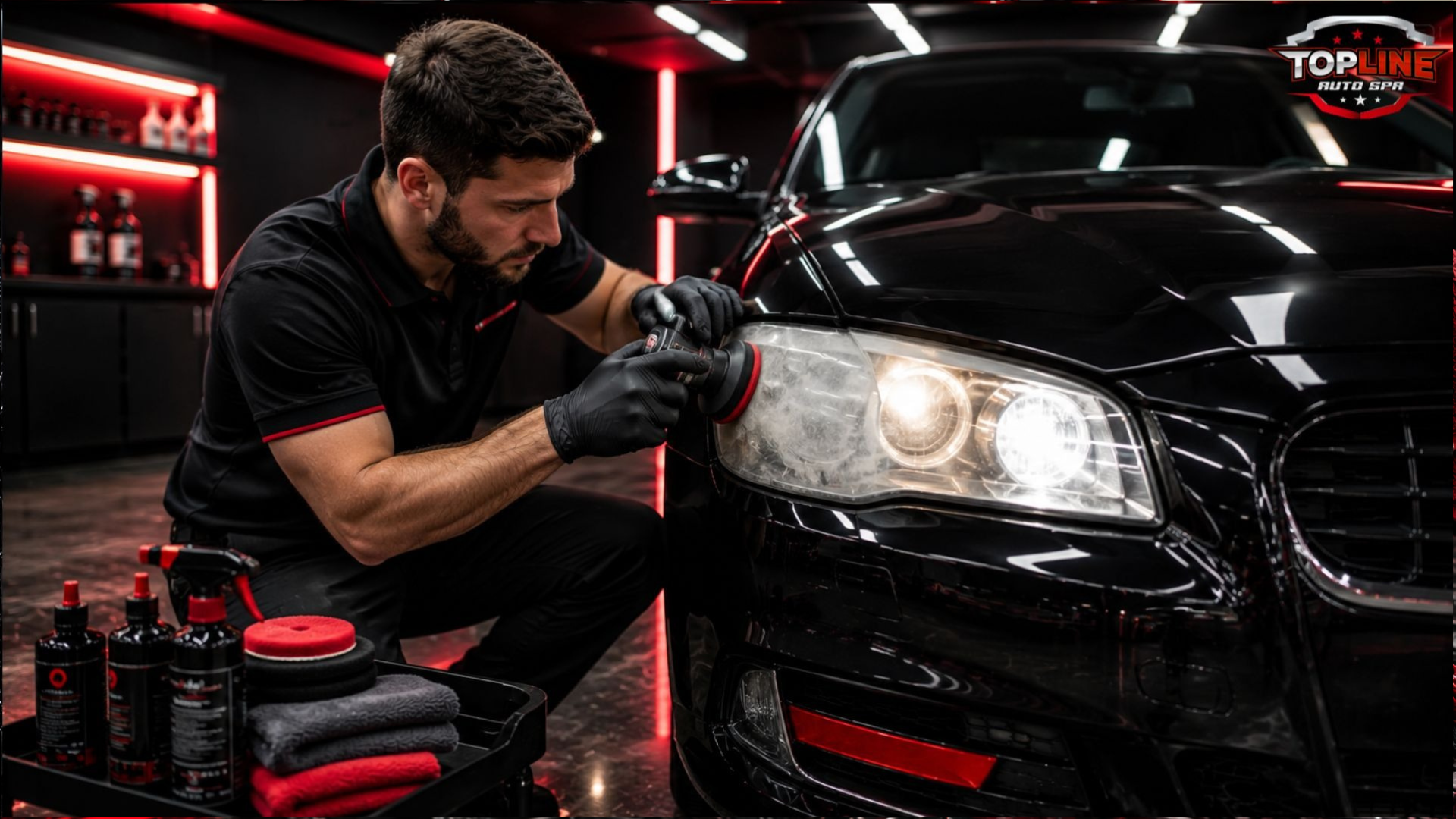
Professional technicians use specialized polishing equipment and protective coatings designed to restore clarity while helping protect the lens against future UV damage.
In many cases, a professional auto detailing service can also assess other exterior components to ensure the vehicle maintains a clean, well-maintained appearance beyond just the headlights.
DIY Restoration vs. Professional Headlight Restoration
Many car owners try toothpaste, baking soda, or inexpensive restoration kits after watching online tutorials. While these methods may provide temporary improvement, they rarely deliver long-lasting results because they often remove oxidation without restoring the protective UV coating.
DIY Restoration
DIY methods can be effective if:
- The oxidation is mild.
- The lenses have minimal scratches.
- You follow every restoration step carefully.
However, common DIY methods may leave swirl marks or uneven sanding patterns if done incorrectly.
Pros
- Lower upfront cost
- Convenient for minor haze
- Good for temporary improvement
Cons
- Results may only last a few months.
- Risk of damaging the lens.
- Often lacks long-term UV protection.
Professional Restoration
Professional restoration involves multiple polishing stages followed by the application of a durable UV protectant that helps prevent oxidation from returning quickly.
Professionals also inspect the entire exterior, ensuring the headlights match the vehicle’s restored appearance. If your paint has also started looking dull or uneven, it’s worth learning why your car paint looks patchy or cloudy in sunlight, since the same environmental factors that affect your headlights can also impact your vehicle’s finish.
How to Prevent Cloudy Headlights
Restoring headlights is only half the job. Proper maintenance can keep them clear for years and reduce the need for frequent restoration.
Wash Your Vehicle Regularly
Road grime, insects, bird droppings, and chemical contaminants gradually damage the headlight surface. Washing your vehicle regularly removes these contaminants before they begin breaking down the protective coating.
Park in Covered Areas
Whenever possible, park inside a garage or under shade to minimize constant UV exposure.
Vehicles parked outdoors all year typically experience oxidation much faster.
Apply UV Protection
After restoration, applying a quality UV sealant helps slow down future oxidation.
Professional-grade coatings generally last much longer than consumer products.
Keep the Entire Exterior Protected
Your headlights aren’t the only parts exposed to harsh environmental conditions. Maintaining the rest of your vehicle with services like paint correction can help preserve a consistent, glossy appearance while removing oxidation and surface imperfections from painted panels.
Common Mistakes That Make Cloudy Headlights Worse
Many vehicle owners unintentionally shorten the life of their headlights by following poor maintenance practices.
Using Household Cleaners
Glass cleaners, bleach-based products, and harsh chemicals can strip protective coatings and damage plastic lenses.
Always use automotive-safe cleaning products.
Skipping UV Protection
One of the biggest mistakes after polishing headlights is failing to apply a UV protectant.
Without protection, oxidation usually returns much faster.
Waiting Too Long
Minor haze is much easier to restore than severe oxidation.
Delaying restoration can eventually lead to permanent damage that requires replacing the entire headlight assembly.
Using Abrasive Materials
Steel wool, coarse sandpaper, and rough scrubbing pads can permanently scratch the plastic surface.
Always use products specifically designed for automotive headlights.
When Should You Replace Instead of Restore?
Not every cloudy headlight can be saved.
Replacement may be the better option if:
- The plastic has deep internal cracks.
- Moisture is trapped inside the housing.
- The lens has severe structural damage.
- Previous restoration attempts have removed excessive material.
- The headlight continues to fog internally.
A professional inspection can determine whether restoration is still possible or replacement is the safer and more cost-effective choice.
Many repair shops also offer headlight restoration as one of their exterior add-on services, allowing you to improve visibility without replacing the entire assembly when the damage is only surface-level.
Why Professional Maintenance Is Worth the Investment
Cloudy headlights affect more than appearance—they directly impact driving safety. Reduced light output makes it harder to identify road hazards, pedestrians, and traffic signs during nighttime or poor weather conditions.
Professional restoration not only improves visibility but also enhances your vehicle’s overall appearance and resale value. Combined with regular washing, UV protection, and routine exterior maintenance, restored headlights can remain clear for years.
Rather than waiting until oxidation becomes severe, addressing the issue early helps avoid more expensive repairs or complete headlight replacement.
Conclusion
Cloudy headlights are one of the most common signs of exterior wear, but they’re also one of the easiest problems to address when caught early. UV rays, oxidation, environmental contaminants, and everyday driving conditions gradually wear away the protective coating on your headlight lenses, reducing visibility and diminishing your vehicle’s appearance.
Whether you choose a DIY restoration kit for minor oxidation or professional restoration for more severe damage, taking action early can significantly extend the life of your headlights. Pairing regular maintenance with protective treatments helps prevent oxidation from returning quickly while keeping your vehicle looking its best.
If you’ve noticed your headlights becoming dull, yellow, or hazy, don’t wait until nighttime visibility becomes a safety concern. Restoring clarity today can improve both your driving confidence and your vehicle’s overall appearance for years to come.
FAQs
1. What causes headlights to become cloudy?
Cloudy headlights are primarily caused by UV exposure, oxidation, road debris, pollution, and harsh weather conditions. Over time, these factors wear away the factory protective coating, causing the plastic lens to become hazy or yellow.
2. Can cloudy headlights be permanently restored?
In many cases, yes. Mild to moderate oxidation can often be restored through proper polishing and the application of a UV protectant. Severely damaged or cracked headlights may require replacement.
3. How long does professional headlight restoration last?
Professional restoration typically lasts between one and several years, depending on driving conditions, UV exposure, maintenance, and whether a high-quality protective coating is applied after restoration.