
Is Ceramic Coating Worth It? A Realistic Guide for Daily Drivers
When purchasing a new car or attempting to preserve a current vehicle, automotive paint protection becomes a top priority. Everyday driving exposes a vehicle to countless environmental hazards—from harsh winter road salt in Pennsylvania to industrial fallout and bird droppings. Traditional waxing requires application every few months and offers minimal resistance against environmental bonds, which is why an increasing number of vehicle owners shift toward long-term chemical barriers. However, local driving conditions demand special care; understanding how a hard layer reacts during prolonged exposure to precipitation and humidity is essential for drivers in varying climates. For instance, handling a ceramic coating in rainy weather requires proactive washing habits to prevent acidic rain deposits and hard industrial minerals from drying out on the warm clear coat.
Before spending hard-earned money at a professional detailing shop, the critical question remains: is ceramic coating worth it for a regular vehicle that faces commuter traffic every single day? By analyzing the true protective properties, everyday value metrics, and long-term care demands, vehicle owners can make an informed choice that matches their driving lifestyle and budget.
Key Takeaways
- Sacrificial Clear Coat Layer: A liquid quartz finish acts as a semi-permanent, high-gloss chemical barrier that bonds directly with factory clear coat layers to block out harsh contamination.
- Myth vs. Reality on Damage: While the treatment creates exceptional chemical and environmental resistance, it does not act as armor against high-impact stone chips or deep structural surface scratches.
- Significant Time Savings: The hyper-hydrophobic surface tension forces liquids and dirt to slide off, turning highly tedious, hours-long vehicle wash sessions into effortless maintenance rinses.
- Direct Return on Investment: Maximizing factory paint depth and minimizing clear coat oxidation directly preserves a car’s physical aesthetic, bolstering its future vehicle trade-in and resale value.
- Strict Maintenance Routine: Long-term durability depends completely on proper wash habits; failing to perform regular decontamination cleanings will neutralize the hydrophobic performance over time.
What Exactly is a Nano Ceramic Coating?
To properly assess if the investment is justified, it helps to understand what the material is on a structural level. Unlike standard waxes or polymer paste sealants that simply sit on top of the factory paintwork as a temporary film, a professional-grade nano ceramic coating consists of silicon dioxide or titanium dioxide suspended in a liquid chemical carrier.
Upon manual application to the vehicle’s exterior, this liquid formula undergoes a cross-linking chemical reaction with the factory clear coat layer. As it cures, it transforms into a highly durable, rigid, semi-permanent microscopic crystal lattice. This ultra-smooth top layer serves as a transparent sacrificial shield, filling in the microscopic pores of your paintwork so that contaminants can no longer anchor down into the clear coat.
Analyzing the Critical Ceramic Coating Pros and Cons
Evaluating the long-term value of a vehicle upgrade requires balancing its protective capabilities against its inherent limitations. To answer if it is truly worth the money, an owner must view the realistic capabilities side-by-side.
The Advantages
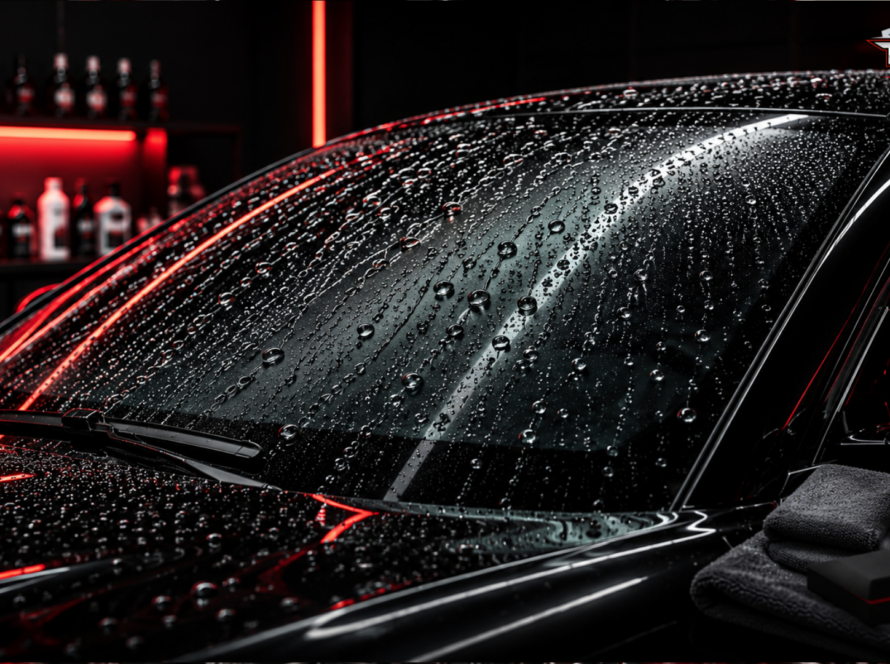
- Advanced Hydrophobic Performance: The intense surface tension makes water bead up instantly and slide off cleanly, carrying road grime away with it.
- Chemical Decontamination Resistance: It chemically shields your paintwork from acidic damage caused by bird droppings, bug splatter, tree sap, and caustic industrial fallout.
- UV Ray Absorption: It reflects ultraviolet rays, preventing clear coat failure, oxidation, and the paint color fading caused by consistent sun exposure.
- Enhanced Visual Depth: The crystalline structure bounces light perfectly, producing a rich, permanent wet-look gloss that far outshines conventional waxes.
The Disadvantages
- No Rock Chip Protection: It lacks the physical thickness and elastomeric shock absorption required to stop high-velocity stone impacts on the highway.
- Susceptibility to Water Spots: Because water beads up into perfect spheres, if those beads evaporate completely under direct sunlight, they can leave mineral rings behind on the surface.
- Requires Precise Installation: Professional prep work demands hours of rigorous paint correction to ensure the surface is entirely free of swirl marks before locking it in under the hard layer.
Understanding the True Ceramic Coating Cost Breakdown
The total expenditure required to protect a vehicle varies considerably based on the vehicle’s initial condition, its physical size, and the tier of product chosen. Generally, professional installations range anywhere from $900 to upwards of $2,500. It is crucial to realize that a significant portion of the total ceramic coating cost is not actually the liquid formula itself, but the intensive labor involved in the preparation phase.
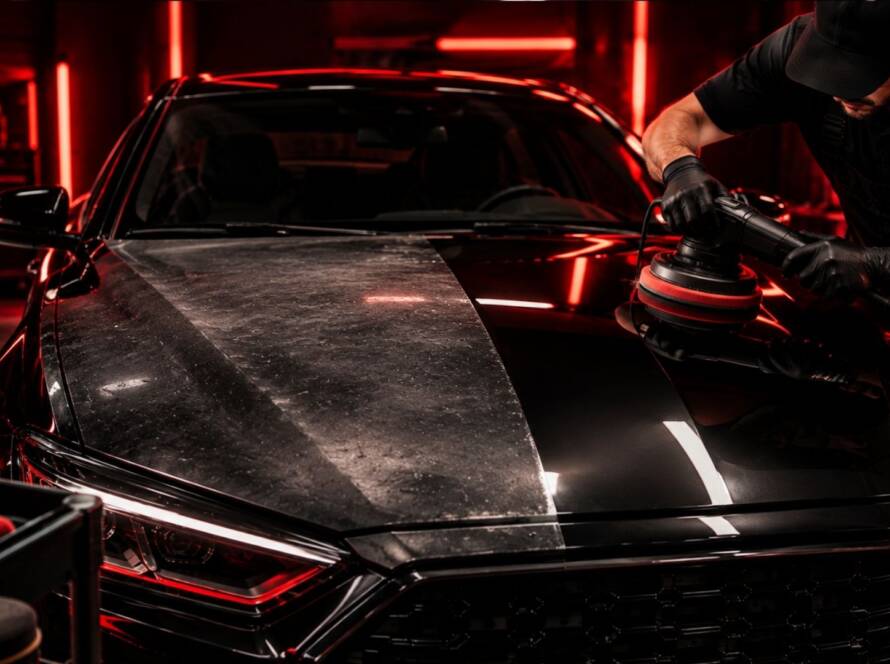
Before applying a premium protectant, a detailing specialist must conduct a full mechanical and chemical paint decontamination wash, followed by precision clear coat refinement. This leveling process uses machine buffers and compound polishes to eliminate fine swirl marks, light scratches, and oxidation. If an installer skips this step, the coating will bond to contaminated paint, permanently locking those visual defects underneath the clean crystal shell. If the paint has existing structural imperfections or deep chemical etching that a simple wash cannot clear, a detailed paint correction service must be performed to correctly level out the surface before reapplying protection.
The Reality of Ongoing Ceramic Coating Maintenance
A very common misconception among car buyers is that a coated vehicle never has to be washed again. In reality, consistent ceramic coating maintenance is absolutely mandatory to prevent environmental road elements from clogging the microscopic ridges of the finish. Over months of regular commuting, traffic film, fine dust, and exhaust oils will accumulate on top of the coated layer. This buildup blocks the hydrophobic features, causing the paint to look dull and making water pool instead of bead.
To keep the finish operating at peak performance for its entire lifespan, you should wash the car every two weeks using a pH-neutral, wax-free automotive shampoo via the two-bucket method. Standard automatic car washes that utilize mechanical rotating brushes or heavy cloth curtains should be strictly avoided, as the stiff bristles drag abrasive grit across the finish, creating fine micro-scratches. Instead, opt for careful hand washing or use a dedicated touchless laser wash to rinse away surface film safely.
Does it Shield Paint Against Swirl Marks and Fine Scratches?
Another critical distinction car owners must make centers around scratch resistance. Many retail kits advertise an extreme 9H hardness rating, leading daily drivers to believe their car paint is now completely scratch-proof. This is simply not the case.
While the crystal structure provides excellent resistance against fine micro-marring caused by light contact or windy dust conditions, it can still be scratched by improper washing techniques or coarse clothing. The advantage is that those minor imperfections occur within the sacrificial protectant layer rather than slicing deeply into your vehicle’s irreplaceable factory clear coat.
Ceramic Coating vs. Traditional Wax: A Long-Term Comparison
For decades, high-quality carnauba wax was the standard benchmark for keeping a vehicle shiny. However, looking at the time and financial commitment over a multi-year ownership timeline reveals a staggering difference in efficiency. Traditional carnauba wax delivers a lifespan duration of two to three months maximum, whereas a professional ceramic coating offers two to five plus years depending on the tier.
While wax takes only an hour or two to apply initially, it must be completely stripped and replaced multiple times a year. In contrast, a professional coating application requires a multi-day commitment up front to handle extensive clear coat leveling, but demands dramatically lower ongoing maintenance since dirt struggles to adhere to its glass-like composition. Furthermore, traditional waxes dissolve quickly when exposed to environmental acids or high-pH soaps, while a nano crystalline shield continuously withstands strong automotive cleaning chemicals without degrading.
Conclusion
When evaluating if a premium protective installation makes sense for a vehicle driven every single day, the answer ultimately depends on how much value you place on time savings, structural paint preservation, and long-term resale retention. If an owner views the service as a magical, maintenance-free armor that stops highway rock chips, they will likely be disappointed by the real-world physical limitations of the material. Because the protective layer cures to a microscopic thickness measured in nanometers, it lacks the physical mass and cushioning elasticity needed to absorb the mechanical energy of flying stones or gravel. If a driver wants absolute protection against highway road debris and physical parking lot scratches, they should look into installing a thick thermoplastic paint protection film on high-impact zones.
However, for the daily commuter who wants to completely eliminate the need for constant seasonal waxing, drastically cut down routine cleaning efforts, and maintain an absolute showroom gloss that withstands punishing environmental damage, investing in a high-grade chemical treatment is a symbol of smart car ownership. By pairing professional prep work with a consistent care routine, you effectively freeze the pristine condition of your car’s exterior, ensuring it commands premium value down the road when it comes time to trade up or sell.
Frequently Asked Questions
1. Can a professional ceramic coating prevent rock chips on the highway?
No, it cannot stop physical impact damage from flying stones or gravel. Because the protective layer cures to a microscopic thickness measured in nanometers, it lacks the physical mass and cushioning elasticity needed to absorb the mechanical energy of a rock hitting the bumper at high speeds. If a driver wants absolute protection against stone chips, highway road debris, and physical parking lot scratches, they should look into installing an 8-mil thick thermoplastic polyurethane paint protection film on high-impact zones.
2. Is it safe to run a coated vehicle through an automatic car wash?
You should strictly avoid standard automatic car washes that utilize mechanical rotating brushes or heavy cloth curtains. The stiff bristles and spinning fabrics in those automated tunnels carry coarse grit, dirt, and metallic brake dust left behind by the hundreds of dirty trucks and SUVs that went through previously. Dragging those abrasive contaminants across a coated surface under high pressure will create severe swirl marks and micro-marring, quickly wearing down the gloss. Instead, opt for careful hand washing or use a dedicated touchless laser wash to rinse away surface film safely.
3. What should I do if my coating stops beading water effectively?
If the surface loses its hydrophobic performance and water begins pooling on the flat panels, it usually does not mean the product has completely failed or worn off. In most scenarios, the surface has simply become clogged by an accumulation of environmental contaminants like embedded metallic iron filings, hard water spots, industrial soot, or street oil film. To restore the high-gloss hydrophobic behavior, the vehicle needs a dedicated decontamination maintenance wash.
If the paint has structural imperfections or deep chemical etching that a wash cannot clear, a detailed paint correction service must be performed to correctly level out the surface before reapplying protection.