
Your car’s paint isn’t just about looks – it’s the first line of defense against rust, UV damage, and the elements. So when you notice paint peeling, flaking, or lifting off in layers, it’s time to take it seriously.
Paint peeling happens for specific reasons, and the good news is that most of them are preventable. Whether you’re dealing with cosmetic damage or deep structural problems, understanding what causes peeling and how to stop it will save you money and headaches down the road.
This guide walks you through the warning signs, what’s actually happening under the surface, and exactly how to fix it.
Key Takeaways
- Paint peeling usually starts with moisture trapped under the paint, clear coat failure, or UV damage, breaking down the protective layers
- Clear coat failure is the most common culprit in modern vehicles – it’s designed to protect the paint below, and when it fails, peeling accelerates
- Prevention is far cheaper than repair: regular washing, sun protection, and professional coatings make a huge difference
- Minor surface peeling can sometimes be addressed with paint correction, but severe peeling often requires professional repainting
- Modern solutions like ceramic coating and paint protection film offer long-term defense against future peeling
- Acting fast matters – once peeling starts, it spreads quickly as more moisture gets underneath
What Paint Peeling Actually Looks Like
Before jumping into causes, let’s be clear about what we’re talking about. Paint peeling comes in a few forms:
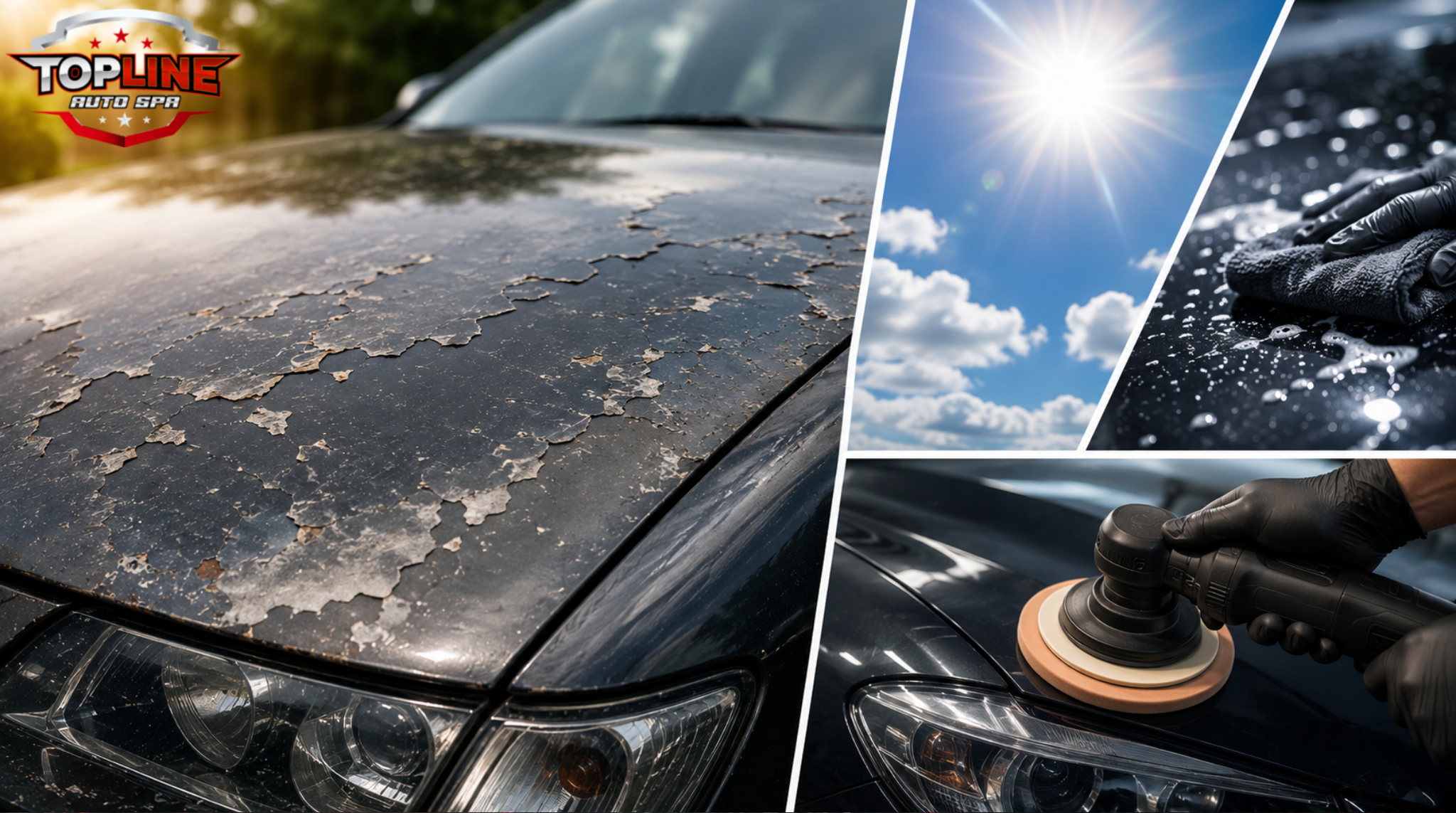
Surface peeling. This starts as small bubbles or blisters under the clear coat. The paint might lift slightly, but stay attached. You can often see it catching light or feel it with your hand.
Flaking paint. Chunks of paint start coming off in layers, usually starting at edges, corners, or around trim. This is more advanced and indicates the bond between layers has failed.
Crazing or fine cracks. You’ll see a spiderweb pattern of tiny cracks across the paint surface. This typically precedes actual peeling and means the clear coat is breaking down.
Ghosting. The paint appears dull or discolored in patches. It looks like dirt at first, but it’s actually the beginning stages of clear coat degradation.
All of these are warning signs that your paint’s protective barrier is compromised.
Why Paint Peels: The Root Causes
Clear Coat Failure
Modern cars have two paint layers: the color coat and a clear top coat. The clear coat does the heavy lifting – it protects the color beneath from UV rays, oxidation, and environmental contaminants.
When the clear coat degrades, moisture sneaks in. That moisture then pushes the clear coat away from the color coat beneath, and peeling begins. This is especially common on older vehicles or cars exposed to harsh sun without protection.
Moisture and Humidity
Water is paint’s enemy. If moisture gets trapped between paint layers – whether from humidity, washing, or rain – it causes the paint to separate from the base. The moisture acts as a barrier that prevents proper adhesion.
This is why cars in humid climates or those stored in damp garages often develop peeling faster.
UV Damage
The sun doesn’t just fade paint – prolonged UV exposure breaks down the chemical bonds in the clear coat. Over time, the protective layer becomes brittle and starts separating. Darker colors absorb more heat, which accelerates the process.
Poor Paint Quality or Application
Not all paint jobs are created equal. If the surface wasn’t properly prepped or if cheap paint was used, adhesion problems start early. Factory paint from decades ago also holds up differently than modern formulations.
Environmental Contaminants
Road salt, industrial fallout, bird droppings, and tree sap are acidic and corrosive. When left on paint, they eat through the clear coat and cause the layers to separate.
Age and Weather Exposure
Paint simply wears out. A car that’s 10+ years old is far more likely to peel than a newer vehicle, especially if it’s been parked outside year-round.
How to Fix Paint Peeling
For Minor Surface Peeling
If you’ve caught it early – just small bubbles or light flaking – here’s what works:
Step 1: Clean thoroughly. Wash the affected area with soap and water. Let it dry completely.
Step 2: Gently remove loose paint. Use a soft brush or plastic scraper to remove any paint that’s already lifting. Don’t be aggressive – you only want to remove what’s already coming off.
Step 3: Sand the edges. Light sanding around the peeling area helps feather the transition between damaged and healthy paint.
Step 4: Assess the damage. If it’s just a small spot, paint correction might restore the appearance. If the peeling has exposed the base color, you’re looking at a small touch-up job.
For cars where the clear coat is failing but the paint is still relatively intact, professional paint correction can remove the damaged clear coat layer and restore clarity. This works best before peeling becomes severe.
For Moderate to Severe Peeling
Once peeling has spread or exposed the base coat, you need more aggressive action:
Professional repainting is the right move. A quality paint job involves:
- Removing all loose paint
- Sanding down to bare metal or primer
- Repainting with proper primer, color, and clear coat
- Buffing and polishing for a seamless finish
This is an investment, but it addresses the problem completely and prevents rust from taking hold.
Prevention and Long-Term Protection
Here’s the real opportunity: stop peeling before it starts.
Regular washing and maintenance. Wash your car every two weeks with proper soap. This removes contaminants that eat through paint. Dry it thoroughly to prevent water spots.
Wax or sealant. A good coat of wax creates a barrier against UV rays and moisture. Reapply every 3 months for best protection.
Park in shade when possible. Direct sunlight accelerates clear coat breakdown. A garage or covered parking makes a measurable difference over time.
Professional protection coatings. If you’re serious about preventing peeling:
A ceramic coating creates a durable, hydrophobic layer that shields paint from UV damage, oxidation, and contaminants. It lasts much longer than wax (1-3 years typically) and provides excellent protection against the conditions that cause peeling.
Paint protection film is an ultra-clear layer applied to vulnerable areas – hood, fenders, bumper, mirrors. It physically shields the paint and can prevent peeling on high-impact zones.
For cars already showing signs of wear, paint correction removes oxidized clear coat and restores a protective surface before peeling progresses further.
The combination of ceramic coating or paint protection film plus regular maintenance is the gold standard for preventing future peeling.
Why Peeling Spreads So Fast
Here’s something important to understand: peeling accelerates. Once the protective layers separate, water gets in more easily, and the peeling zone expands. What starts as a small bubble can become a widespread problem in months if left untreated.
This is why acting fast matters. Don’t wait and hope it gets better on its own – it won’t.
If you’re experiencing peeling or other paint damage, detailed guidance on protection options is available in our guide on Best Ways to Protect Your Car Paint from Chips and Scratches, which covers preventive strategies that work even after minor damage has occurred.
Conclusion
Paint peeling is fixable, but prevention is always the better strategy. Whether you’re dealing with an older vehicle or wanting to protect a newer one, you have clear options:
- For active peeling, professional repair or repainting stops the damage
- For vulnerable paint, ceramic coating or paint protection film prevents future issues
- Regular maintenance keeps your paint’s protective barrier intact
The key is catching problems early and investing in protection. Your car’s paint job will last years longer – and your car will look better doing it.
Frequently Asked Questions
Can I just paint over peeling paint myself?
Painting over active peeling without removing the loose paint underneath won’t work. The new paint has nothing solid to bond to and will peel again. You have to remove all compromised paint first, which usually requires professional-grade preparation and equipment.
How much does it cost to fix peeling paint?
Small spot repairs start around $200-500. Full-panel repainting runs $800-2,000+, depending on the extent of damage and your vehicle. Prevention through ceramic coating ($500-2,000 depending on coverage) is typically far cheaper than repainting.
Will ceramic coating prevent paint peeling on my older car?
Ceramic coating protects against future peeling by blocking UV rays and moisture, but it can’t fix peeling that’s already happening. If your car has active peeling, you’ll need to repair that first, then apply ceramic coating to protect the new paint.