

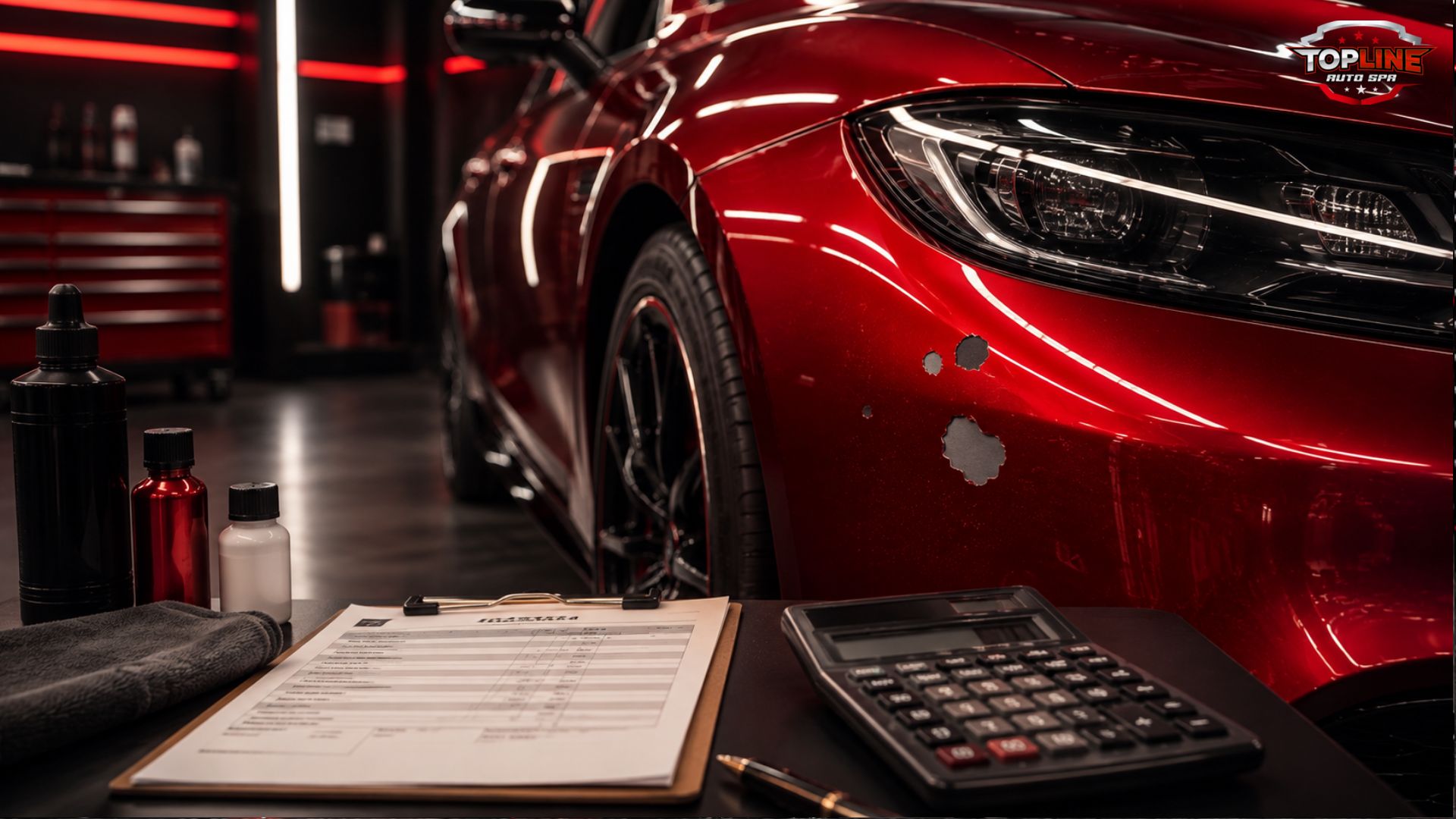
Paint chips on your vehicle are inevitable. Whether from flying debris on the highway, parking lot accidents, or environmental exposure, paint chips happen to every car owner eventually. But when you notice those white, exposed primer spots or metal showing through your paint, the question becomes: how much will it cost to fix this damage? Understanding paint chip repair costs helps you make informed decisions about whether to repair immediately, wait until you have multiple chips to repair, or pursue prevention strategies to avoid future damage.
Paint chip repair costs vary dramatically based on the chip’s location, size, depth, and the repair method chosen. A tiny chip on a less-visible area might cost $50-$150 to repair through a professional touch-up service. A larger chip affecting a prominent area might cost $300-$1,000 or more if professional paint correction and repainting are required. For multiple chips or extensive damage, costs can escalate significantly.
Many car owners are surprised by paint chip repair costs and wonder whether professional repair is actually justified. Understanding the true cost of paint chip repair—and comparing it to the cost of paint damage that worsens over time—helps you appreciate why addressing chips promptly is important. An ignored paint chip exposes bare metal to oxidation, rust, and corrosion. What starts as a cosmetic issue can become a structural problem requiring expensive restoration.
For Lehigh Valley residents, paint chip repair costs take on additional importance. Our region’s road salt exposure accelerates rust and corrosion developing in unrepaired paint chips. The cost of chip repair in our climate is essentially the cost of preventing rust and corrosion that would otherwise compromise your vehicle’s longevity and value.
This comprehensive guide explores everything you need to know about paint chip repair costs, from understanding what determines the price to exploring different repair options at various price points. Whether you’re dealing with a single chip or multiple areas of damage, understanding paint chip repair costs helps you make the most economical and effective repair decisions.
Key Takeaways
- Paint chip repair costs range from $50 for small DIY touch-ups to $1,000+ for professional paint correction on large visible chips
- Professional touch-up service for small chips typically costs $50-$150 and provides quick, affordable repair
- Professional paint correction for larger visible chips costs $300-$1,000 depending on chip size and location
- Complete panel repainting becomes necessary for extensive damage, costing $500-$2,000+ per panel
- DIY paint chip repair kits cost $20-$50 but require careful application for acceptable results
- Paint chip repair costs vary by vehicle make, model, and paint color complexity
- Ignoring paint chips leads to rust and corrosion, creating far more expensive repairs
- Lehigh Valley’s road salt accelerates rust in unrepaired chips, making prompt repair important
- Prevention through paint protection film eliminates paint chip repair costs by protecting vulnerable areas
- Professional paint chip repair is more cost-effective than addressing rust and corrosion damage later
Understanding Paint Chip Damage: Why Repair Matters
Before discussing paint chip repair costs, understanding what paint chips are and why they matter helps you appreciate why repair is important rather than optional cosmetic work.
Paint chips occur when your vehicle’s paint is damaged, exposing the layers beneath. Your vehicle’s paint system consists of several layers: primer, basecoat (color), and clear coat (protection). A paint chip exposes one or more of these layers, but typically shows the white or light-colored primer beneath, or even bare metal if the chip is deep.
Paint chips form from multiple sources. Flying debris on highways—rocks, gravel, metal shards—strike your paint with enough force to break through clear coat and basecoat, exposing primer or metal. Parking lot accidents create chips from contact with other vehicles. Door dings and hail damage create larger chips. Minor scrapes from bushes or objects create smaller chips. Over years of vehicle ownership, most cars accumulate multiple paint chips.
The significance of paint chips extends beyond aesthetics. An exposed paint chip is an open wound on your vehicle’s exterior. The exposed metal primer or bare metal begins oxidizing immediately upon exposure to oxygen. This oxidation is the beginning of rust development. In Lehigh Valley’s climate with road salt and moisture, rust develops particularly quickly in unrepaired chips.
As rust develops beneath and around the paint chip, it expands. The expanding rust pushes paint away from metal, enlarging the damage. What started as a small cosmetic chip becomes a larger area of peeling paint and rust. This progression can happen over months or years depending on chip location and environmental exposure.
Left long enough, rust penetrating through paint can compromise underlying metal integrity. On critical structural areas, rust can actually affect vehicle safety and function. Even on non-structural areas, extensive rust affects resale value and cosmetic appearance.
This progression from minor paint chip to significant rust damage illustrates why prompt paint chip repair matters. Early repair prevents the cascade of damage that develops without treatment.
Paint Chip Repair Cost Factors: What Determines Your Repair Price
Paint chip repair costs vary dramatically based on several factors specific to your chip and vehicle.
Chip size is the primary cost determinant. Tiny chips smaller than a pinhead might be ignored because repair costs exceed the cosmetic benefit. Small chips (less than 1/4 inch) typically cost $50-$150 to repair professionally. Medium chips (1/4 to 1/2 inch) cost $150-$300. Larger chips (more than 1/2 inch) cost $300-$1,000 or more depending on other factors.
Chip location significantly affects cost. Chips on the hood, fenders, or doors—visible areas—require more careful repair and professional touch-up, costing more than chips on less-visible areas like roof edges or undercarriage areas. Prominent location chips often require professional paint correction to ensure color matching and seamless integration with surrounding paint.
Paint color complexity affects repair costs. Solid colors like white, black, or red are relatively straightforward to match and repair. Metallic or pearlescent colors requiring multiple layers are more complex and expensive to repair. Custom or specialty colors might require more time to match accurately, significantly increasing labor costs.
Chip depth determines repair method and cost. Chips exposing only clear coat might be addressed through clear coat repair alone, costing less than chips exposing basecoat or primer. Deep chips exposing primer or metal require more extensive repair including primer application and multiple paint layers, driving up costs substantially.
Vehicle make and model affects repair costs. Luxury vehicles with premium finishes or specialty colors cost more to repair than standard vehicles. Some manufacturers’ finishes require specialized products or techniques, increasing repair costs significantly. High-end vehicles might double or triple repair costs compared to economy models.
Whether the chip is isolated or part of broader damage affects pricing. A single chip receives one repair estimate. Multiple chips might receive a different rate if grouped in one repair session. Extensive damage affecting large areas transitions from “chip repair” to “paint correction” or “panel repainting” with significantly different costs.
Professional versus DIY approach dramatically affects costs. Professional repair costs $50-$1,000+ depending on factors above. DIY repair costs $20-$50 in materials but requires your time and carries risk of unsatisfactory results.
Professional Paint Chip Repair: Understanding Your Options
Professional paint chip repair offers solutions at various price points, from affordable touch-up services to comprehensive paint correction and restoration.
Professional touch-up service is the most economical professional repair option. Professional technicians use factory-matched paint and specialized applicators to carefully fill and blend small chips. This service typically costs $50-$150 per chip and takes 30 minutes to an hour. Touch-up service works well for small chips in less-visible locations where cosmetic perfection isn’t critical.
Professional paint correction addresses medium-sized chips in visible locations with greater precision. Paint correction involves sanding, applying primer if necessary, applying base coat and clear coat in layers, and blending the repair area with surrounding paint. This more intensive service costs $300-$800 depending on chip size and complexity. Paint correction produces more seamless results than simple touch-up, particularly for visible chips that you see regularly.
Complete panel repainting becomes necessary for extensive chip damage or when multiple chips make spot repair impractical. Panel repainting costs $500-$2,000+ per panel depending on vehicle size and paint quality. While expensive, panel repainting completely eliminates chip damage in affected areas, providing consistent color and finish across the entire panel.
Professional repair versus DIY cost comparison shows professional service’s value. A professional touch-up costing $100 might repair a chip properly in one hour. A DIY attempt costing $30 in materials might take three hours and produce unsatisfactory results. The professional service’s higher cost is justified by quality results and time savings.
Professional paint chip repair is frequently the most cost-effective solution when you factor in quality, durability, and time investment. The repair lasts years without degradation, producing professional appearance that increases vehicle value and satisfaction.
DIY Paint Chip Repair: Budget Option with Realistic Expectations
DIY paint chip repair kits offer budget-friendly alternatives to professional repair, though results depend heavily on application skill and care.
DIY paint chip repair kits typically cost $20-$50 and include paint, applicators, and sometimes primer. Popular kits include Dr. ColorChip, Turtle Wax, and various manufacturer-specific touch-up kits. These kits provide factory-matched paint for many vehicles, making color matching straightforward for most owners.
The application process for DIY kits involves cleaning the chipped area thoroughly, applying primer if the chip exposes metal, applying paint in thin layers, and sanding/polishing after paint dries. Careful application produces acceptable results for small, simple chips. Rushed or careless application produces visible brushstrokes, color mismatch, or drips that draw more attention than the original chip.
Successful DIY repair requires patience and attention to detail. Multiple thin paint layers produce better results than attempting to fill the chip with thick paint application. Allowing proper drying time between layers is essential—rushing this process results in paint running or poor adhesion. Proper sanding and polishing after paint dries creates a finish that blends with surrounding paint.
The primary advantage of DIY repair is cost savings. $30 in materials beats $100+ professional repair. For someone with patience and reasonable application skill, DIY repair produces acceptable results on small chips in less-visible locations.
The primary disadvantage is inconsistent results and significant time investment. Unsuccessful DIY repairs look worse than the original chips. Drips, brush marks, and poor color matching draw more attention to the repair than small unprepared chips. Additionally, DIY repair might take 1-2 hours of your time, costing you in time investment even if materials are cheap.
Hybrid approach combining DIY and professional services provides balance. You might address numerous small chips through DIY touch-up kits while reserving professional paint correction for prominent chips requiring superior results.
Paint Chip Repair Costs by Severity: Different Scenarios and Pricing
Understanding paint chip repair costs for different damage scenarios helps you estimate repair expenses for your specific situation.
Single small chip in inconspicuous location: Professional touch-up costs $50-$100. DIY repair costs $25-$40 in materials. This damage typically doesn’t justify expensive professional repair unless you’re addressing multiple chips simultaneously in one service visit.
Single medium chip in moderately visible location: Professional paint correction costs $200-$400. DIY repair costs $30-$50 in materials but might produce less-than-ideal results that don’t match your quality standards. Professional repair is justified for appearance concerns and resale value protection.
Single large chip in highly visible location: Professional paint correction costs $500-$1,000. Complete panel repainting might be recommended, costing $800-$2,000. DIY repair is not recommended for prominent damage where quality expectations are higher.
Multiple small chips scattered across vehicle: Grouping repairs in one professional session might cost $200-$400 total for three or four chips. Addressing each individually would cost $50-$150 each, totaling $150-$450+ for three chips. Professional batch repair saves money compared to individual repairs scheduled separately.
Extensive chipping from hail damage or accident: Professional assessment determines whether spot repair or panel repainting is more economical. Costs range from $1,000-$5,000+ depending on damage extent and number of affected panels.
Paint chip repair with rust already developing: Professional repair costs more ($400-$800+) because rust treatment is necessary before repainting. Addressing chips before rust develops prevents these additional costs and complications.
Prevention: Eliminating Paint Chip Repair Costs Before They Occur
While paint chip repair costs range from affordable to expensive, the best approach is prevention that eliminates the need for repair altogether.
Paint protection film on high-risk areas prevents paint chips by creating a sacrificial barrier. Rock chips and debris damage the protective film instead of your paint. Paint protection film on hood, fenders, front bumper, and side mirrors—areas most exposed to flying debris—costs $500-$1,500 but completely eliminates paint chip damage in those areas.
The self-healing property of modern paint protection film is particularly valuable. Minor scratches in the film disappear when exposed to heat from sun or warm water. Your vehicle maintains pristine appearance while the film protects your paint beneath.
Over a vehicle’s ownership period, paint protection film eliminates numerous chips that would otherwise require individual repairs at $50-$150 each. Paint protection film paying for itself through prevented chip repairs makes strong economic sense.
Defensive driving that minimizes exposure to road debris reduces chip risk substantially. Maintaining distance from vehicles ahead (decreasing flying debris exposure), avoiding roads with loose gravel, and staying clear of construction zones reduces chip incidents significantly.
Garaged parking protects paint from environmental exposure that contributes to damage. While garage parking doesn’t directly prevent chips from flying debris, it reduces overall environmental stress on paint and weathering effects that make paint more vulnerable to damage.
Regular professional inspection that addresses chips immediately after they occur prevents rust development that dramatically increases repair costs. Professional detailing identifies new chips early, allowing prompt repair before rust develops and spreads.
The preventive approach of combining paint protection film on high-risk areas with prompt chip repair of damage that does occur provides optimal protection and cost management strategy for long-term paint preservation.
When to Repair Paint Chips: Decision Framework
Determining whether to repair a paint chip involves weighing repair costs against consequences of leaving it unrepaired.
Tiny chips (less than 1/16 inch) in inconspicuous locations probably don’t justify repair costs. Even professional touch-up costing $75 is expensive for barely visible damage. Monitor these chips—if they don’t show rust development within several months, consider ignoring them as the cosmetic impact is minimal.
Small chips (1/16 to 1/4 inch) in visible locations warrant professional touch-up costing $50-$150. Early repair prevents rust before it develops, avoiding more expensive repairs later. The investment is justified by rust prevention and appearance maintenance.
Medium chips (1/4 to 1/2 inch) in prominent locations justify professional paint correction at $200-$400. These visible chips affect appearance and require repair for aesthetic reasons and resale value protection.
Large chips (more than 1/2 inch) or multiple chips in visible areas justify professional assessment. Panel repainting might be more economical than multiple individual chip repairs, depending on total damage extent.
Chips showing rust development require prompt professional repair including rust treatment, costing $300-$800+. Delaying rust repair dramatically increases costs as rust spreads and compromises larger areas of paint and substrate.
Location matters significantly—chips on hood/fenders visible to observers justify earlier repair than chips on roof edges or undercarriage where visibility is minimal. Cosmetic priority and resale value considerations influence repair decisions.
Safety-critical location chips on windshield or areas affecting visibility might justify insurance claims rather than out-of-pocket repair through deductible.
Comprehensive Paint Chip Repair and Prevention Strategy
Paint chip repair fits into larger paint protection strategies combining multiple protective approaches for maximum effectiveness.
To better understand paint chip repair techniques and the best approaches for different chip scenarios, check out our detailed guide on Car Paint Chip Repair – Best Way to Fix Chips in Car Paint, which provides comprehensive information about professional and DIY repair methods for various damage situations.
Professional repair using professional paint correction addresses existing chip damage effectively. This correction restores your paint’s appearance before applying protective treatments that prevent future damage and extend the life of your repair work.
Paint protection film on high-risk areas prevents chips from occurring in the first place. For areas not covered by film, protective coatings provide defense against UV damage and environmental degradation. This combination repair-and-protect approach provides optimal paint protection and minimizes chip-related repair costs over time.
Ceramic coating provides long-lasting protection after chip repair, creating a hydrophobic surface that repels water and reduces contaminant bonding. The coating protects your repair work from future environmental damage and extends the longevity of the restoration.
Regular maintenance including professional detailing identifies new chips early, allowing prompt repair before rust develops. Professional detailing combined with ceramic coating creates a maintenance system that keeps paint in excellent condition and minimizes repair frequency and costs.
This comprehensive approach—repair existing damage, apply protective coating, add protective film where appropriate, maintain regularly through professional detailing—provides optimal paint protection and minimizes chip-related repair costs throughout your vehicle’s ownership period.
Cost Comparison: Professional Repair vs. Long-Term Damage Costs
Comparing immediate professional paint chip repair costs to long-term costs of ignoring damage clarifies the economic case for prompt repair.
Immediate professional touch-up repair: $75-$150 per chip
Versus
Long-term costs of ignoring the chip:
- Rust development within 6-12 months: Requires rust treatment and repair, costing $300-$600
- Rust spreading to adjacent paint: Expands damage, requiring professional paint correction or panel repainting, costing $500-$2,000
- Compromised underlying metal: In severe cases, structural damage costing thousands or even creating safety issues
The economic case is clear: early professional repair at $75-$150 prevents far more expensive damage costing hundreds or thousands later. This math is particularly compelling for Lehigh Valley residents where road salt accelerates rust development.
Lehigh Valley residents face this equation even more dramatically because road salt accelerates rust development. A $100 chip repair now prevents $500+ in rust damage six months later in our climate with salt spray exposure.
Lehigh Valley-Specific Paint Chip Repair Considerations
Lehigh Valley residents face specific circumstances affecting paint chip repair costs and urgency.
Road salt exposure in winter months accelerates rust development in paint chips dramatically. An unrepaired chip that might take months to rust in mild climates can rust within weeks in Lehigh Valley winter conditions. This climate reality makes prompt paint chip repair more urgent and economically important than in other regions.
Salt spray doesn’t just affect the chip—it can penetrate under surrounding paint, causing rust that extends beyond the original chip damage. Winter paint chip repair is particularly important in our region to prevent salt-related corrosion spreading.
Hard water spotting that commonly occurs in Lehigh Valley doesn’t directly affect paint chips but indicates water exposure that promotes rust development in unrepaired chips. This water exposure accelerates the timeline for rust development significantly.
Temperature swings from summer heat to winter cold stress paint and accelerate chip progression. Repeated freezing and thawing cycles can expand chips as water penetrating under paint expands upon freezing, enlarging damage.
For Lehigh Valley owners, the cost-benefit analysis of paint chip repair shifts toward earlier intervention. Addressing chips before winter, or immediately after damage occurs, prevents the salt and freeze-thaw damage that dramatically increases repair costs.
Conclusion: Understanding Paint Chip Repair Costs Drives Smart Maintenance Decisions
Paint chip repair costs range from $50 for small DIY touch-ups to $1,000+ for professional correction of large visible chips. Understanding what determines these costs helps you make economical repair decisions while avoiding the far more expensive damage that develops when chips are ignored.
The most important insight is that early repair is economical repair. Addressing chips through affordable touch-up service before rust develops prevents the cascade of damage that transforms minor cosmetic issues into expensive restoration projects. In Lehigh Valley’s challenging climate with road salt and temperature swings, this economic advantage is even more pronounced than in milder regions.
Whether you choose professional repair, DIY touch-up, or prevention through protective film, the key is taking action rather than ignoring paint chips. An ignored chip is an investment in future repair costs. A repaired chip is an investment in your vehicle’s appearance, longevity, and value.
Regular inspection that identifies new chips promptly, address chips through appropriate repair methods before rust develops, and consider prevention through paint protection film for high-risk areas. These principles combine to minimize paint chip repair costs while maintaining your vehicle’s appearance and protecting your investment.
For professional paint chip repair and protection strategies specific to your vehicle’s needs, professional professional detailing services can assess your paint condition and recommend appropriate repair and protection approaches. Professional guidance helps you make cost-effective decisions that address existing damage while preventing future chip-related repairs.
Frequently Asked Questions
1. How much does it typically cost to repair a single paint chip?
A small paint chip professional touch-up typically costs $50-$150. Repair cost varies based on chip size, location, and paint complexity. Tiny chips might cost $50, while larger or more visible chips cost $150+. DIY touch-up kits cost $20-$50 in materials.
2. Is it worth repairing small paint chips, or should I ignore them?
Yes, repairing small chips is worth the investment even if repair costs seem high. Small chips expose metal or primer that begins rusting within weeks or months. Rust development turns a $75 chip repair into a $300-$600 rust repair later. Early repair is economical investment in prevention.
3. How long does professional paint chip repair last?
Professional paint chip repair lasts indefinitely if properly applied and maintained. Repair durability depends on quality of initial repair and protection afterward. Adding ceramic coating to repaired areas provides additional protection extending durability significantly.
4. Can I use my car insurance to cover paint chip repair costs?
Most comprehensive auto insurance covers paint chip damage if caused by accidents. However, deductibles typically apply—you might pay $500-$1,000 out-of-pocket before insurance coverage applies. Minor paint chips usually cost less than deductible amounts, making DIY or direct professional repair more economical.
5. What’s the difference between DIY and professional paint chip repair?
DIY repair costs $20-$50 but requires your time and carries risk of unsatisfactory results. Professional repair costs $50-$800+ but guarantees superior results and proper color matching. Professional repair is worth the investment for visible chips affecting vehicle appearance.
6. Will my paint chip rust if left unrepaired?
Yes, paint chips expose metal or primer that begins oxidizing immediately. In Lehigh Valley’s climate with road salt, rust develops within weeks to months. Delaying repair dramatically increases damage severity and repair costs substantially.
7. How much does Lehigh Valley’s road salt affect paint chip repair urgency?
Road salt accelerates rust development significantly compared to milder climates. A chip that might take 6-12 months to rust in mild climates can rust within weeks in Lehigh Valley during winter. This climate reality makes prompt winter chip repair particularly important for regional vehicle owners.
8. Can paint protection film prevent paint chips entirely?
Yes, paint protection film on high-risk areas (hood, fenders, bumper, mirrors) prevents paint chips by creating a sacrificial barrier. The film costs $500-$1,500 but eliminates chip repairs in those areas, paying for itself through prevented damage over vehicle ownership.
9. What’s the cost comparison between chip repair and panel repainting?
Individual chip repairs cost $50-$1,000 each. Panel repainting costs $800-$2,000+ per panel. If extensive damage affects large areas, panel repainting becomes more economical than multiple individual chip repairs addressing the same area.
10. Does ceramic coating affect paint chip repair costs?
Ceramic coating applied after chip repair protects the repair from future damage. Adding ceramic coating to repaired areas costs $100-$300 additional but provides years of protection and durability for your repair work.