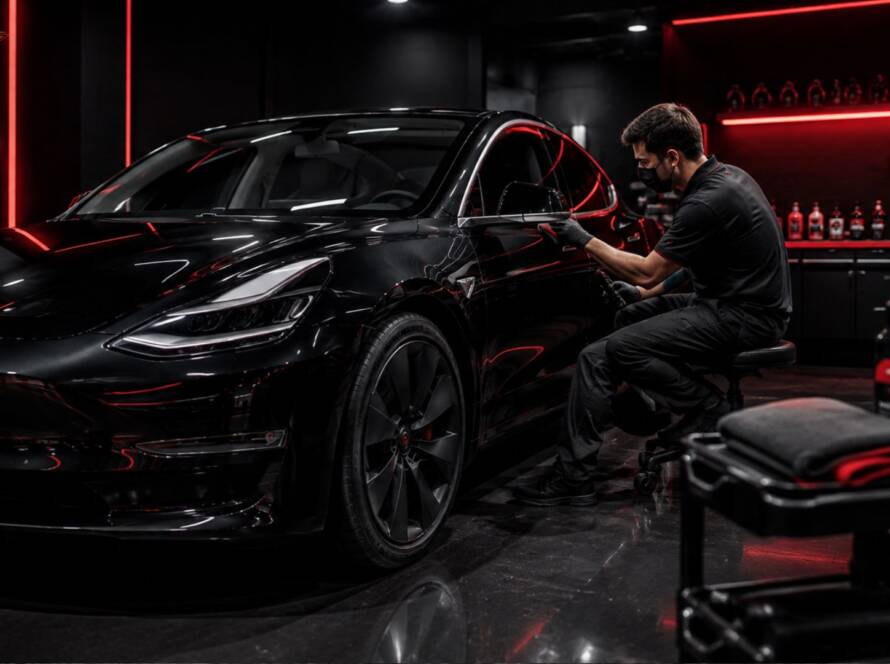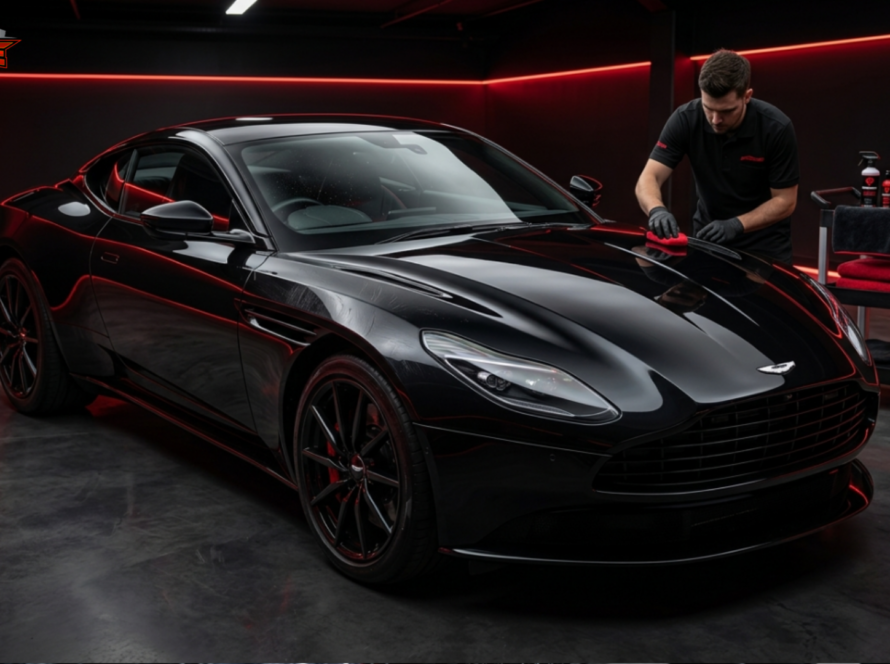

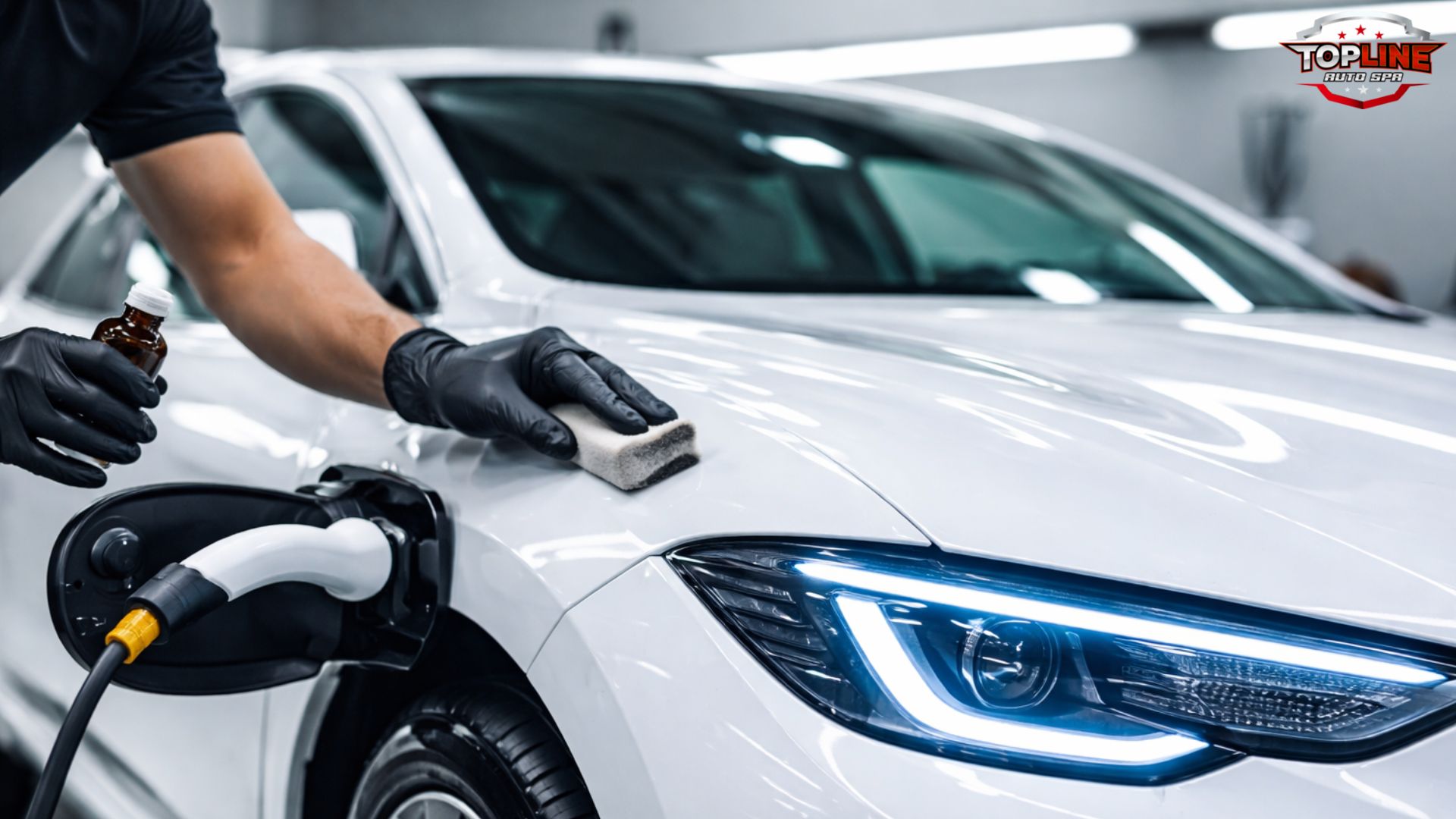
Electric vehicles are a permanent fixture on American roads. 2025 was reportedly the second-best year on record for EV sales in the U.S., with the EV market holding a 7.8% share of all new vehicle sales. That means millions of new EV owners are on the road right now, and that number keeps growing. But owning an EV is not just about saving on gas. It is also about keeping your car looking great for years to come.
Many EV owners are turning to ceramic coating electric vehicle protection as the top choice for long-term paint care. And it makes sense. These cars are expensive. The paint needs real protection.
But does ceramic coating actually work well on EVs? Are there any differences compared to a regular gas-powered car? This guide gives you straight answers so you can make the right call for your vehicle.
What Is Ceramic Coating and How Does It Work?
Ceramic coating is a liquid polymer that bonds to your car’s paint at a molecular level. Once it cures, it forms a hard, glass-like layer over the surface. This layer protects the paint from UV rays, dirt, water, bird droppings, and light scratches.
Unlike wax or sealant, ceramic coating does not wash away. It lasts for years when applied correctly by a trained detailer. The result is a surface that stays cleaner longer and looks deeper and more vibrant than bare paint alone.
Think of it like a shield. Your factory paint stays protected underneath while the coating takes the beating from daily driving.
Are Electric Vehicles Any Different When It Comes to Paint Protection?
In short, yes. EVs have a few unique traits that affect how paint protection works.
First, many EVs are heavier than gas-powered cars. More weight means more road debris gets kicked up onto lower panels and rocker areas. That increases the risk of rock chips and paint damage over time.
Second, EVs produce no engine heat under the hood. This changes how some coatings cure on front-facing panels. A professional detailer knows how to account for this during application.
Third, many EV manufacturers use softer paint formulas compared to traditional automakers. Softer paint scratches more easily. That makes EV paint protection even more important, not less.
Does Ceramic Coating Work Well on Tesla and Other EVs?
Yes, it absolutely does. Ceramic coating for Tesla models has become one of the most requested services at professional detail shops. Tesla paint, in particular, is known for being soft and easy to scratch. Owners often notice swirl marks just from regular washing.
A ceramic coating adds hardness to the surface and makes washing much easier. Water beads up and rolls off. Dirt does not stick as easily. The paint stays cleaner between washes.
The same benefits apply to Rivian, Polestar, Lucid, Chevy Equinox EV, and any other electric vehicle. The coating does not care what powers the car. It bonds to clear coat, and that is universal across all vehicles.
The Real Benefits of Ceramic Coating for EV Owners
Here is what EV owners can realistically expect from a professional ceramic coating:
- Long-term paint protection that lasts two to five years or more, depending on the grade
- Stronger resistance to UV fading, which matters especially in sunny climates
- Easier cleaning because contaminants slide off the slick surface
- Better resistance to light scratches, swirl marks, and water spots
- A deeper, glossier finish that shows off the EV’s color and lines
- Protection against bird droppings and tree sap, which can etch paint quickly
Keep in mind that ceramic coating is not scratch-proof. It adds hardness and resistance. But it will not stop a key or a rock chip. For that level of protection, you would want to pair it with paint protection film.
What Makes the Best Car Coating for EVs?
Not all coatings are the same. The best car coating for EVs comes down to a few key factors.
Hardness rating matters. Look for a professional-grade coating rated 9H or higher on the pencil hardness scale. This gives your paint the most durable protection available.
Warranty coverage is another big one. Professional coatings applied by trained detailers often come with a warranty. DIY kits do not offer this. If the coating fails or hazes over, you are on your own.
Application quality makes all the difference. Even the best coating product will underperform if it is applied on paint that has not been properly decontaminated and polished. This is where professional electric car detailing separates itself from DIY attempts.
The Professional Application Process: What to Expect
When you bring your EV in for a ceramic coating service, here is what a reputable shop actually does before touching a bottle of coating:
- Full hand wash and decontamination to remove bonded contaminants
- Iron fallout removal and clay bar treatment to smooth the surface
- Paint correction, including polishing to remove existing swirls and scratches
- Panel wipe-down with an isopropyl alcohol solution to strip all residues
- Coating application in a controlled environment, panel by panel
- Curing time, which can take 24 to 48 hours or longer depending on the product
Skipping any of these steps leads to poor bonding and uneven results. That is why a quality detail shop never rushes the process.
How Long Does Ceramic Coating Last on an EV?
Lifespan depends on three things: the coating grade, how the car is maintained, and the conditions it lives in.
A consumer-grade coating might last one to two years. A professional-grade coating with proper maintenance can last five years or more. Some top-tier products claim up to ten years, though real-world results vary.
To get the most out of your coating, wash your EV regularly using pH-neutral soap. Avoid automatic car washes with harsh brushes. Schedule annual inspections with your detailer to check coating condition and apply a booster if needed.
Is Ceramic Coating Worth It for an EV?
If you spent $40,000 to $100,000 or more on an electric vehicle, protecting that investment makes financial sense. Paint repairs are expensive. Repainting a panel on an EV can cost several hundred to several thousand dollars depending on the car.
Ceramic coating is a one-time investment that pays dividends in paint longevity, resale value, and daily ease of maintenance. Clean cars also hold their value better when it comes time to sell or trade in.
Many EV owners find that once they experience how easy the car is to clean after coating, they wish they had done it sooner.
What to Look for in a Professional Detailer for Your EV
Not every detail shop has experience working with EVs. When choosing a shop, ask these questions:
- Do you have experience detailing Tesla, Rivian, or other EV brands?
- Do you offer paint correction before coating application?
- What coating brand and grade do you use?
- Does the coating come with a warranty?
- Do you work in a climate-controlled environment?
A professional shop should be able to answer all of these confidently. At TopLine AutoSpa, our team specializes in EV detailing and offers a full range of ceramic coating services tailored to each vehicle’s specific paint needs.
Conclusion: Protect Your EV the Right Way
Electric vehicles are an investment. The paint on your EV deserves the same level of care as the technology under the hood. Ceramic coating delivers real, lasting protection that keeps your EV looking showroom-fresh for years.
From softer factory paint on Tesla models to the extra road debris exposure that comes with heavier EV platforms, these vehicles benefit greatly from professional paint protection. And when it is done right by an experienced detailer, the results speak for themselves.
Whether you drive a Tesla, Rivian, or any other electric vehicle, applying a ceramic coating electric vehicle protection layer is one of the smartest things you can do right after purchase.
Ready to protect your EV? Book your appointment with TopLine AutoSpa today. Our team of certified detailers will assess your paint, recommend the right coating grade, and deliver results you can see and feel. Do not wait until the paint shows damage. Protect it now.
Frequently Asked Questions
Does ceramic coating work on all electric vehicles?
Yes. Ceramic coating bonds to the clear coat on any vehicle, including all EV brands. Whether you drive a Tesla, Rivian, Lucid, or Chevy Bolt, the coating performs the same way. The only variable is the condition of your paint before application.
How much does ceramic coating cost for an EV?
Pricing depends on the size of your vehicle, the grade of coating used, and whether paint correction is needed first. Professional ceramic coating packages typically range from $500 to $2,000 or more. Contact TopLine AutoSpa for a custom quote based on your specific vehicle.
Can I apply ceramic coating myself on my EV?
DIY kits exist, but they rarely deliver professional results. Proper application requires paint correction, decontamination, and a controlled environment. Without these steps, the coating may bond unevenly or fail early. Professional application gives you the best durability and a warranty to back it up.
How do I maintain my EV’s ceramic coating after application?
Use a pH-neutral car shampoo every two to four weeks. Avoid automatic brush car washes. Rinse the car after rain to remove water spots before they set. Schedule annual check-ins with your detailer to assess the coating and apply a maintenance spray booster if needed.