
Why Your Engine Bay Deserves Professional Attention
Your vehicle’s engine bay is more than just the mechanical heart of your car it’s a complex ecosystem of components that require regular maintenance and care. Most car owners focus on exterior shine and interior cleanliness, but the engine compartment remains overlooked, accumulating dirt, grime, and potentially harmful contaminants that can affect performance and longevity.
Engine bay detailing & protection is an essential service that goes far beyond a simple wash. It’s a specialized process that combines thorough cleaning with protective treatments to maintain your engine’s health, improve efficiency, and extend the lifespan of critical components. Whether you’re a car enthusiast or an everyday driver, understanding the importance of engine compartment care can save you thousands in repair costs down the road.
This comprehensive guide covers everything you need to know about engine bay detailing, from the cleaning process to protective coatings, maintenance schedules, and safety considerations that professionals follow.
What Is Engine Bay Detailing? Understanding the Basics
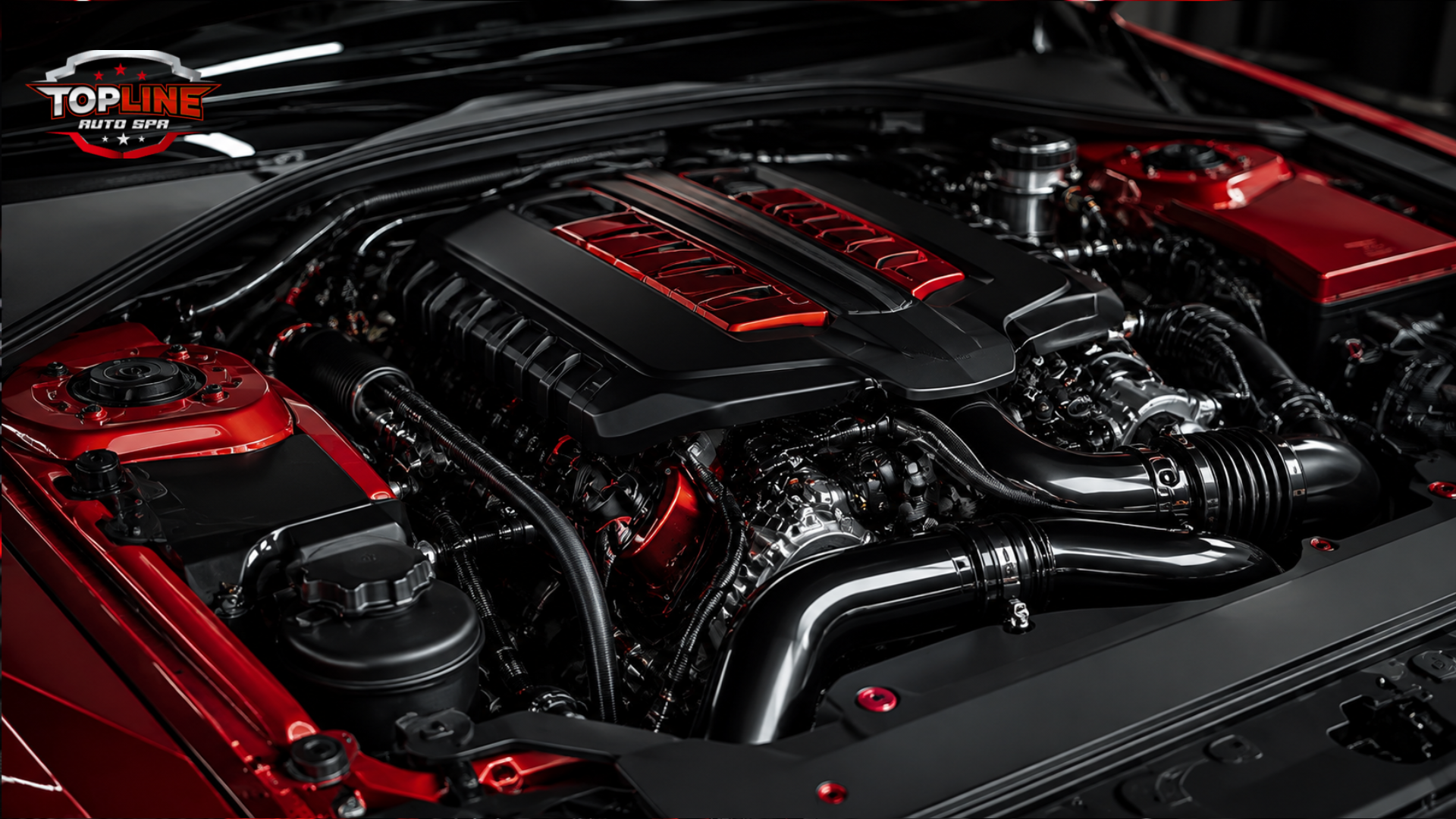
Engine bay detailing is a professional cleaning and protective service that removes built-up dirt, grime, oil residue, and contaminants from your vehicle’s engine compartment. Unlike basic engine washing, this process involves careful attention to individual components, safe cleaning methods, and protective treatments that safeguard sensitive parts.
The Difference Between Engine Cleaning and Engine Bay Detailing
Engine cleaning typically refers to a surface-level wash that removes loose dirt and dust. Engine bay detailing, on the other hand, is a comprehensive service that includes:
- Deep cleaning of hard-to-reach areas
- Component-specific care (belts, hoses, connectors)
- Degreasing of accumulated oil and buildup
- Application of protective sealants and dressings
- Safety-focused procedures to prevent damage
This distinction matters because proper engine bay detailing & protection requires knowledge about which products are safe for specific materials and components, and how to clean without causing electrical or mechanical issues.
Why Engine Bay Detailing & Protection Matters
1. Performance and Efficiency
A clean engine bay operates more efficiently. Dirt and grime accumulation can:
- Insulate heat, causing components to run hotter
- Block air intake areas, reducing engine efficiency
- Interfere with electronic sensors
- Create conditions for corrosion and component degradation
Professional engine bay detailing & protection removes these obstacles, allowing your engine to breathe and function at peak performance.
2. Early Problem Detection
During the detailing process, professionals inspect components closely and can spot potential issues before they become expensive repairs:
- Leaking hoses or connectors
- Worn belts and aging rubber components
- Fluid leaks that require attention
- Corroded battery terminals
- Loose or damaged wiring
3. Longevity and Resale Value
A well-maintained engine bay contributes to overall vehicle longevity. When you eventually sell or trade your vehicle, a clean and well-protected engine compartment demonstrates proper maintenance and commands higher resale value.
4. Preventing Rust and Corrosion
The engine bay environment is harsh salt, moisture, and chemicals create ideal conditions for rust. Protective coatings applied during engine bay detailing & protection create barriers against these corrosive elements, particularly important for vehicles in areas with road salt or high humidity.
The Engine Bay Detailing Process: Step-by-Step Safety-Focused Approach
Professional engine bay detailing & protection follows a methodical, safety-conscious process. Understanding these steps helps you appreciate why this isn’t a DIY job best left to professionals.
Step 1: Engine Cool-Down and Inspection
The first critical safety measure is ensuring the engine is completely cool. Hot engines can cause burns, and water on hot components can cause damage. Professionals:
- Wait at least 2-3 hours after engine shutdown
- Inspect the bay for obvious damage or fluid leaks
- Document existing conditions
- Plan the approach based on the engine’s condition
Step 2: Disconnect Battery and Protective Measures
Safety-focused professionals take precautions:
- Disconnect the negative battery terminal to prevent electrical shorts
- Use plastic sheeting to protect electrical components, alternator, and air intake
- Cover open connectors and sensitive areas
- Ensure all electrical components are protected from water spray
Step 3: Dry Brushing and Dust Removal
Before introducing water or chemicals:
- Use soft-bristled brushes to remove dry dirt and debris
- Gently clean around components without forcing dirt into crevices
- Remove loose buildup from surfaces, belts, and hoses
- Clear debris from air filter housing and intake areas
Step 4: Component-Specific Cleaning
This is where engine bay detailing & protection differs from generic engine washing:
For Engine Block and Covers:
- Use appropriate degreasing solutions designed for engine components
- Apply cleaners safely to avoid over-saturation
- Use brushes and soft cloths to agitate and lift grime
- Rinse carefully with low-pressure water
For Rubber Components (Belts and Hoses):
- Use mild cleaners that won’t degrade rubber
- Gently brush to remove oxidation without harsh scrubbing
- Inspect for cracks, leaks, or wear patterns
For Plastic Components:
- Use pH-neutral cleaners to prevent brittleness
- Avoid harsh chemicals that crack or discolor plastic
- Gently restore appearance without degrading material
For Metal Fasteners and Hardware:
- Remove corrosion using appropriate methods
- Polish connectors and terminals
- Ensure everything is secure and functional
Step 5: Drying
- Use compressed air to remove water from hard-to-reach areas
- Follow up with clean towels for surfaces
- Ensure all water is removed from electrical connections
- Let excess moisture evaporate naturally
Step 6: Protection Application
This is the critical difference between cleaning and complete engine bay detailing & protection:
- Apply engine dressing to plastic covers and components
- Use rubber protectant on belts and hoses
- Apply silicone spray for metal components where appropriate
- Use plastic-specific UV protectants
- Apply protective sealant to prevent future buildup
Step 7: Final Inspection and Reconnection
- Reconnect the battery terminal securely
- Perform a final visual inspection
- Start the engine to verify proper function
- Check for any unusual sounds or leaks
Types of Protective Coatings Used in Engine Bay Detailing
Modern engine bay detailing & protection relies on several specialized products, each serving specific purposes.
Engine Dressing and Coating
What it does: Restores the appearance of plastic engine covers and components while providing UV protection and water resistance.
Benefits:
- Prevents plastic fade and brittleness
- Creates a protective barrier against dust and grime
- Easy to maintain between professional services
- Enhances engine bay appearance
Types available:
- Water-based dressings (environmentally friendly)
- Silicone-based coatings (longer-lasting)
- Ceramic engine protectants (premium protection)
Rust Prevention and Metal Protection
What it does: Creates a barrier on metal components to prevent rust and corrosion.
Key applications:
- Battery terminals and connections
- Metal fasteners and brackets
- Engine block exterior surfaces
- Heat shields
Maintenance advantage: Reduces the need for frequent cleaning and prevents corroded connections that affect performance.
Rubber Component Preservation
What it does: Protects belts, hoses, and rubber seals from UV damage, oxidation, and cracking.
Why it matters: Rubber degradation is a leading cause of engine compartment failures. Preventive protection through engine bay detailing & protection extends the life of these critical components.
Long-term benefits:
- Prevents unexpected belt failures
- Reduces hose leaks
- Maintains proper sealing
Common Engine Bay Problems and Maintenance-Focused Solutions
Understanding common issues helps you recognize why professional engine bay detailing & protection is an investment, not an expense.
Problem 1: Oil and Grease Buildup
What causes it:
- Normal engine operation creates minor oil mist
- Leaks from gaskets or seals accumulate
- Grease from manufacturing residue settles
- Cooking effect of heat cooks dust onto surfaces
Maintenance-focused solution:
- Professional degreasing removes buildup
- Identification of small leaks before they become major
- Application of protective coatings to slow reaccumulation
- Regular maintenance prevents severe buildup
Timeline: Most vehicles benefit from engine bay detailing every 12-18 months depending on driving conditions.
Problem 2: Corrosion and Rust Formation
What causes it:
- Road salt in winter conditions
- High humidity environments
- Moisture trapped in crevices
- Exposed metal components oxidizing
Maintenance-focused solution:
- Professional cleaning removes corrosive salts
- Protective coatings create barriers
- Battery terminal cleaning prevents corrosion-related failures
- Regular inspection catches early rust before major damage
Prevention is key: Engine bay detailing & protection in coastal or high-salt regions should be performed more frequently.
Problem 3: Electrical Connector Issues
What causes it:
- Corrosion on battery terminals
- Moisture in electrical connectors
- Oxidation of connection points
- Accumulated grime conducting electricity
Maintenance-focused solution:
- Professional cleaning safely removes corrosion
- Terminal protectant applied after cleaning
- Connector inspection ensures proper connections
- Poor electrical connections are identified before failure
Impact: A corroded battery terminal or connector can cause starting issues, charging problems, or sensor failures.
Problem 4: Hose and Belt Degradation
What causes it:
- UV exposure cracks rubber
- Thermal cycling (heating and cooling) causes expansion/contraction
- Exposure to oils and chemicals
- Age and oxidation
Maintenance-focused solution:
- Professional inspection identifies worn components
- Protective coatings slow UV damage
- Early identification prevents roadside failures
- Proper maintenance scheduling extends service life
Real-world benefit: Catching a cracking serpentine belt during engine bay detailing prevents engine-stopping failures.
Local & Commercial Intent: Professional Engine Bay Detailing Services
For vehicle owners searching for “engine bay detailing near me” or commercial fleets seeking professional services, understanding what to expect is crucial.
When to Seek Professional Engine Bay Detailing & Protection Services
Ideal candidates for professional service:
- Vehicles over 5 years old with significant buildup
- Recently purchased used vehicles with unknown maintenance history
- Vehicles driven in harsh conditions (coastal areas, winter climates, off-road)
- High-performance or luxury vehicles where attention to detail matters
- Fleet vehicles requiring scheduled maintenance
What to Expect From Professional Services
Quality indicators:
- Technicians disconnect battery before starting
- All electrical components are protected during cleaning
- Service uses component-appropriate cleaning solutions
- Low-pressure water is used to prevent damage
- Protective coatings are applied strategically
- Service includes inspection and documentation
Service variations:
- Standard engine bay detailing: Cleaning and basic dressing ($150-$300)
- Comprehensive engine bay detailing & protection: Includes deep cleaning, protective coatings, and inspection ($300-$600)
- Specialty services: Ceramic coating application, rust treatment, component restoration ($600+)
Commercial and Fleet Applications
Professional engine bay detailing & protection for commercial fleets offers distinct advantages:
- Preventive maintenance: Regular detailing extends component life
- Downtime reduction: Identifying issues early prevents unexpected breakdowns
- Resale value: Fleet vehicles with documented maintenance command better prices
- Warranty compliance: Regular detailing and inspection support warranty claims
- Safety: Clean, well-maintained engines run more reliably
DIY Engine Bay Detailing: Important Safety Considerations
While professional service is recommended, understanding the process helps if you decide to tackle this yourself. Critical safety considerations:
Essential Safety Precautions
- Engine Temperature: Allow the engine to cool completely (at least 2-3 hours)
- Electrical Safety: Disconnect the negative battery terminal before starting
- Protective Equipment: Wear gloves and eye protection
- Workspace: Ensure adequate ventilation; never work in enclosed spaces
- Water Management: Use low-pressure water spray, never high-pressure washers on the engine
- Component Protection: Cover electrical components and air intake before using water
Tools and Products You’ll Need
- Soft-bristled brushes (various sizes)
- Degreaser (engine-safe formula)
- Clean microfiber towels
- Compressed air
- Engine dressing or protective coating
- Safety glasses and gloves
What NOT to Do
- Never spray water directly on the engine while it’s warm
- Don’t use harsh chemicals designed for floors or heavy industrial use
- Avoid high-pressure washers near electrical components
- Don’t neglect to reconnect the battery terminal securely
- Never work on a running engine
Better option: Even if you’re DIY-inclined, professional engine bay detailing & protection is worth the investment to avoid costly mistakes.
Seasonal and Climate-Specific Engine Bay Maintenance
Engine bay detailing needs vary depending on where you live and drive.
Winter and Road Salt Regions
Challenge: Road salt accelerates corrosion and metal oxidation
Maintenance schedule:
- Pre-winter inspection and protective coating
- Mid-winter deep cleaning if exposure is heavy
- Post-winter cleaning to remove salt residue
Focus areas:
- Battery terminals and connections
- Metal fasteners and brackets
- Heat shields and undercarriage components
Coastal Environments
Challenge: Salt spray creates aggressive corrosion conditions
Maintenance schedule:
- Quarterly engine bay detailing & protection recommended
- Extra emphasis on protective coating application
- Regular inspection for early rust formation
High-Humidity Climates
Challenge: Moisture encourages rust and electrical issues
Maintenance schedule:
- Semi-annual detailing to prevent moisture-related buildup
- Enhanced focus on electrical connectors
- Extra drying and protective coatings
Desert and High-Heat Regions
Challenge: Extreme temperatures accelerate plastic degradation and fluid evaporation
Maintenance schedule:
- Focus on UV protection and heat damage prevention
- Regular inspection of fluid levels and conditions
- Protective coating application to prevent plastic cracking
Complementary Services: Connecting Engine Bay Care to Overall Vehicle Maintenance
Engine bay detailing is part of a larger vehicle maintenance picture. Understanding how engine bay care connects to other services helps you develop a comprehensive maintenance strategy.
Connection to Interior Detailing
Just as professional car wash services miss important interior areas, general maintenance also overlooks detailed interior cleaning. If you’re investing in what premium interior car detailing cleans that car washes miss, it makes sense to also prioritize engine bay detailing & protection for complete vehicle care.
Related Services Worth Considering
Undercarriage Cleaning: Removes road salt and grime that can affect structural integrity and longevity.
Fluid System Cleaning: Complements engine bay detailing by maintaining internal cleanliness external and internal care work together.
Paint Protection and Ceramic Coating: While you’re protecting your engine bay, protecting your paint investment completes the picture.
Battery Service and Terminal Cleaning: Often included in professional engine bay detailing & protection, this ensures reliable starting and charging.
The Long-Term Value of Engine Bay Detailing & Protection
When evaluating whether to invest in professional engine bay detailing & protection, think beyond immediate appearance. Consider:
Financial perspective:
- Prevented breakdowns avoid towing and emergency repairs
- Early issue detection saves thousands on major repairs
- Extended component life delays expensive replacements
- Better resale value offsets service costs
Reliability perspective:
- Confident operation without unexpected failures
- Reduced roadside assistance calls
- Better predictability for maintenance scheduling
- Peace of mind regarding vehicle condition
Vehicle longevity:
- Proper maintenance extends vehicle lifespan by years
- Clean, protected engines require fewer major repairs
- Well-maintained vehicles retain value better
- Documented care history supports future resale
Choosing Professional Engine Bay Detailing & Protection Services
What to Look For
Red flags to avoid:
- Shops that rush the process or skip protection steps
- Services that use high-pressure washers on the engine
- Lack of battery disconnection or component protection
- Unavailable inspection reports or documentation
- Unclear pricing or hidden charges
Quality indicators:
- Detailed process explanation before starting
- Documented inspection and findings
- Use of appropriate, branded products
- Professional approach to electrical safety
- Warranty or guarantee on work performed
- Before-and-after photos
Questions to Ask
- Do you disconnect the battery before starting?
- How do you protect electrical components?
- What protective products do you use?
- Will you provide a detailed inspection report?
- What warranty or guarantee do you offer?
- How long will the protective coating last?
- What’s included in your comprehensive service?
- Do you offer scheduled maintenance packages?
Conclusion: Engine Bay Detailing & Protection as Preventive Maintenance
Engine bay detailing & protection isn’t a luxury service; it’s preventive maintenance that extends vehicle life, prevents costly repairs, and maintains reliability. Your engine bay is the heart of your vehicle, and like any heart, it benefits from regular care and protection.
Whether you drive a daily commuter, maintain a fleet of commercial vehicles, or cherish a performance machine, professional engine bay detailing & protection offers measurable benefits:
- Immediate: Improved appearance and confidence in cleanliness
- Short-term: Early problem detection and prevention
- Long-term: Extended component life and vehicle longevity
- Financial: Cost savings through prevented breakdowns and repairs
The question isn’t whether to invest in engine bay detailing & protection, but how often to maintain this critical service based on your climate, driving conditions, and vehicle type.
Frequently Asked Questions About Engine Bay Detailing & Protection
1: How often should I get professional engine bay detailing?
For most vehicles, every 12-18 months is ideal. However, vehicles in harsh climates (coastal, road salt, extreme heat) or high-mileage vehicles should consider annual service. Fleet vehicles often benefit from scheduled service every 6-12 months.
2: Will engine bay detailing improve my fuel economy?
Indirectly, yes. A clean engine operates more efficiently, and early identification of maintenance issues prevents performance degradation. You won’t see dramatic improvements, but a well-maintained engine runs optimally.
3: Is it safe to pressure wash my engine bay?
No. High-pressure washers can force water into electrical components, damage seals, and cause expensive damage. Professionals use low-pressure water or steam with careful component protection.
4: Can engine bay detailing & protection prevent breakdowns?
It reduces the likelihood by catching developing problems early. Regular inspection during detailing identifies worn belts, leaking hoses, corroded connectors, and other issues before they cause failure.
5: What’s the difference between ceramic engine coating and regular dressing?
Ceramic coatings offer longer-lasting protection (6-12 months vs. 3-6 months), superior water beading, and enhanced UV protection. Regular dressing is more affordable but requires more frequent reapplication.
6: Will engine bay detailing void my warranty?
Professional engine bay detailing & protection won’t void your warranty if performed correctly. However, check your specific warranty terms. Using non-approved products might affect coverage.
7: Is engine bay detailing worth the cost?
Yes, when considering the cost of major repairs that proper maintenance prevents. A $300-600 detailing is far less than repairing corroded electrical systems, replacing seized components, or dealing with unexpected breakdowns.
8: Can I use household cleaners on my engine bay?
No. Household cleaners can damage rubber, plastics, and electrical components. Engine bay detailing & protection requires specialized products formulated for automotive use.
9: What should I do if I notice a leak during engine bay detailing?
Professional technicians will document and report it. Small seepage might require monitoring; actual leaks need attention from a mechanic. Early identification is part of the preventive maintenance benefit.
10: How long does professional engine bay detailing take?
Typically 1-3 hours depending on the engine’s condition and the service level. Comprehensive engine bay detailing & protection takes longer than basic cleaning.