
For most drivers, a routine trip through a local drive-through car wash feels like enough to keep a vehicle looking presentable. You drive past the spinning brushes, hand over a few dollars for a quick vacuum machine at the end, and wipe down the dashboard with a generic wet cloth. It is a fast, convenient routine, but surface-level tidying merely masks the dirt, oils, and bacteria that build up over months of daily driving. True restoration requires specialized interior car detailing to address the deep environmental contaminants lurking hidden out of sight.
A basic car wash vacuum is built purely for speed and volume, meaning it only pulls loose crumbs from the very top layers of your floor mats. It entirely skips the ground-in contaminants, embedded liquids, and microscopic allergens that have bonded with the lower fabric fibers. To truly preserve your investment, it is important to understand the significant differences between a superficial visual cleaning and deep thermal sanitization.
Key Takeaways
- Surface cleaning often doesn’t remove the true source of stubborn odors
- Moisture trapped in carpets and upholstery from cheap wash methods can create persistent mold
- Air vents and high-tech console crevices frequently harbor microscopic, airborne contaminants
- Professional hot vapor extraction floats deep oils out of fabric fibers completely
The Hidden Zones of Dirt Accumulation
Over time, your vehicle’s cabin acts like a closed air filter, constantly trapping airborne dust, skin cells, hair, pet dander, and microscopic organic material. Every time the doors open or windows roll down, environmental pollutants rush inside. When you rely solely on quick express washes, several critical zones are consistently neglected:
- Deep Fabric Fibers: Friction from sliding in and out of your seats grinds friction-based dirt deep into the upholstery pores, creating an abrasive paste that thins out fabrics over time.
- HVAC Vents and Internal Crevices: Heavy dust and airborne spores build up inside dark climate control vents, blowing allergens directly into your breathing space every time you turn on the AC or heater.
- High-Touch Console Electronics: Center consoles, steering wheel seams, turn signals, and window switches accumulate oils from your skin that attract sticky grime and foster bacteria growth.
- Seat Tracks and Sub-Floorboards: The tight spaces beneath car seats act as a collection point for dropped food, moisture, and road debris that standard car wash vacuum nozzles simply cannot reach.
To safely lift these materials without damaging delicate factory electronics, fading sensitive dashboard plastics, or thinning out modern leather coatings, technicians must step away from standard utility vacuums and utilize commercial-grade heat extraction.
Professional Extraction vs. Surface Wiping
The biggest difference between a quick wash and an advanced studio service lies in the grade of equipment and chemistry used. A premium detail doesn’t just push dirt around with a microfiber towel or mask smells with a cheap scented spray; it floats contaminants completely out of the surfaces. Utilizing a specialized full interior shampoo treatment allows pH-balanced cleaning agents to break the chemical bond between tough oils, greasy food spills, and fabric fibers.
By pairing targeted stain lifters with pressurized dry vapor steam reaching temperatures above 180°F, professionals melt away sticky cup holder residue and sanitize porous surfaces without over-saturating the underlying interior foam backing pads. Over-saturation is a massive risk at automated car washes, as trapped moisture under the carpets leads to hidden mold and mildew growth.
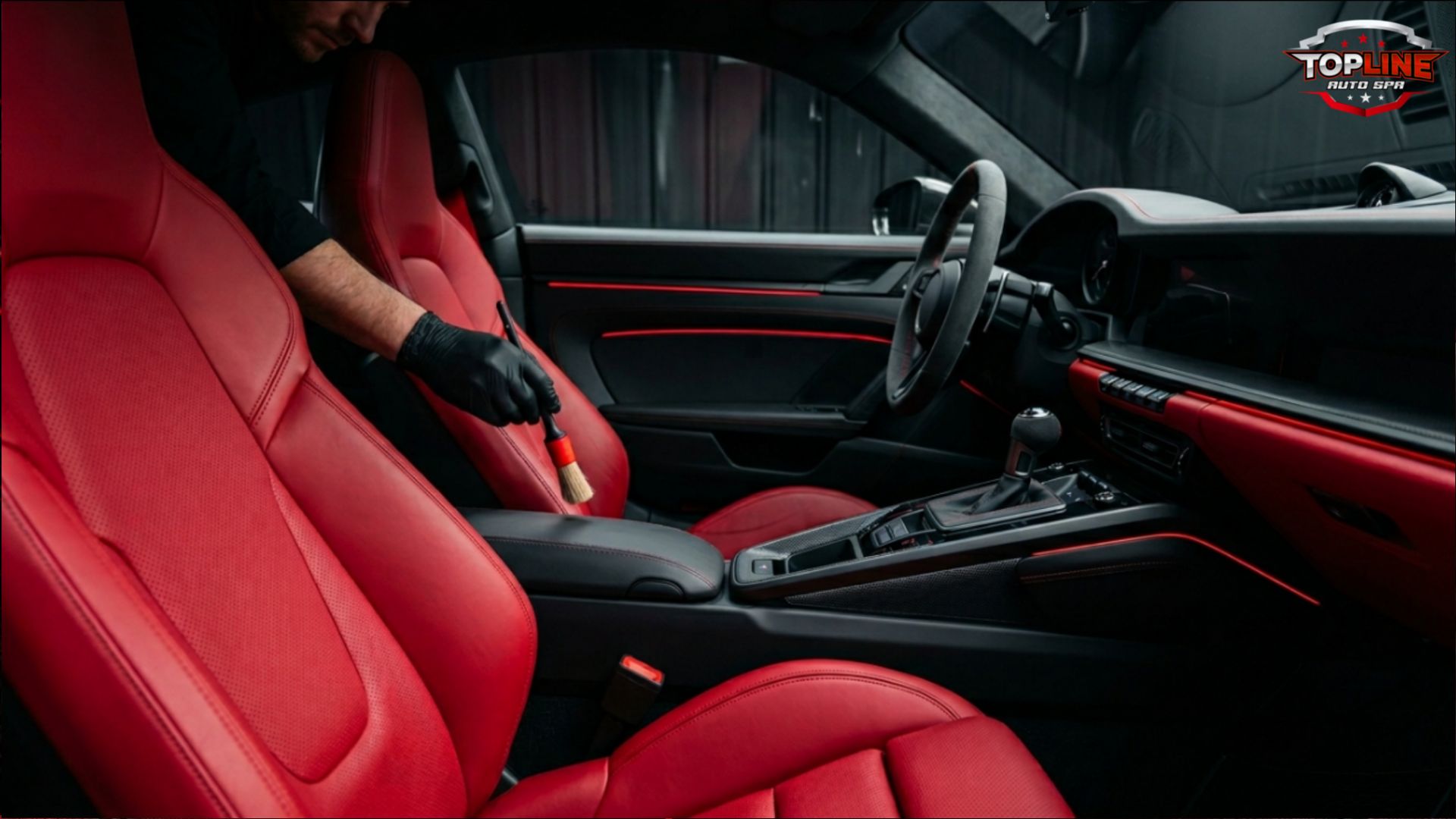
Furthermore, detailing involves material-specific tools tailored to your cabin’s exact textures. Technicians use genuine horsehair brushes to safely agitate leather grain, ultra-soft detailing brushes for delicate piano-black trim, and high-pressure compressed air purges to blow hidden sand and debris out from the tightest seams before the extraction phase even begins.
Restoring a True Showroom Standard
Relying solely on cheap, silicone-based plastic protectants from automated car washes creates a greasy, high-gloss film over your dashboard. This artificial shine actually acts like a magnet for airborne dust, rapidly making your dashboard look dirty again while creating a distracting glare on your windshield. Professional preservation requires deep chemical decontamination followed by breathable, non-greasy matte UV sealants that shield leather and vinyl from sun damage without altering the factory texture.
If you’ve noticed a lingering stale, musty scent in your vehicle even after wiping down the seats and throwing away trash, the odor source is likely trapped inside the deep under-seat carpeting backing or within the porous seat cushions themselves. To understand how deep-set smells can easily linger in an otherwise clean-looking cabin, check out our guide on [Why Your Car Still Smells Bad After Interior Cleaning].
Ultimately, investing in a meticulous deep cabin cleaning program does far more than clear away immediate clutter. It actively purifies the air you breathe during your daily commute, preserves expensive leather and suede materials from cracking, and keeps your vehicle’s interior pristine for years to come.
Conclusion: Choose True Protection Over Surface Polish
At the end of the day, an automated or express drive-through car wash is designed exclusively for a fast surface sweep, not deep-seated decontamination. Leaving organic dirt, micro-dust, dead skin cells, and microscopic allergens trapped inside your upholstery eventually breaks down the structural fibers of your cabin, degrades fabric elasticity, and quietly destroys your car’s long-term resale value.
Bringing your vehicle to a dedicated professional studio ensures that every single microscopic particle is thoroughly purged from your climate vents, seat tracks, seatbelts, and sub-floorboards using specialized thermal tooling. This level of meticulous care creates a physical shield against future spills and UV degradation while ensuring your driving environment is genuinely healthy. If you are ready to experience a fully sanitized cabin that smells pristine, handles seasonal wear effortlessly, and looks exactly like it just rolled off the factory showroom floor, it is time to upgrade from a basic wash to a premium interior detail.
Frequently Asked Questions (FAQ)
1. Will a premium interior detail completely remove deep grease or coffee stains?
While professional detailing utilizes commercial-grade hot water extractors and advanced chemical stain lifters, total removal depends on how long the stain has been setting in the material. If addressed early, most organic oils, coffee stains, and mud spots can be completely pulled out of the fabric fibers.
2. Is steam cleaning safe for modern car electronics and digital dashboard screens?
Yes, when performed by an experienced technician. Professional detailing studios use fine-mist dry vapor steam and specialized brush attachments to clean tight crevices safely. Direct moisture is never sprayed onto open electronic switches, touchscreens, or digital gauge clusters.
3. How long does a full professional interior detailing service typically take?
Unlike a quick 15-minute express car wash wipe-down, a comprehensive interior detail takes anywhere from 3 to 5+ hours. This extended timeline is necessary to allow for meticulous crevice purging, deep steam extraction, leather conditioning, and proper drying times.