

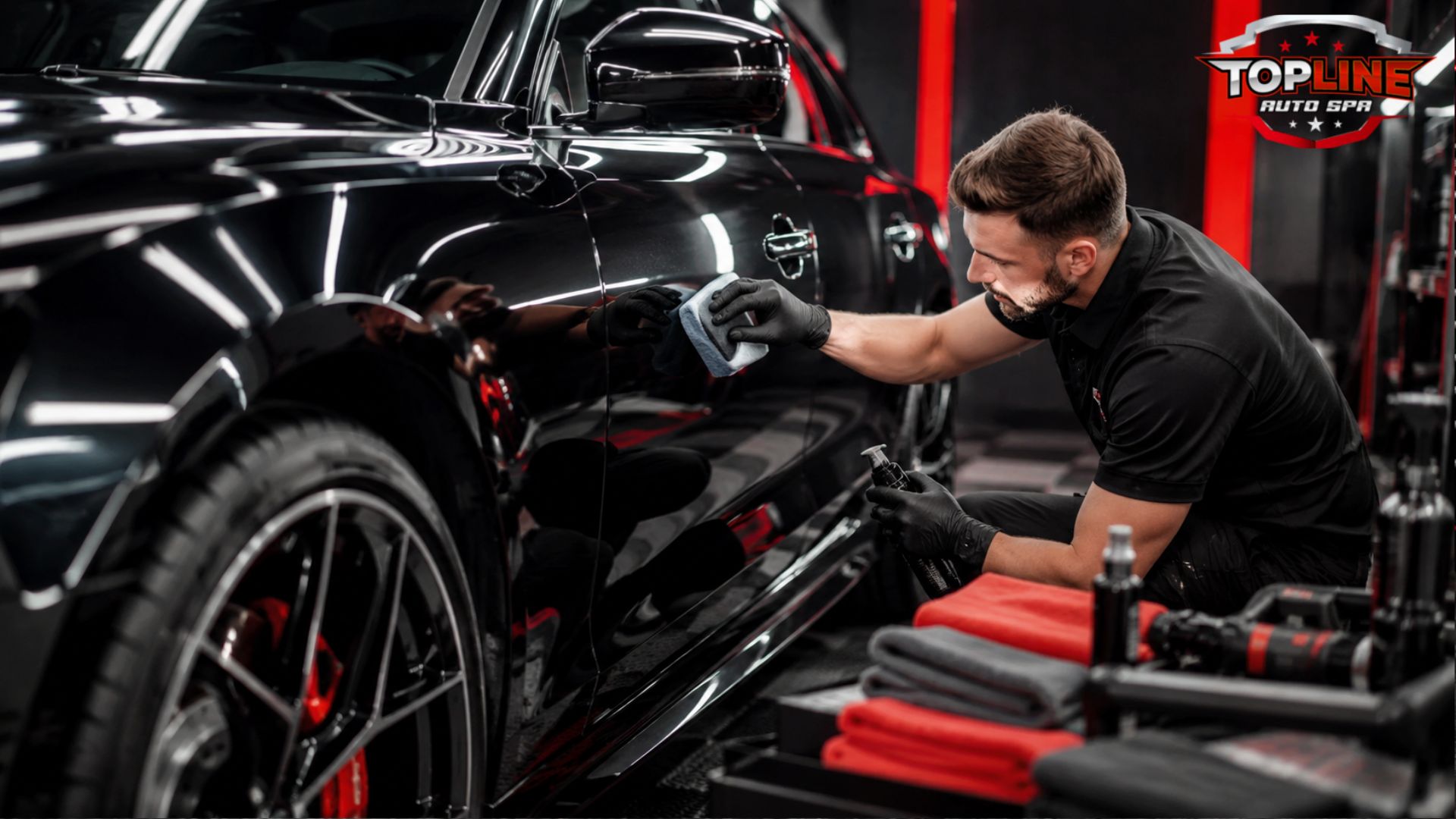
Your car can look perfectly clean after a wash and still have contaminants stuck to its paint. Brake dust, industrial fallout, road residue, tree sap, tar, and other environmental particles can bond to the surface and make the paint feel rough or look less vibrant. Over time, these contaminants can make proper paint maintenance more difficult and may interfere with polishing or protective treatments.
Paint decontamination is the process of safely removing these bonded contaminants from a vehicle’s exterior surface. Unlike a standard wash, which primarily removes loose dirt and grime, decontamination focuses on contaminants that remain attached to the paint after washing. For vehicle owners who want to maintain a smooth, clean finish, professional auto detailing services can provide a more thorough level of exterior care than a routine wash alone.
Key Takeaways
- A vehicle can look clean while still having bonded contaminants on its paint.
- Common contaminants include brake dust, industrial fallout, tar, tree sap, and road residue.
- A rough or gritty surface after washing can indicate contamination.
- Chemical and mechanical methods may both be used during the decontamination process.
- Decontamination can be an important preparation step before paint correction or protective treatments.
- Regular washing helps prevent buildup, but it may not remove every contaminant attached to the paint.
What Is Paint Decontamination?
Paint decontamination is a detailing process designed to remove contaminants that remain bonded or embedded in a vehicle’s painted surfaces after normal washing. While soap and water can remove loose dirt, some particles become attached to the clear coat and require a more targeted approach.
The goal is to leave the paint cleaner and smoother without unnecessarily abrading or damaging the surface. Depending on what is contaminating the vehicle, professional decontamination may involve chemical products, mechanical methods such as clay media, or a combination of both. The appropriate method depends on the type and severity of contamination and the condition of the vehicle’s paint.
Why Does Car Paint Become Contaminated?
Your vehicle is exposed to its surroundings every time you drive or park it outdoors. Airborne particles, road debris, industrial fallout, and organic material can gradually accumulate on the exterior. Brake dust is one common source of contamination because fine metallic particles produced during braking can settle on painted panels as well as wheels. Road grime can contain dirt, oils, chemicals, and other substances that accumulate during everyday driving.
Environmental exposure can also contribute to contamination. Tree sap can stick to the surface and become increasingly difficult to remove if left untreated, while tar and petroleum-based road residue can adhere to lower panels. Industrial fallout consists of extremely small airborne particles that may not be obvious when looking at the vehicle but can become noticeable when the paint is touched. Because different contaminants require different removal methods, identifying the type of contamination is an important part of proper paint care.
How Do You Know Your Car Needs Decontamination?
One of the easiest ways to identify bonded contamination is to pay attention to how the paint feels after washing. Once the vehicle has been thoroughly washed and dried, gently run clean fingertips over the surface. Paint that is properly clean and free from significant bonded contamination should generally feel smooth. If it feels rough, gritty, bumpy, or slightly textured despite being visibly clean, contaminants may still be attached to the surface.
There can also be visible signs. Small orange or brown specks, tar spots, sticky residue, or areas that look dull despite being washed may indicate contamination. However, these signs do not automatically tell you exactly what is affecting the paint. A rough surface could have several causes, which is why it is important to avoid using aggressive products or techniques without first understanding the problem.
Paint Decontamination vs. a Normal Car Wash
A normal car wash and paint decontamination perform different jobs. Washing is designed to remove loose dirt, dust, mud, and surface grime, making it an essential part of routine vehicle maintenance. Decontamination goes a step further by addressing substances that remain attached to the paint after the vehicle has been washed.
This does not mean every vehicle needs an intensive decontamination treatment every time it is cleaned. Overworking a vehicle’s paint can be unnecessary, and the appropriate frequency depends on factors such as how often the vehicle is driven, where it is parked, environmental exposure, and the condition of the paint. Regular washing should remain the foundation of maintenance, with decontamination performed when the surface actually needs it.
What Is the Paint Decontamination Process?
The exact process can vary depending on the vehicle and the type of contamination present, but professional decontamination generally begins with a thorough exterior wash. Removing loose dirt first reduces the amount of material sitting on the paint before more specialized treatments are used.
The surface is then inspected to identify visible and bonded contaminants. This inspection is important because contamination is not the same thing as scratches, oxidation, swirl marks, or other forms of paint damage. A simple way to understand the difference is to inspect the paint after washing. If the surface still feels rough or has visible residue, it may have bonded contaminants rather than actual paint damage. For a closer look at how these issues differ, read Understanding Surface Contamination vs Paint Damage.
Depending on the contamination, specialized chemical treatments may then be used to loosen or dissolve specific substances. For example, iron-removing products can help address metallic particles, while tar removers may be appropriate for petroleum-based residue. Mechanical decontamination may also be used when contaminants remain attached after chemical treatment. A clay bar or similar detailing media can carefully remove certain bonded particles when used with appropriate lubrication and technique.
After the process is complete, the paint should be inspected again. The objective is not simply to make the vehicle look clean but to leave the surface smoother and better prepared for whatever appropriate detailing or protection step comes next.
Can Paint Decontamination Remove Scratches?
Paint decontamination and paint correction are not the same process. Decontamination focuses primarily on removing unwanted substances attached to the surface, while paint correction is intended to improve suitable paint defects such as swirl marks, certain scratches, oxidation-related dullness, and other imperfections through polishing or related techniques.
A vehicle can require both processes. For example, a car may have bonded contaminants on its paint as well as light surface defects. Removing the contamination first can create a cleaner surface before polishing begins. This is why professional paint correction services may include paint decontamination as part of the preparation process. However, decontamination itself should not be presented as a method for repairing scratches.
Why Does Decontamination Matter Before Paint Correction?
Polishing a heavily contaminated surface is generally not the ideal approach. When contaminants remain on the paint, they can interfere with the preparation and polishing process and make it more difficult to achieve a clean, consistent finish.
A common preparation sequence may involve washing the vehicle, removing bonded contamination, inspecting the surface, polishing or correcting the paint where necessary, and then applying an appropriate form of protection. The exact sequence can vary depending on the vehicle’s condition. Decontamination does not automatically mean paint correction is required. If the paint looks healthy and smooth once contamination has been removed, additional correction may not be necessary.
Does Paint Decontamination Remove Paint Oxidation?
Not necessarily. Contamination and oxidation are different paint conditions, and understanding the distinction is important. Contamination refers to unwanted material that has attached to or become embedded in the surface, while oxidation involves deterioration of the paint system and is often associated with prolonged environmental exposure and UV radiation.
Removing contaminants can improve the cleanliness and feel of a vehicle’s surface, but it does not automatically reverse paint deterioration. If the paint remains dull, faded, or degraded after decontamination, additional evaluation may be needed to determine whether polishing or paint correction is appropriate.
Is a Clay Bar the Same as Paint Decontamination?
A clay bar is one tool that may be used during paint decontamination, but the terms do not mean the same thing. Paint decontamination describes the overall process of removing bonded contaminants, while clay bar treatment is a specific mechanical method that can be used to remove certain contaminants from the paint.
Modern decontamination can involve both chemical and mechanical methods. The appropriate combination depends on the contamination present and the condition of the paint. Using the least aggressive effective method is generally preferable to applying unnecessary force to the surface.
How Often Does a Car Need Paint Decontamination?
There is no universal schedule that works for every vehicle. A car that is frequently driven, parked outdoors, or exposed to industrial environments may accumulate contaminants more quickly than a vehicle that is primarily kept indoors. Instead of following a rigid schedule, vehicle owners should pay attention to the condition of the paint.
If the surface feels rough after washing, visible tar or sap remains, metallic contamination is noticeable, or the vehicle is being prepared for paint correction or a protective treatment, decontamination may be appropriate. The goal is to respond to the actual condition of the paint rather than performing an intensive treatment simply because a certain amount of time has passed.
What Happens If You Skip Decontamination?
Not every contaminated vehicle will immediately develop visible paint damage, but leaving contaminants on the surface for extended periods can make the paint increasingly difficult to maintain. Certain contaminants may become more firmly attached over time, while some substances can contribute to staining or surface deterioration if they remain on the vehicle.
There is also a practical detailing concern. A contaminated surface is more difficult to prepare properly for polishing or protection. Regular washing can remove loose contamination and reduce buildup, but occasional decontamination may still be necessary when bonded contaminants remain on the paint.
Is Professional Paint Decontamination Worth It?
Professional decontamination can be particularly useful when a vehicle has heavy or unknown contamination, has not received thorough exterior care for an extended period, or is being prepared for paint correction or a protective treatment. It can also be helpful when the owner is unsure which type of contamination is present or which removal method is appropriate.
For light contamination, experienced vehicle owners may be comfortable performing some maintenance themselves. However, professional detailing can help reduce the risk of using an overly aggressive chemical or mechanical approach. The benefit is not simply removing dirt; it is selecting an appropriate process for the condition of the vehicle while minimizing unnecessary stress on the paint.
Paint Decontamination Before Ceramic Coating
Proper surface preparation becomes particularly important before applying a long-term protective treatment. A coating should be applied to a properly prepared surface, and contaminants remaining on the paint can interfere with the preparation process and the final result.
After washing and decontamination, the vehicle may also require polishing or another preparation step depending on its condition. Once the surface has been properly prepared, ceramic coating services can provide an additional layer of paint protection and help make routine maintenance easier. The appropriate coating and preparation process will depend on the vehicle’s paint condition and the owner’s goals.
How Can You Reduce Paint Contamination?
You cannot completely prevent environmental contamination, but good maintenance can reduce buildup and make your vehicle easier to care for. Regular washing is one of the simplest ways to remove loose contaminants before they have more time to accumulate. Proper washing and drying techniques are also important because aggressive scrubbing or dirty wash media can create unnecessary surface defects.
It is also a good idea to address substances such as bird droppings and tree sap promptly rather than allowing them to remain on the paint for extended periods. If your vehicle is frequently exposed to industrial fallout, highway driving, outdoor parking, or other contamination sources, inspect the paint periodically. If the surface continues to feel rough after a proper wash, that can be a sign that routine cleaning is no longer enough.
When Should You Get Professional Paint Decontamination?
Professional assistance may be appropriate when you are dealing with heavy or unidentified contamination, preparing a vehicle for paint correction, or getting the surface ready for a protective coating. A professional can assess whether the vehicle needs simple cleaning, chemical decontamination, mechanical decontamination, polishing, paint correction, or another treatment.
The important point is that decontamination is not automatically the solution to every paint problem. A rough surface, dull finish, scratches, water spots, and oxidation can have different causes and may require different treatments. Proper assessment helps prevent unnecessary work and ensures that the surface receives the appropriate level of care.
Conclusion
Paint decontamination is an important part of maintaining a smooth, clean, well-prepared vehicle surface. A car can look spotless after a wash while still carrying bonded contaminants that affect how the paint feels and how effectively it can be prepared for polishing or protection.
The key is understanding the difference between routine washing, decontamination, paint correction, and paint protection. Each process has a different purpose. Regular washing helps control everyday dirt and grime, while decontamination addresses contaminants that remain attached to the paint. Paint correction addresses appropriate surface imperfections, and protective treatments help maintain the finish after proper preparation.
If your vehicle feels rough after washing or you are preparing it for a more advanced paint treatment, a professional assessment can help determine the appropriate next step. For vehicle owners in Allentown, PA, TopLine Auto Spa provides professional automotive detailing and paint-care services based on the condition and needs of the vehicle.
Frequently Asked Questions (FAQs)
1. What is paint decontamination?
Paint decontamination is the process of removing bonded or embedded contaminants that normal washing may leave behind on a vehicle’s painted surfaces. It can involve chemical and mechanical methods depending on the type of contamination.
2. How do I know if my car needs paint decontamination?
After washing and drying the vehicle, gently feel the paint with clean fingertips. If the surface still feels rough, gritty, or bumpy, bonded contaminants may be present. Visible tar, sap, or metallic particles can also indicate that decontamination may be needed.
3. Should I decontaminate my car before paint correction or ceramic coating?
Proper surface preparation is generally important before either treatment. Decontamination can remove contaminants that may interfere with polishing or coating preparation, while additional correction may be appropriate depending on the condition of the paint.