
Why is PPF so expensive is one of the most common questions car owners ask today. Recent industry reports show that over 60 percent of new vehicle owners research paint protection options within the first 12 months, yet many still walk away confused or misinformed. This confusion is exactly why debunking PPF myths matters in conversations.
From our years of hands-on PPF installations, we see the same misunderstandings again and again. Many car owners rely on online forums, short videos, or sales claims that leave out important facts. Some believe PPF damages paint. Others think it is only for luxury cars or that it always turns yellow. These ideas often come from poor-quality installs or outdated products.
This guide is built on real-world detailing experience, not guesses or marketing talk. We work on daily drivers, family SUVs, electric vehicles, and high-end cars every week. Our goal is simple. Help you understand what paint protection film truly does, why it costs what it does, and how to decide if it makes sense for your car.
What Paint Protection Film Actually is From a Detailer’s Perspective?
Paint protection film, often called PPF, has changed a lot in recent years. Industry estimates show that more than half of professional detail shops now install advanced PPF on new vehicles. This shift happened because modern films perform much better than older options.
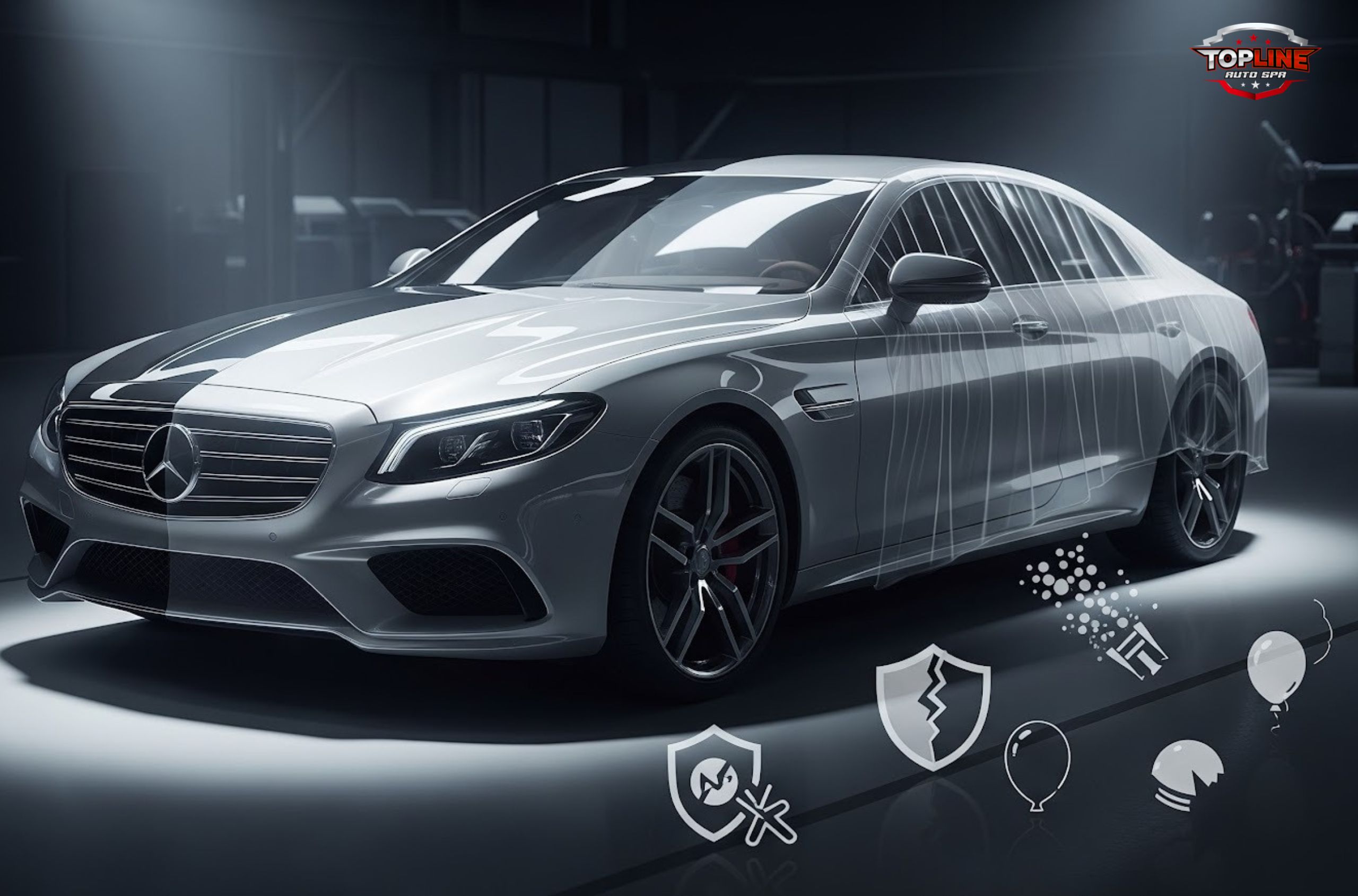
Today’s PPF is made from a strong and flexible material called thermoplastic polyurethane. It has a clear top layer that helps the film resist stains, sun damage, and light scratches. When heat from the sun or warm water hits the surface, small marks can soften or disappear. This helps the paint underneath stay in better shape for longer.
Many car owners still think PPF is the same as the old clear bras used years ago. Those early films were thick, hard to hide, and often turned yellow. Modern PPF is clearer, smoother, and designed to blend into the paint. When installed the right way, most people cannot even tell it is there.
Common PPF Myths Debunked by Professionals
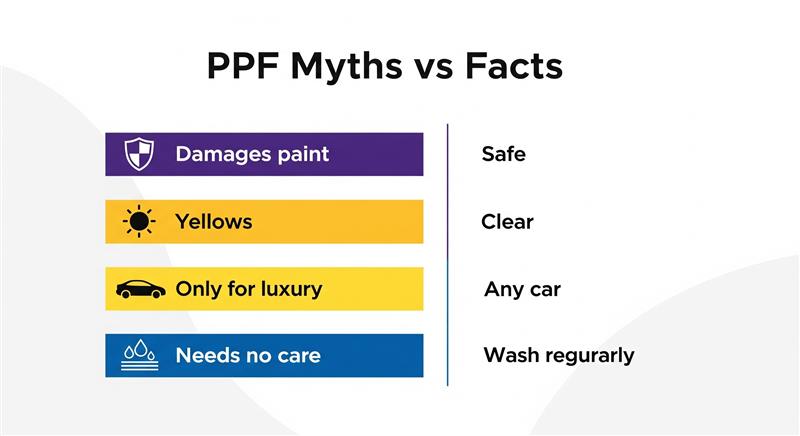
Myth 1: PPF Will Damage My Car’s Paint
Many car owners fear that PPF will harm their paint when it is removed. In professional removal cases, factory paint usually stays safe and untouched. Problems often happen when the car has aftermarket repainting or when the surface was not prepped correctly before installation. OEM paint is baked at high temperatures and is much stronger. Repainted panels are softer and can lift if handled the wrong way. A proper inspection helps prevent these issues.
Myth 2: All PPF Turns Yellow Over Time
Yellowing is mostly linked to older or lower-quality films. Early PPF lacked strong UV protection and stained easily. Modern films use UV inhibitors and clear topcoats that slow down sun damage. The environment also matters. Cars exposed to strong sun, heavy pollution, and poor washing habits may show changes faster. From vehicles driven in harsh climates, high-quality PPF stays clear much longer than most people expect.
Myth 3: PPF Is Only for Luxury or Sports Cars
This myth ignores how much damage daily drivers face. Cars used for work, school runs, and long commutes see more road debris and stone chips. Family sedans and SUVs often take more abuse than weekend sports cars. PPF helps reduce repaint costs and keeps the car looking newer. Many everyday vehicles benefit from services like paint protection film in Lehigh Valley PA that focus on real driving conditions.
Myth 4: PPF Makes the Car Look Dull or Plastic
Modern PPF is designed to improve, not hide, your car’s paint. Gloss film adds depth and shine, while satin and matte options give clear style choices. When done right, paint protection film is worth the money because it protects the surface and keeps the finish looking clean and smooth.
A professional installation makes a big difference. Skilled installers use clean edge wrapping so the film blends into the paint. Poor installs can leave visible lines or haze, which leads people to think PPF looks bad.
Myth 5: Once Installed, PPF Can’t Be Removed
PPF is made to be removable. It can be taken off safely within its recommended lifespan. Professional removal uses heat and a steady technique to protect the paint underneath. When film shows wear, staining, or age, replacement is often the best option. Safe removal without paint damage is common when done by trained professionals.
Myth 6: PPF Protects Against All Damage
Some car owners think PPF can stop every type of damage. In reality, it protects against small rocks, road debris, light scratches, and minor abrasions. It cannot prevent damage from major accidents, deep impacts, or very sharp objects. PPF lowers the risk of everyday wear, but knowing its limits helps car owners make smart decisions about how to protect their vehicle and when extra care is needed.
Myth 7: PPF Needs No Care at All
PPF is strong, but it still needs care to last. Dirt, dust, and pollution can build up over time. Harsh cleaning chemicals or abrasive brushes can damage the film. Regular washing with mild soap and water keeps the surface clear and shiny. Routine care helps the film maintain its self-healing properties and extends its lifespan, ensuring the paint underneath stays protected longer.
Myth 8: PPF Is a Waste of Money
Some people think PPF costs too much for what it does. The truth is that it can save money over time. Rock chips and scratches can be expensive to repair, and they lower a car’s resale value. PPF protects the original paint and prevents small damages from becoming costly repairs. For most daily drivers, the investment pays off by keeping the car looking newer and reducing future maintenance costs.
Conclusion
PPF myths debunked show that paint protection film for cars is not just for luxury vehicles. It protects your car from scratches, chips, and UV damage. Many car owners avoid it because of wrong ideas about yellowing, high costs, or constant maintenance. The truth is that high-quality PPF lasts for years, keeps your paint looking new, and adds value to your car.
Investing in certified installation ensures the best results. At TopLine Auto Spa, our team uses top-grade films and proven techniques to keep your car safe and shiny. Paint film protection for cars is simple, effective, and worth it when done right.
Don’t wait until damage happens. Protect your vehicle today with TopLine Auto Spa’s expert PPF services. Contact us now to schedule your installation and see the difference quality protection makes.
FAQs
- Does PPF require constant maintenance?
No. Routine washing is enough. Many PPF types are self-healing and easy to maintain.
- Is PPF worth the cost?
Absolutely. Paint film protection for cars saves money on repairs and keeps your vehicle looking new longer.
- Does PPF yellow over time?
High-quality PPF does not yellow. Yellowing usually happens with low-quality films or improper maintenance.