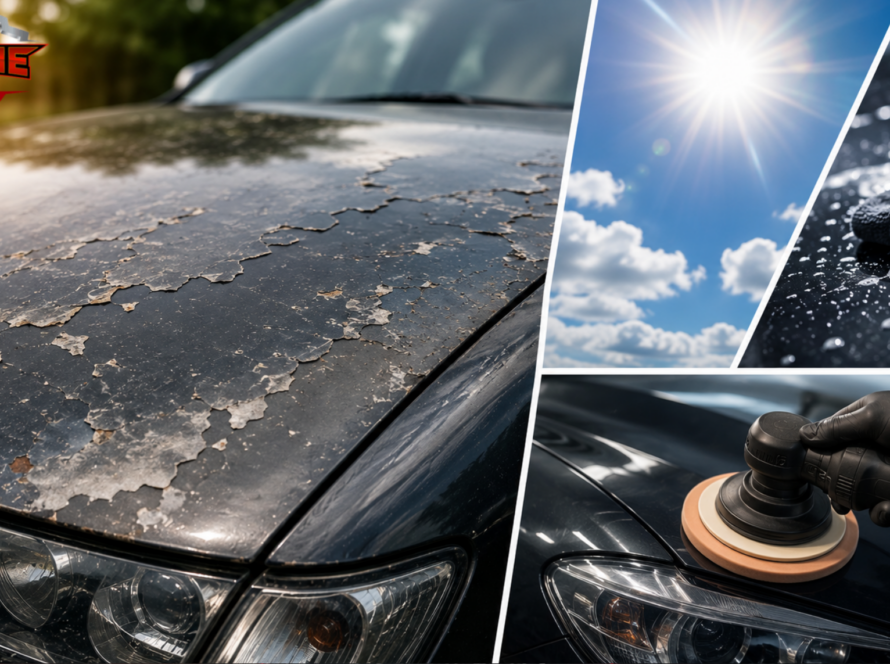

Your car might look clean after a wash—but that doesn’t mean it actually is. Hidden contaminants like brake dust, industrial fallout, and embedded grime stick to your paint and slowly damage it over time.
That’s where decontamination tools like clay bars and iron removers come in. But which one does your car really need?
If you’re serious about maintaining your car’s finish, combining the right method with services like paint correction near me can make a huge difference in restoring and protecting your paint long-term.
Key Takeaways
- Clay bars remove surface contaminants stuck on paint
- Iron removers dissolve embedded metal particles chemically
- Both serve different purposes and work best together
- Skipping decontamination can damage your car’s finish
- Proper technique is essential to avoid scratches
- Professional detailing ensures safe and effective results
What Is a Clay Bar?
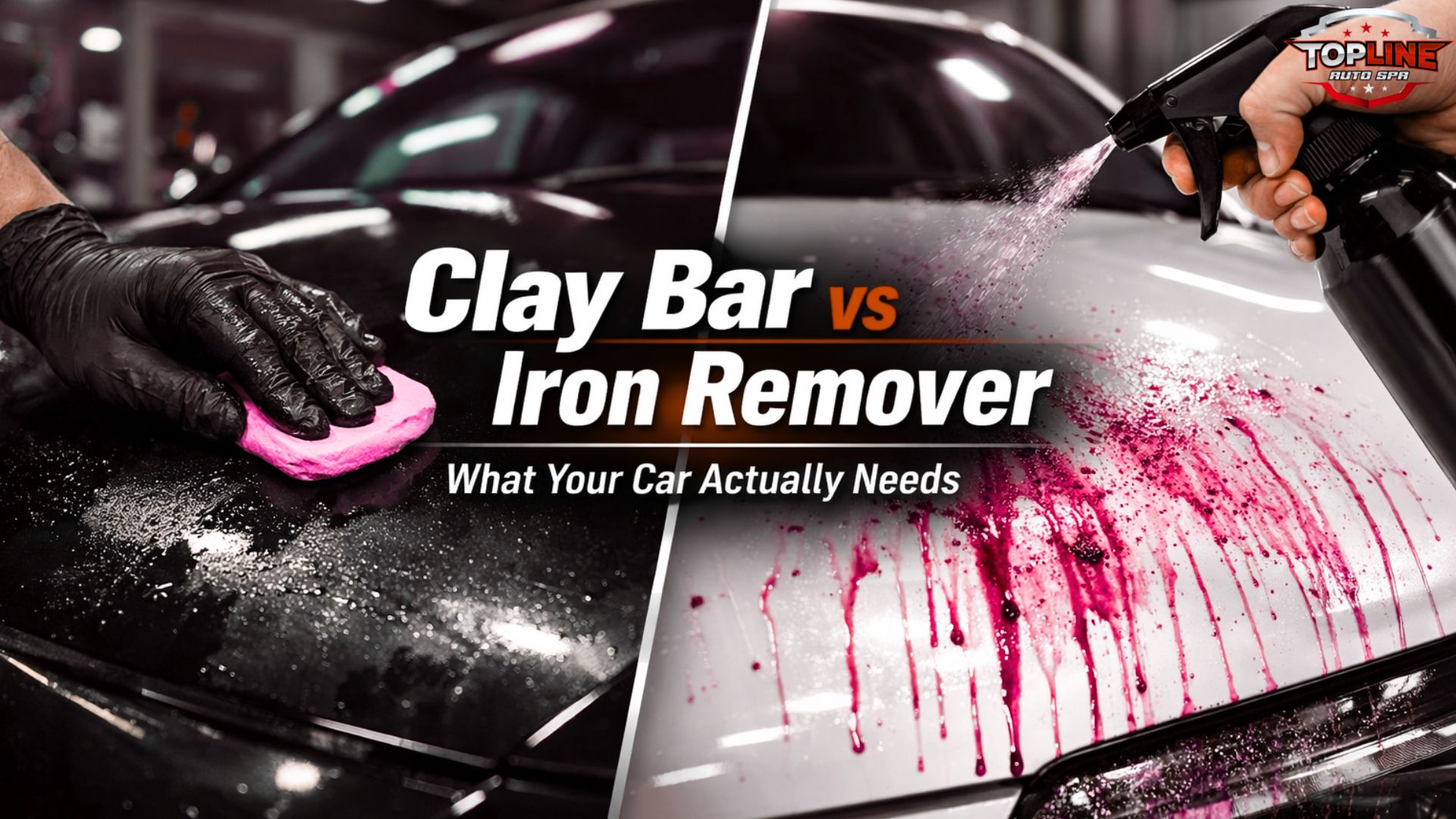
A clay bar is a soft, flexible material used to remove contaminants bonded to your car’s surface. Even after washing, particles like tar, tree sap, and dirt can remain stuck to the paint.
How It Works
A lubricated clay bar is gently rubbed over the paint, picking up contaminants that regular washing can’t remove.
What It Removes
- Road grime
- Tree sap
- Light tar spots
- Surface contaminants
When to Use It
Clay bar treatment is ideal when your car feels rough to the touch, even after a wash.
What Is an Iron Remover?
Iron remover is a chemical solution designed to dissolve iron particles embedded in your car’s paint. These particles usually come from brake dust and industrial pollution.
How It Works
The solution reacts with iron particles and breaks them down, often turning purple as it dissolves contamination.
What It Removes
- Brake dust
- Rail dust
- Industrial fallout
When to Use It
If your car has been exposed to heavy traffic, construction areas, or urban pollution, iron remover is highly effective.
Clay Bar vs Iron Remover: Key Differences
1. Type of Contamination
- Clay bar → Removes surface-level contaminants
- Iron remover → Targets embedded iron particles
2. Method
- Clay bar → Physical removal
- Iron remover → Chemical breakdown
3. Usage
- Clay bar → Requires manual effort and lubrication
- Iron remover → Spray-on, rinse-off process
4. Risk Level
- Clay bar → Can cause scratches if used incorrectly
- Iron remover → Safer but still requires proper rinsing
Which One Does Your Car Actually Need?
For Light Contamination
If your car feels slightly rough or has minor buildup, a clay bar is usually enough.
For Heavy Contamination
If your vehicle is exposed to brake dust or industrial pollution, iron remover is essential.
Best Approach: Use Both
For complete decontamination, professionals often use iron remover first, followed by a clay bar. This ensures both embedded and surface contaminants are removed.
Why Decontamination Matters Before Protection
Skipping this step can cause serious issues:
- Poor bonding of coatings
- Reduced shine and smoothness
- Long-term paint damage
Before applying any protective layer, the surface must be completely clean. This is why professionals often combine decontamination with ceramic coating lehigh valley pa to ensure maximum durability and performance.
Solution: Choose the Right Method for Your Car
There’s no one-size-fits-all answer. The right choice depends on your car’s condition, environment, and how often you maintain it.
If you’re unsure, professional services can assess your paint and apply the correct treatment safely. Opting for full service auto detailing near me ensures your car gets a complete cleaning, decontamination, and protection process without risk of damage.
Insight: Why Many DIY Decontamination Jobs Go Wrong
Many car owners jump straight into clay bar treatment without proper lubrication or technique. This often leads to micro-scratches or swirl marks.
Similarly, overusing iron remover or letting it sit too long can harm your paint. The key is balance and proper application.
If your paint already has imperfections, understanding how car detailing can remove scratches will help you restore your vehicle’s finish before applying protection.
Conclusion
When it comes to keeping your car’s paint in top condition, understanding the difference between clay bars and iron removers is essential. While both are designed to remove contaminants, they work in completely different ways and serve unique purposes.
A clay bar is perfect for lifting surface-level contaminants and restoring smoothness, while an iron remover targets deeper, embedded particles that you can’t see but can definitely harm your paint over time. Choosing one over the other without understanding your car’s needs can lead to incomplete cleaning or even unintended damage.
For the best results, these methods are often used together as part of a complete decontamination process. This ensures your paint is fully cleaned and ready for protective treatments like ceramic coating or paint protection film.
In the long run, proper decontamination isn’t just about making your car look better—it’s about preserving the integrity of your paint, improving the effectiveness of protective layers, and maintaining your vehicle’s value. Taking the time to do it right, or trusting professionals to handle it, can make a noticeable difference in how your car looks and lasts over time.
FAQs
1. Can I use a clay bar without iron remover?
Yes, but it may not remove embedded iron particles completely.
2. How often should I decontaminate my car?
Every 3–6 months, depending on driving conditions.
3. Is iron remover safe for all cars?
Yes, when used correctly and rinsed properly, it is safe for most surfaces.