
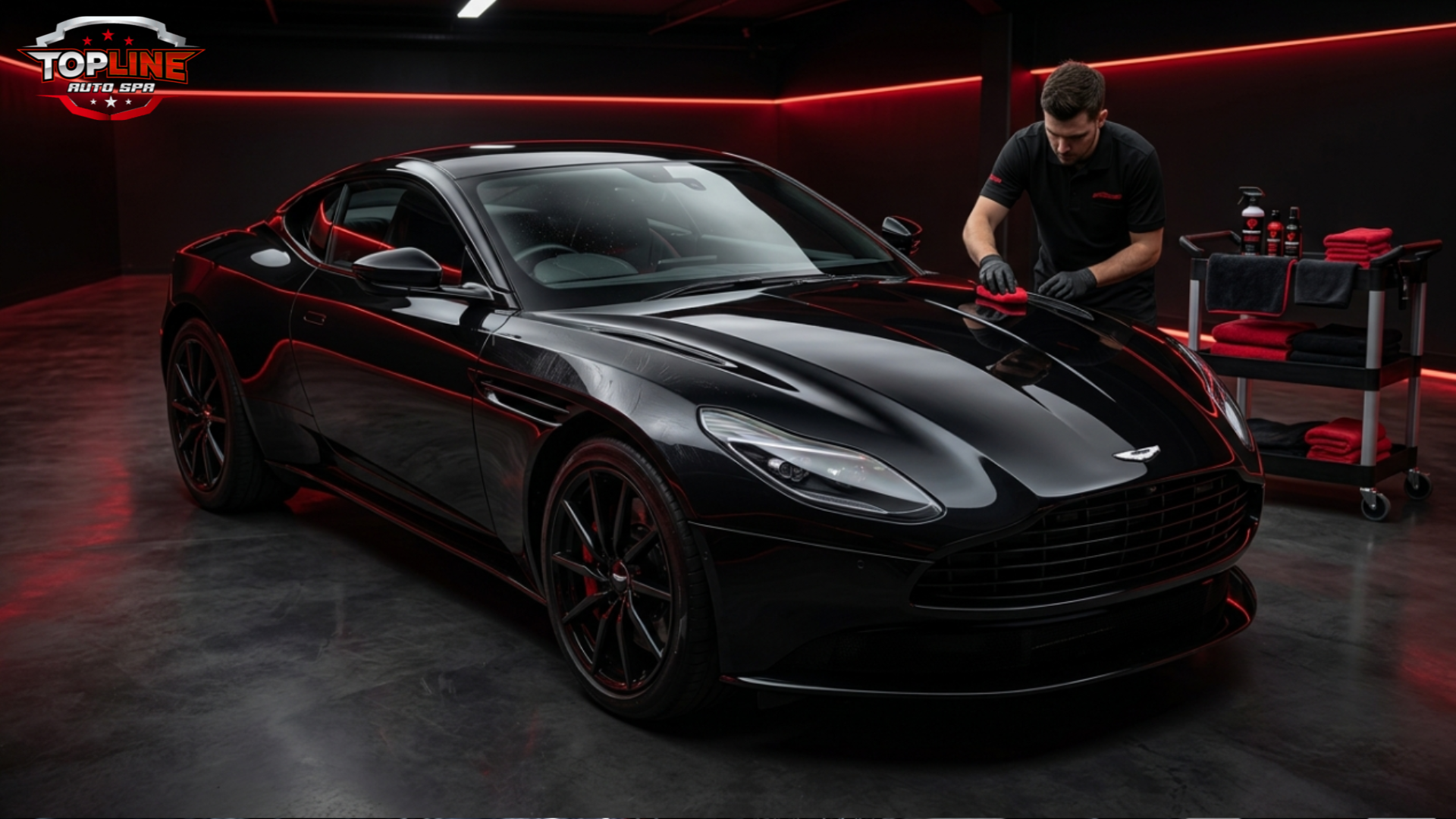
There is an old, famous saying among professional detailers and automotive enthusiasts alike: “Black isn’t a color; it’s a second job.” When a dark vehicle is freshly washed, meticulously polished, and sitting under pristine showroom lighting, absolutely nothing else on the asphalt can match its commanding presence, deep mirror-like reflection, and sheer elegance. It represents the ultimate statement of luxury, power, and automotive sophistication.
However, that breathtaking beauty comes with a major catch that every owner quickly realizes. Dark finishes are notoriously the most high-maintenance, fragile surface variants to keep clean and scratch-free. While a white, silver, or light grey car can easily mask a thick layer of static dust and weeks of road grime, a dark vehicle acts like an optical magnifying glass for every single surface imperfection. To keep that deep, ink-like paint looking pristine and to prevent it from fading into a dull, hazy grey, understanding the exact science behind why dark factory clear coats demand a higher level of surface defense is absolutely essential.
Key Takeaways
- Dark finishes do not scratch more easily mechanically, but they reveal micro-flaws far more clearly than lighter colors due to optical contrast.
- Extreme surface thermal absorption accelerates chemical etching from baked-on bird droppings, acid rain, and hard water minerals.
- Precision machine polishing is a mandatory prerequisite to clear away existing micro-marring before sealing dark body panels.
- Combining layered physical polyurethane barriers with slick hydrophobic topcoats is the ultimate way to eliminate wash-induced swirls.
The Greenhouse Effect: The Optical Illusion of Swirl Marks and Micro-Marring
A very common misconception among luxury vehicle owners is that black paint is physically softer or more fragile than other paint formulations mixed at the factory. In reality, the clear coat layer applied over a black color base coat is the same chemical composition, hardness rating, and thickness as the clear coat sprayed onto a white or silver car. The difference isn’t structural or material; it is entirely optical.
When sunlight or overhead street lamps hit a car panel, the light streams straight through the transparent clear coat, bounces off the underlying pigmented color base, and reflects up to your eyes. On a white or light silver car, the light reflection is incredibly bright and scattered, effectively blinding your eyes to fine defects. On a dark car, however, the dark background absorbs the vast majority of the light rays, creating a high-contrast canvas.
Every single microscopic scratch, automated wash line, and spiderweb swirl acts like a tiny prism. When light hits the sharp edges of these minute grooves, it reflects white light directly back out against the dark backdrop. Something as minor as wiping down a dusty black panel with a dry towel, using an old wash mitt, or brushing past the car with a jacket can instantly create thousands of tiny parallel scratches that ruin the paint’s depth and cloud its gloss.
Thermal Absorption and Accelerated Chemical Etching
The second major vulnerability of dark vehicles is how they interact with ambient outdoor temperatures and solar energy. It is a well-known thermodynamic fact that dark surfaces absorb significantly more radiation from the solar spectrum than light surfaces. On a typical hot summer afternoon, while a white car’s hood remains warm to the touch, the surface temperature on a black car hood can easily soar past 70°C.
This extreme surface heat acts as an aggressive catalyst that accelerates environmental and chemical damage. When an acidic bird dropping, industrial tree sap, or a splash of mineral-heavy sprinkler water lands on a boiling hot black panel, the moisture inside the contaminant evaporates almost instantly. This leaves behind highly concentrated, baking-hot acids and minerals that rapidly cook into and eat through the porous structure of the clear coat.
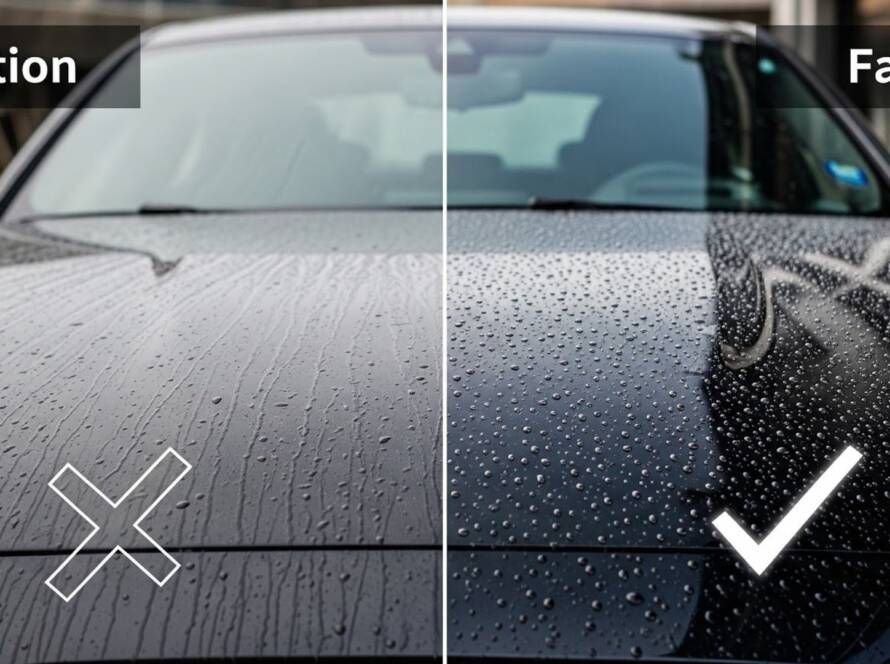
What might take days to damage a white car’s paint can cause permanent, deep chemical etching into a black car’s surface in a matter of hours. This accelerated environmental decay makes proactive surface protection a critical requirement rather than an optional luxury. Applying an advanced ceramic coating creates an ultra-hard, chemically resistant crystalline barrier that blocks these hot environmental acids from ever reaching or bonding with the sensitive factory paint work underneath.
Sub-Surface Leveling: The Mandatory Prep Step
Because dark paint highlights every sub-surface defect with unforgiving clarity, you cannot simply slap a protective layer over a black car without rigorous correction work. Attempting to install a clear bra or a liquid quartz barrier directly over unpolished black paint will permanently lock in all the existing hazy swirls, buffer trails, and marring beneath the defensive shield, making the vehicle look permanently dull.
Before any long-term defense strategy can begin, the paint must undergo a thorough paint correction. This precision process uses specialized rotary or dual-action machine polishers paired with graduating abrasive compounds to gently shave away a microscopic fraction of the damaged clear coat. By leveling the clear coat down to the depth of the scratches, an expert technician restores perfect optical clarity, revealing a flawless, liquid-like depth of color. Only when the paint is completely corrected and pristine can the long-term defensive armor be installed to lock that perfect look in place.
Layered Armor: The Ultimate Multi-Tiered Defense Strategy
For dark vehicles driven on regular highways, the ultimate insurance policy against road hazards is a heavy-duty paint protection film. This thick, elastic polyurethane clear bra acts as a rugged physical cushion that absorbs the violent impact of flying highway gravel, eliminating rock chips and deep parking lot scrapes. Modern premium films also feature elastomeric self-healing topcoats, meaning that if the film gets lightly swirled during a wash, exposure to sun, heat, or warm water will automatically melt the scratches away, keeping the black surface looking completely brand new.
For maximum results, the gold standard for dark cars is a combined approach: installing a rugged physical film on high-impact zones like the front bumper and hood, and treating the remaining panels with a premium ceramic layer. This guarantees your vehicle is fully insulated against both high-speed stone impacts and environmental fallout, while gaining an extreme level of slickness and hydrophobic performance that makes keeping the car clean an effortless task.
Rewriting Your Long-Term Maintenance Habits
Owning a dark vehicle means completely abandoning old, unsafe cleaning methods. It means throwing away cheap retail sponges, staying far away from automatic tunnel car washes with spinning plastic brushes, and committing strictly to safe hand-washing techniques like the professional two-bucket method equipped with grit guards.
To keep that freshly detailed look alive over the years, backing up your careful home care routine with quarterly or bi-annual professional detailing maintenance washes ensures your protective layers stay fully decontaminated and performing at their absolute peak. Taking care of dark paint requires specialized knowledge and discipline, but when done right, your vehicle will continuously reward you with a deep, jaw-dropping showroom reflection that stops traffic wherever you drive.
Conclusion: Honoring the Commitment to Dark Paint
Ultimately, protecting a black vehicle is not about changing how the paint is made, but about managing the unique way it handles light and heat. Because dark, clear coats act as high-contrast backdrops for swirl marks and absorb devastating thermal spikes from the sun, they require a proactive defense system to survive the elements.
By investing in professional clear coat correction, shielding high-impact panels with self-healing films, and layering hydrophobic ceramic matrices, you drop a permanent seal over your investment. Dark paint demands discipline, but when armored with professional surface protection, it delivers an unmatched, liquid reflection that remains the undisputed crown jewel of the highway.
Frequently Asked Questions (FAQ)
1. Does paint protection film change or dull the look of a black car?
Not at all. High-quality modern polyurethane films are completely optically clear and engineered with ultra-smooth topcoats that prevent the “orange peel” texture associated with cheap wraps. When properly installed by an expert studio, the film is completely invisible to the naked eye. In fact, the thick polymer structure actually deepens the gloss of black paint, giving it a rich, wet-look finish while providing heavy-duty physical defense.
2. Why do automatic car washes ruin black paint so much faster than other colors?
Automatic car washes rely on fast-spinning friction brushes made of heavy nylon fibers or closed-cell foam pads. As these brushes slap against vehicles, they carry heavy road grit, dirt, and mud left over from previous trucks. On black paint, this mechanical grinding introduces deep, circular scratch patterns across the entire vehicle. Because of the high contrast of a dark backdrop, these millions of micro-scratches instantly reflect light, creating a dull, hazy white reflection across your car.
3. How can I safely wipe dust off my black car without doing a full wash?
You should never use a dry microfiber cloth or a traditional car duster to wipe dry dust off black paint. Dragging dry dust particles across an unprotected clear coat behaves exactly like rubbing fine sandpaper over the panels, resulting in immediate micro-marring. If you need to clear away light dust, always mist the panel generously with a high-lubricity quick detailer or waterless wash spray first to lift and encapsulate the dirt particles safely before wiping gently with a plush, high-GSM microfiber towel.