

The moment you drive a brand-new vehicle off a dealership lot, an invisible clock starts ticking. For the vast majority of vehicles, depreciation sets in immediately, eating away at the car’s financial worth month after month. Statistics show that an average vehicle loses roughly 15% to 20% of its initial market value within the very first year, and up to 50% or more by the time it reaches its fifth anniversary. It is a harsh financial reality that every vehicle owner has to face.
Yet, if you look closely at the used automotive market, an interesting anomaly appears: certain cars manage to aggressively defy this steep downward trend. While one vehicle model handles like a rapidly depreciating stone, another similar model retains a massive percentage of its original price tag even after years of daily commuting. What causes this dramatic financial divide? While brand reliability and market demand lay the structural groundwork for strong residual values, the physical preservation of a vehicle’s cosmetic surfaces plays a defining role. To maximize your eventual return on investment, understanding the exact science behind vehicle depreciation and asset protection is essential.
Key Takeaways
- Depreciation rates vary significantly based on brand reputation, historical reliability data, and active market demand.
- A vehicle’s physical cosmetic condition directly determines whether an appraiser prices it at the top or bottom of its book value.
- Shielding high-impact exterior zones prevents irreversible rock chips and clear coat degradation.
- Maintaining a pristine, contaminant-free cabin space strongly preserves private party resale and trade-in premiums.
Brand Equity, Reliability, and Market Demand Factors
At the absolute foundation of low automotive depreciation sits the basic economic law of supply and demand. Certain manufacturing brands have spent decades building an ironclad reputation for engineering mechanical components that easily withstand the test of time. When a vehicle model is known to cross the 100,000-mile or 200,000-mile mark with only routine fluid changes, its demand remains exceptionally high in the secondary used market.
Furthermore, changing consumer preferences dictate market trends. For instance, if fuel efficiency or all-weather capability suddenly becomes the primary concern for commuters, vehicles fitted with hybrid powertrains or robust all-wheel-drive systems will automatically see their residual values hold steady or even increase. However, regardless of how structurally perfect a car’s engine or transmission remains, a secondary buyer or dealership appraiser evaluates an asset from the outside in. If the vehicle looks neglected, weathered, or severely worn down visually, its mechanical pedigree will rarely save it from a massive deduction in market valuation.
Clear Coat Integrity: Restoring and Protecting Exterior Surface Gloss
The exterior paint on your vehicle is the first thing an appraiser or private buyer sees, and it serves as a direct indicator of how well the vehicle was cared for by its previous owner. Standard factory clear coats are incredibly sensitive surfaces that face constant environmental bombardment. Over time, automatic tunnel car washes with coarse plastic brushes scratch the surface, creating thousands of fine, circular swirl marks that cloud the paint’s clarity and kill its reflection.
If your paint has already succumbed to years of wash scratches or environmental dullness, applying a protective layer over those defects will only lock in the visual flaws. To eliminate this visual haze and restore a flawless, deep mirror finish that instantly raises a car’s aesthetic value, investing in a professional paint correction is required. This precision machine polishing process levels out the clear coat to remove sub-surface defects safely.
Once the paint is restored to a flawless showroom condition, locking in that high-gloss reflection requires an advanced defensive layer. Applying a premium liquid polymer ceramic coating creates an ultra-hard, hydrophobic crystalline shield over the clear coat. This chemical barrier prevents road salt, industrial fallout, and bird droppings from etching into the factory paint. If you are pursuing a multi-year treatment strategy, tracking the true ceramic coating lifespan helps you safely map out routine maintenance washes before environmental degradation sets in, keeping your vehicle looking brand new for years.
Physical Defenses Against Road Debris and Interior Deterioration
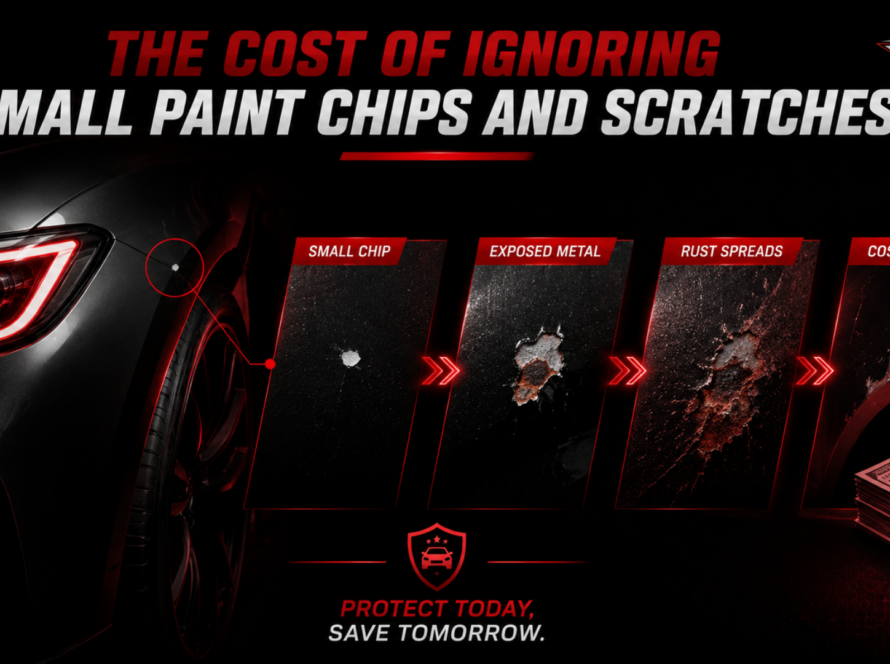
While chemical coatings excel at repelling environmental stains and maximizing gloss, they cannot stop the physical force of high-speed debris on the highway. Flying gravel, loose asphalt, and road salt thrown up by forward traffic act like tiny missiles, chipping away at your front bumper, hood, and side mirrors. Over a few seasons, a heavily pitted front end can slash thousands of dollars off a vehicle’s trade-in appraisal.
To completely insulate your paint against these aggressive physical hazards, installing a heavy-duty paint protection film is the ultimate solution for high-impact zones. This thick, self-healing polyurethane clear bra absorbs the kinetic impact of flying stones, completely preventing rock chips, deep scratches, and road rash.
Simultaneously, preserving a vehicle’s interior cabin is just as critical for protecting resale value. Harsh, unchecked ultraviolet (UV) rays pouring through side windows are the leading cause of dried-out leather upholstery, warped door trim panels, and severely cracked dashboards. Upgrading your vehicle’s glass with advanced solar window tinting blocks up to 99% of these destructive UV rays and rejects solar infrared heat, preserving your interior materials from sun fading while keeping the cabin comfortably cool.
Conclusion: Turning Maintenance Into an Investment Strategy
Ultimately, why some vehicles hold their value remarkably well comes down to a deliberate combination of smart vehicle selection and disciplined cosmetic maintenance. While factory engineering sets the baseline depreciation rate, your day-to-day choices determine whether your specific vehicle commands a premium price tag or sits forgotten on a used car lot.
By executing a strategic vehicle care cycle—including protective films for impact resistance, ceramic barriers for environmental defense, and solar window films for interior uv protection—you actively fight back against the forces of depreciation. When you back up this defense strategy with routine professional detailing check-ups, you aren’t just cleaning a machine; you are actively defending a high-value financial asset that will pay major dividends when it comes time for an upgrade.
Frequently Asked Questions (FAQ)
1. How much value does professional paint protection add to a used car?
While it is difficult to give an exact dollar amount, professional surface protection prevents the common cosmetic deductions that appraisers use to lower a trade-in value. A car free of rock chips, paint swirl marks, and sun-faded upholstery will easily qualify for an “Excellent” or “Pristine” condition rating on Kelly Blue Book (KBB) or Edmunds, which can represent a value premium of several thousand dollars over an identical vehicle in “Fair” or “Good” condition.
2. Can I remove paint protection film (PPF) before selling my vehicle?
Yes, premium paint protection films are engineered with highly sophisticated, stable adhesives that can be safely removed by a professional studio without causing any damage to the underlying factory clear coat. When you peel the film off after years of driving, the factory paint underneath will be completely untouched and in the same pristine condition as the day the film was first installed.
3. Will cheap retail window tints protect my interior from fading?
No, cheap retail window tints are primarily made from basic dyed polyester. While they make the glass look darker from the outside, they offer very little protection against invisible UV rays and infrared heat. Over a short period, cheap films will fade, turn purple, and begin to bubble up, which actually reduces your vehicle’s resale value. To protect your upholstery, you need a professional-grade ceramic or carbon window film designed specifically for high-efficiency solar defense.