
To many vehicle owners, a tiny rock chip on the front bumper or a faint surface scratch near the door handle seems completely harmless. It is easy to look at a microscopic speck of missing paint and think of it as a purely cosmetic flaw, something that can comfortably wait until next season’s budget clears up. After all, when you are busy logging miles on the highway or navigating city traffic, a minor blemish hardly seems worth an immediate trip to a professional studio.
However, viewing a paint chip as a simple visual imperfection is a dangerous and highly expensive automotive misunderstanding. Your vehicle’s factory paint job isn’t just there to look deep and reflective under the sun; it is an engineered, multi-layered defensive boundary line explicitly designed to isolate raw sheet metal from destructive atmospheric elements. When a flying pebble or a stray shopping cart punctures that thin shield, it opens a gateway for structural decay. What starts as a harmless micro-defect can quietly transform into an aggressive, sub-surface rust cycle that eats through structural steel from the inside out. To protect your car’s market value and avoid thousands of dollars in major body shop repairs, understanding the true cascading cost of delayed surface maintenance is absolutely vital.
Key Takeaways
- Minor chips expose the raw underlying steel panels directly to moisture and oxidation.
- Neglected sub-surface marring will spread beneath the clear coat, lifting surrounding paint layers over time.
- Postponing early cosmetic correction inevitably forces owners into paying for expensive, structural panel repainting.
- Proactive defensive installations drop a permanent shield over your factory paint, preserving maximum vehicle asset value.
Anatomy of a Scratch: Breaking the Factory Defense Matrix
To understand why a tiny paint chip is an emergency waiting to happen, you have to look at how modern vehicle panels are constructed at the factory. Your car’s exterior finish is not a single, thick block of liquid color. It is a highly precise, layered system consisting of three distinct chemical elements bonded over the raw metal sheet: the primer, the base color coat, and the transparent clear coat. The clear coat acts as the primary physical shield, blocking UV rays, handling minor friction, and sealing the pigmented paint underneath.
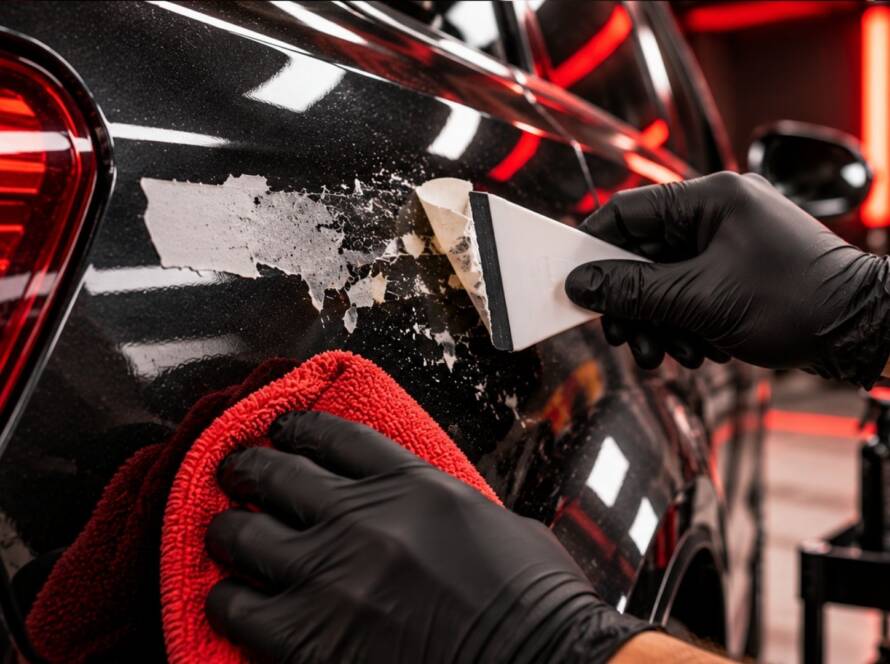
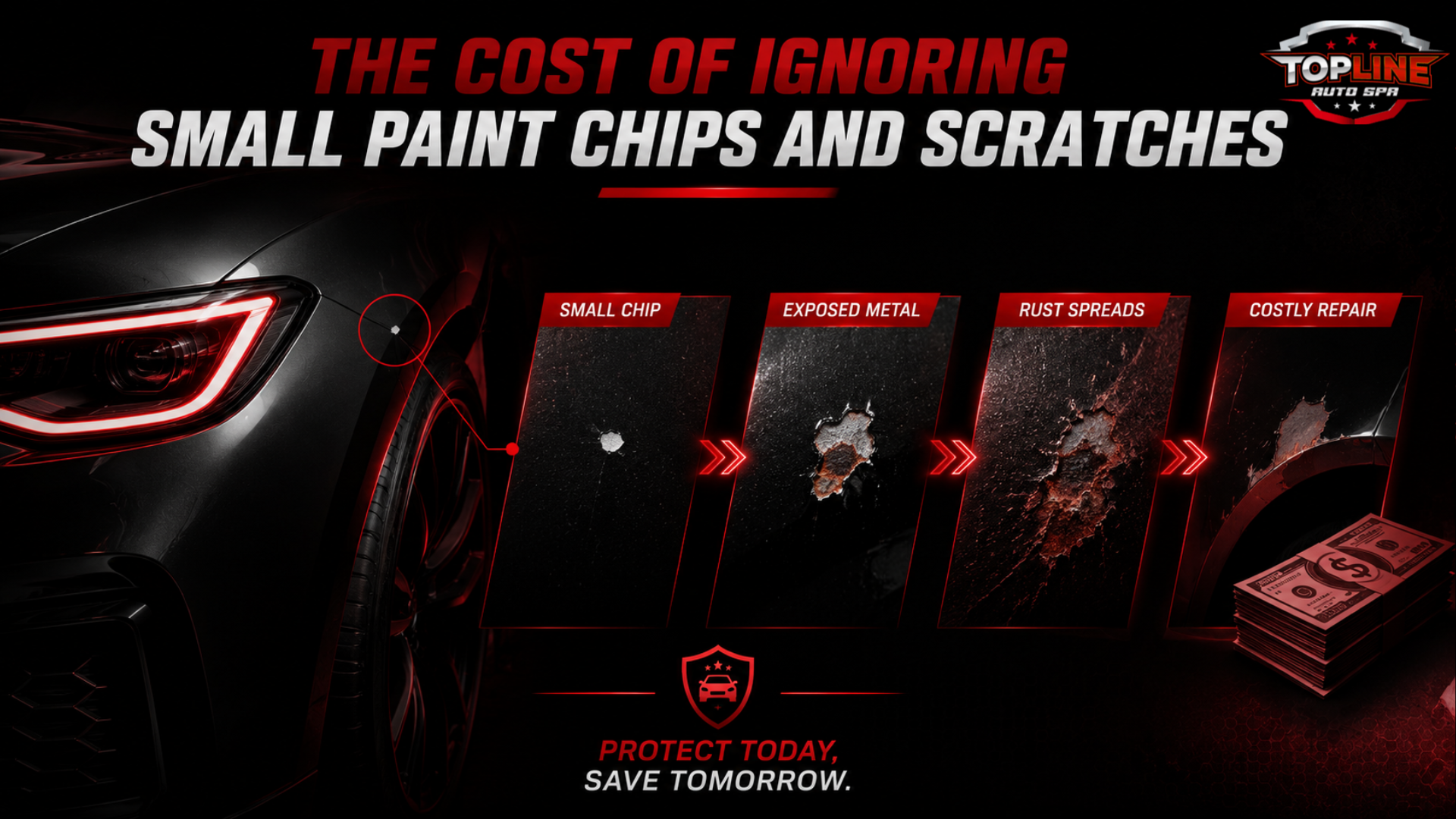
When a deep scratch or a high-velocity stone impact slices straight through that transparent, clear coat and color layer, it fractures the seal. If the scratch exposes the grey primer or the bright silver metal beneath, the clock immediately begins to tick. Raw automotive sheet metal possesses an incredibly high affinity for oxygen. The moment atmospheric moisture, morning dew, or winter road salt finds a path through the puncture, a chemical reaction known as oxidation occurs. Rust begins to form at the core of the chip. Because rust expands as it develops, it will quietly creep outward beneath the surrounding healthy paint layers, lifting the clear coat and causing the factory finish to bubble, flake, and peel away in large, unfixable patches.
The Compounding Financial Escalation of Surface Neglect
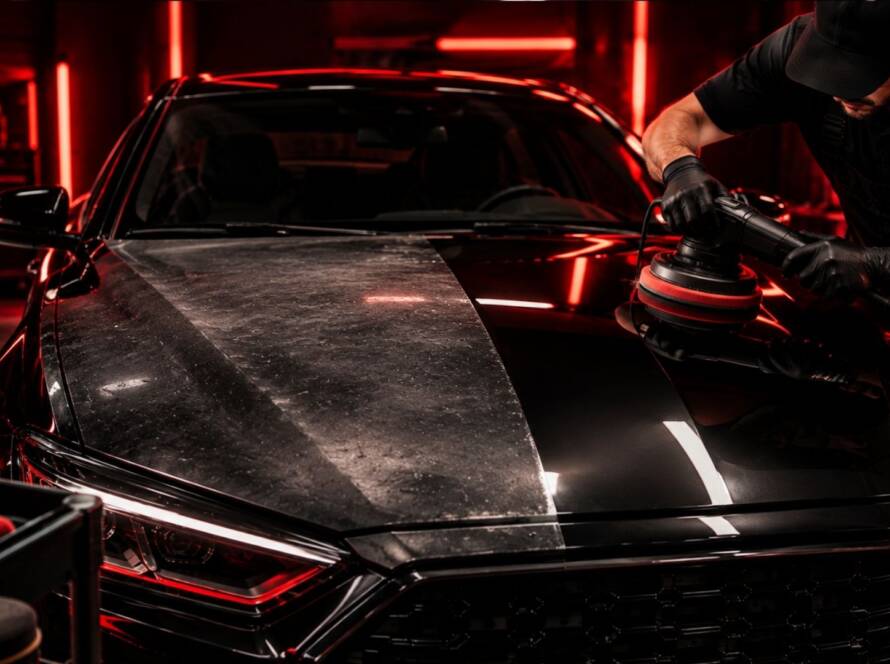
The financial consequences of ignoring minor clear coat damage escalate dramatically over time. If you address a surface scratch or micro-marring early, restoring a flawless mirror finish is a highly controlled, non-invasive process. Investing in a professional paint correction allows an expert technician to use specialized machine polishers to safely level out the clear coat imperfections, erasing the scratches without altering the factory paint depth.
However, if you postpone maintenance and allow a stone chip to develop deep, orange iron oxidation, a simple polishing pad can no longer solve the issue. Once rust embeds into the sheet metal pores, the repair process shifts from preventative detailing to invasive bodywork. The entire section must be mechanically sanded down to bare metal, treated with chemical rust inhibitors, filled with body glaze, and completely resprayed in a localized paint booth. Blending fresh paint across older panels to match perfectly is exceptionally difficult, costs thousands of dollars more than early correction, and instantly diminishes your car’s market value by creating non-factory panels.
Protecting these surfaces pays massive long-term dividends. By ensuring your clear coat remains perfectly sealed, you actively preserve the vehicle’s secondary market appraisal, preventing the steep cosmetic deductions that appraisers use to slash trade-in valuations. If you are tracking your asset protection goals, understanding how routine care directly impacts your ceramic coating lifespan ensures your vehicle stays pristine and holds maximum worth.
Deploying Long-Term Proactive Surface Armor
Instead of waiting for damage to manifest and continuously paying for touch-up repairs, the smartest automotive strategy is to install an unbreakable physical and chemical armor package before the elements strike. For total immunity against high-velocity highway gravel and deep parking lot scrapes, applying a heavy-duty paint protection film across high-impact zones is the ultimate solution. This thick, elastic polyurethane clear bra completely absorbs the kinetic force of flying road hazards, insulating your factory paint work while utilizing advanced self-healing topcoats to automatically erase fine wash scratches under sun heat.
To lock in maximum depth, slickness, and chemical resistance across the remaining body lines, treating the panels with a premium liquid quartz layer is the industry standard. Installing a professional ceramic coating creates a semi-permanent, hydrophobic crystalline boundary line that repels road salt, bird droppings, and industrial chemical soot effortlessly, preventing environmental acids from etching into the clear coat.
You can fortify this comprehensive armor package by addressing your vehicle’s glass as well. Unchecked solar rays pouring through side windows can rapidly dry out leather upholstery and crack dashboards. Upgrading your windows with advanced infrared-blocking solar window tinting safeguards your cabin interior from fading, complementing your exterior protections and keeping the workspace incredibly comfortable.
Conclusion: A Smarter Approach to Automotive Preservation
At the end of the day, a tiny paint chip or a minor clear coat scratch is never a permanent cosmetic flaw; it is an active structural vulnerability. Allowing micro-defects to bake under the sun and absorb road moisture turns minor detailing touch-ups into complex, expensive body shop panel repaints.
By taking a disciplined approach to vehicle care, shielding high-impact strike zones with polyurethane films, sealing your body panels with nano-ceramic matrices, and scheduling routine professional detailing and decontamination washes, you stop the depreciation cycle completely. Investing in proactive surface protection guarantees your vehicle avoids sub-surface rust, preserves its jaw-dropping showroom reflection, and commands absolute top market value when it comes time for an upgrade.
Frequently Asked Questions (FAQ)
1. How long does it take for a bare paint chip to start rusting?
The timeline for oxidation to develop depends heavily on your local environment and weather patterns. In high-humidity climates, coastal regions with heavy sea salt, or northern states that apply aggressive road-deicing chemicals in the winter, raw metal can begin showing fine orange surface rust within 24 to 48 hours of a paint chip puncture. In dry, arid climates, it may take several weeks, but the oxidation process will inevitably occur once moisture lands on bare steel.
2. Can a professional ceramic coating prevent stone chips from damaging my paint?
No, ceramic coatings are not engineered to resist heavy mechanical impacts. While they form an incredibly hard, glossy crystalline shell that easily repels bird droppings, prevents acid rain etching, and minimizes fine hand-wash swirl lines, they are microscopically thin. To completely cushion your front bumper, hood, and fenders from high-velocity flying highway gravel, you must install a heavy-duty, impact-absorbing polyurethane paint protection film (PPF).
3. Is it safe to just use a cheap retail touch-up paint pen over a deep scratch at home?
While retail touch-up pens can temporarily mask the color gap, they rarely create a permanent, airtight seal over the metal. If you apply touch-up paint directly over a chip that has already begun to develop microscopic trace oxidation, you will trap the rust beneath the paint layer, allowing it to spread unseen and cause the panel to bubble later on. A professional studio thoroughly decontaminates, chemically treats, and multi-stages the micro-filling process to ensure a secure, flush seal that stops rust permanently.