
For luxury, sports, and performance vehicle owners, maintaining an immaculate appearance is an ongoing investment. You can spend hours meticulously hand-washing your car panels to a mirror reflection, only to notice an unsightly layer of dark, gritty contamination blanketing your custom rims after a single short drive. This aggressive byproduct of high-performance driving is metallic brake dust, and it remains one of the most frustrating maintenance challenges in the entire automotive world.
Traditional detailing sprays and retail synthetic waxes simply lack the thermal endurance required to insulate your rims from this hot, abrasive debris. Without an advanced defensive barrier, these sharp metallic shavings will slowly embed into your delicate clear coat, leading to permanent chemical staining, pitting, and oxidation.
Fortunately, modern surface engineering has delivered a permanent solution to this common headache. Investing in a professional ceramic coating for wheels establishes a semi-permanent, glass-like quartz matrix across your entire wheel structure. This microscopic shield repels harsh contaminants, preserves your factory finish, and entirely transforms your weekly wash routine.
Key Takeaways
- Heavy-performance brake systems generate hot, sharp metallic shavings that quickly melt into unprotected wheel clear coats.
- A professional quartz shield provides exceptional high-temperature thermal durability that traditional car waxes cannot match.
- The extreme slickness of modern quartz matrices forces iron particles and highway grime to rinse away with minimal friction.
- Investing in advanced structural defense shields your custom rims from permanent pitting and costly structural refinishing.
The Chemistry of Contamination: Why Brake Dust Destroys Unprotected Rims
To understand why traditional cleaning solutions fail, you must first look at how brake dust is formed. When you press down on your brake pedal at highway speeds, the high-friction brake pads press tightly against the spinning steel brake rotors. This intense mechanical pressure creates massive amounts of extreme friction heat while shearing off thousands of microscopic iron filings and burnt carbon particles.
These high-velocity metallic shards fly off your braking components at temperatures frequently exceeding 400 degrees Fahrenheit. When these hot iron filings hit an unprotected wheel panel, they melt straight into the porous factory clear coat finish. As they cool, they chain-link chemically to the surface, creating a rough, dark layer of oxidation that resists standard car wash shampoos.
If left untreated, these embedded iron filings continue to oxidize when exposed to moisture and rain, triggering a microscopic corrosive reaction. This acidic breakdown slowly eats through the protective clear paint layers, causing permanent gray pit marks, black carbon staining, and eventual clear coat failure.
Polyurethane Crystalline Defense: The Power of Curing Quartz Barriers
Standard retail car waxes and modern spray sealants are fundamentally organic chemical structures. Because they possess very low thermal melting thresholds, the extreme heat coming off your performance brake rotors will instantly melt them away, leaving your clear coat completely bare within days.
Opting for a dedicated wheel ceramic coating completely changes this chemical vulnerability. These specialized coatings are formulated from premium silicon dioxide (SiO2) and advanced titanium matrices, curing to create an ultra-dense, glass-hard crystalline topcoat that remains stable at temperatures up to 1,200 degrees Fahrenheit.
When applied to your rims, this liquid quartz matrix flows deep into the microscopic pores of the clear coat, forming a permanent cross-linked molecular bond. Once fully cured, this glossy layer acts as a permanent sacrificial barrier. The hot, metallic filings can no longer find pores to bite into, meaning they sit loosely on top of the ultra-hard ceramic film rather than melting into your vehicle’s factory paint.
Hydrophobic Material Slickness: Making Weekly Rim Cleanup Effortless
The most noticeable benefit of installing a professional ceramic coating alloy wheels package is the incredible slickness it adds to the surface. Cured ceramic matrices possess massive contact angles that actively repel water, oils, and industrial road grime.
This high slickness creates an environment where you can easily protect wheels from brake dust accumulation. Instead of iron filings locking firmly onto the panels, the high surface tension forces the debris to sit loosely on top of the coating.
Consequently, maintaining your wheels no longer requires aggressive scrubbing with caustic acid cleaners or stiff, scratch-prone wheel brushes. During your routine weekly wash, a heavy stream of water from a pressure washer will effortlessly slide the vast majority of caked-on black carbon grime right off the rims, allowing you to clean your wheels quickly without introducing fine surface marring.
Long-Term Capital Preservation: Bypassing Costly Alloy Restorations
Maintaining pristine custom or factory multi-spoke rims is vital if you want your vehicle to project a truly premium look over a realistic ownership timeline. Allowing hot metallic shavings to pit your rims will permanently ruin the vehicle’s aesthetic appeal and significantly lower its market resale value.
Once deep iron pitting sets in across your alloy barrels, the only way to fix the visual damage is by paying for an expensive professional wheel restoration. This complicated process requires dismounting your tires, chemically stripping the wheels down to raw metal, and completely respraying the clear coat.
Investing early in a premium wheel protection coating bypasses this frustrating cycle entirely. The hard crystalline barrier completely blocks road salt, industrial acids, and corrosive moisture from ever reaching the underlying alloy metal, keeping your rims looking brand-new for years to come.
Meticulous Detailing Architecture: The Professional Clean and Prep Protocol
Achieving a flawless, long-lasting molecular bond requires an exhaustive chemical decontamination and mechanical prep process that cannot be replicated in a standard home driveway. Laying down a liquid quartz matrix over existing carbon scaling or iron fallout will only trap those visual defects and cause the coating to fail prematurely.
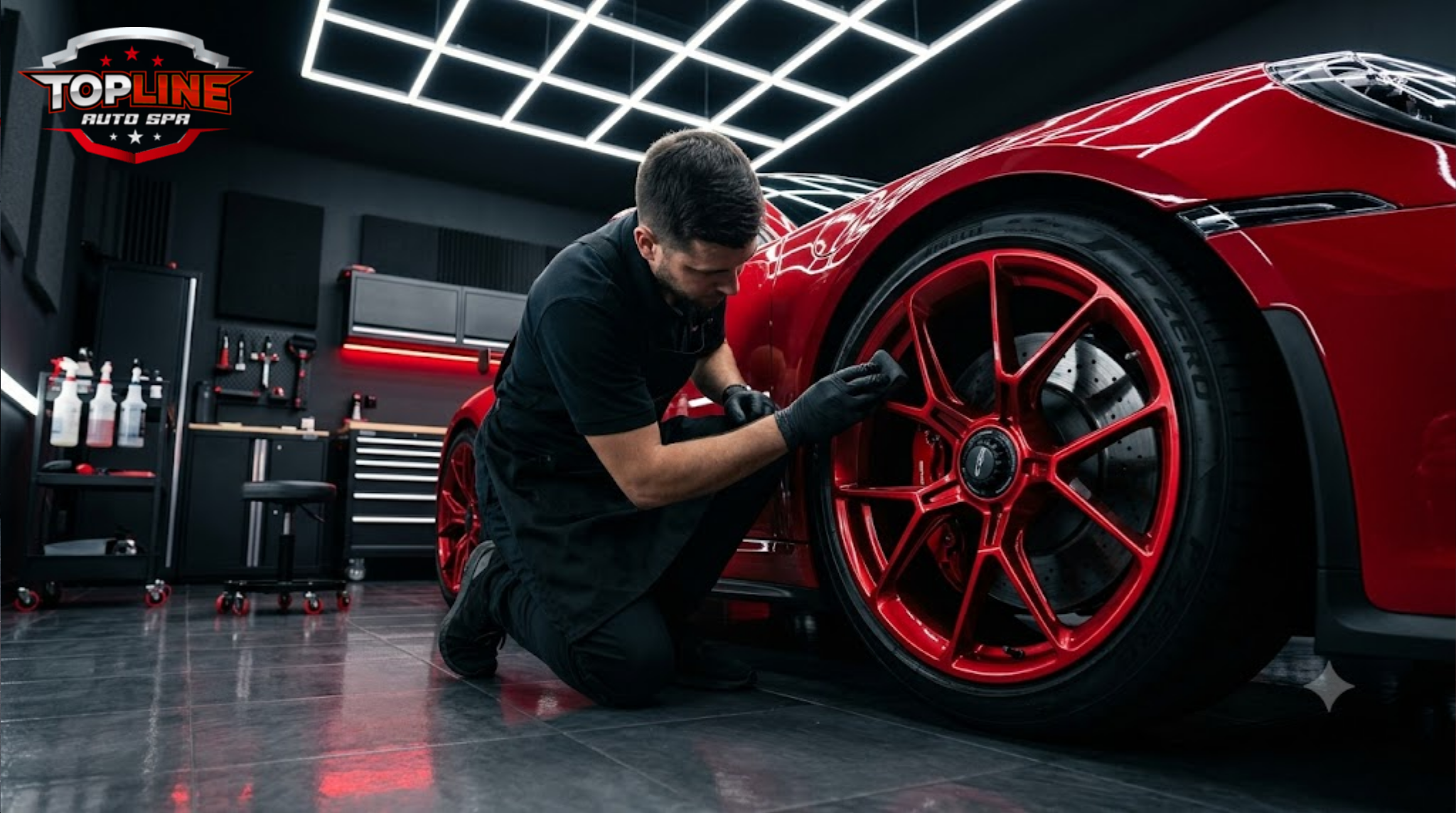
A professional studio begins the installation by removing the wheels entirely to gain complete access to the inner barrels and brake calipers. The wheels undergo a rigorous multi-stage decontamination wash using specialized iron-dissolving cleansers that target and lift embedded metallic shavings safely.
Next, a clay bar treatment clears away stubborn road tars, followed by a meticulous isopropyl alcohol panel wipe down to strip away any remaining polishing oils. Only when the clear coat is completely bare will the technician hand-apply the coating across the faces, inner barrels, spokes, and brake calipers, ensuring comprehensive protection for the entire assembly.
Proactive Home Maintenance: Keeping Coated Rims Immaculate
Once your luxury wheels are safely sealed behind a professional quartz barrier, discovering how to keep wheels clean becomes remarkably simple. You can throw away your aggressive, burning acid wheel cleaners and harsh abrasive sponges.
For routine maintenance, all you need is a bucket of clean water, a pH-neutral automotive shampoo, and a dedicated, ultra-plush microfiber wash mitt. Simply rinse away the loose surface dust with a pressure washer, gently wipe down the spokes with your lubricated microfiber mitt, and rinse again.
To prevent hard water spots from developing on the highly reflective surfaces, always dry the rims immediately using a dedicated cordless blower or a soft microfiber towel. This disciplined, low-friction maintenance cycle preserves the deep glass-like gloss of your coating and keeps your performance vehicle looking showroom-ready for miles to come.
Conclusion
Conquering the constant frustration of filthy, soot-covered rims doesn’t have to be a losing battle. While high-performance braking systems will always generate hot, sharp metallic shavings, modern ceramic technology ensures this debris no longer threatens your vehicle’s presentation. By replacing temporary waxes with a hard, thermally stable quartz barrier, you can insulate your factory finish from chemical etching and structural pitting.
Ultimately, maximizing the beauty, durability, and ease of maintenance for your wheels comes down to premium component selection and professional studio craftsmanship. Investing in a meticulous, wheel-off professional ceramic coating package shields your custom alloy shapes from harsh environmental road hazards. This comprehensive defensive approach saves you from expensive structural refinishing costs, streamlines your weekly detailing routine, and ensures your premium vehicle always commands a powerful, high-end presence on the open road.
Frequently Asked Questions (FAQ)
Does a ceramic coating completely stop wheels from getting dirty?
No, a ceramic coating will not entirely prevent static road dust or metallic brake dust from resting on your wheels. However, it changes how that dirt behaves. Because the cured quartz matrix is exceptionally slick and lacks microscopic pores, the dust cannot bake into or chemically bond with the clear coat. This prevents the debris from staining the finish and allows it to rinse away effortlessly with a standard pressure washer and neutral soap.
How long will a professional wheel ceramic coating last under normal driving conditions?
A high-grade, professional-strength wheel coating applied in a controlled studio environment typically lasts between one and two years. Because wheels face extreme heat cycles, heavy friction, and constant exposure to high-velocity highway debris, they operate in a far harsher environment than your vehicle’s body panels. Routine chemical maintenance checks at a certified detailing shop will help maximize this lifespan.
Is it safe to use automatic car wash wheel brushes on coated rims?
No, you should strictly avoid automated tunnel washes that use heavy, rotating plastic bristle brushes to clean rims. These stiff automated brushes are often contaminated with coarse stones, highway grit, and metal particles left behind by previous trucks. The mechanical force of these dirty brushes will drag abrasive grit across your rims, creating thousands of fine micro-scratches that will quickly dull the reflective shine of your ceramic finish.