
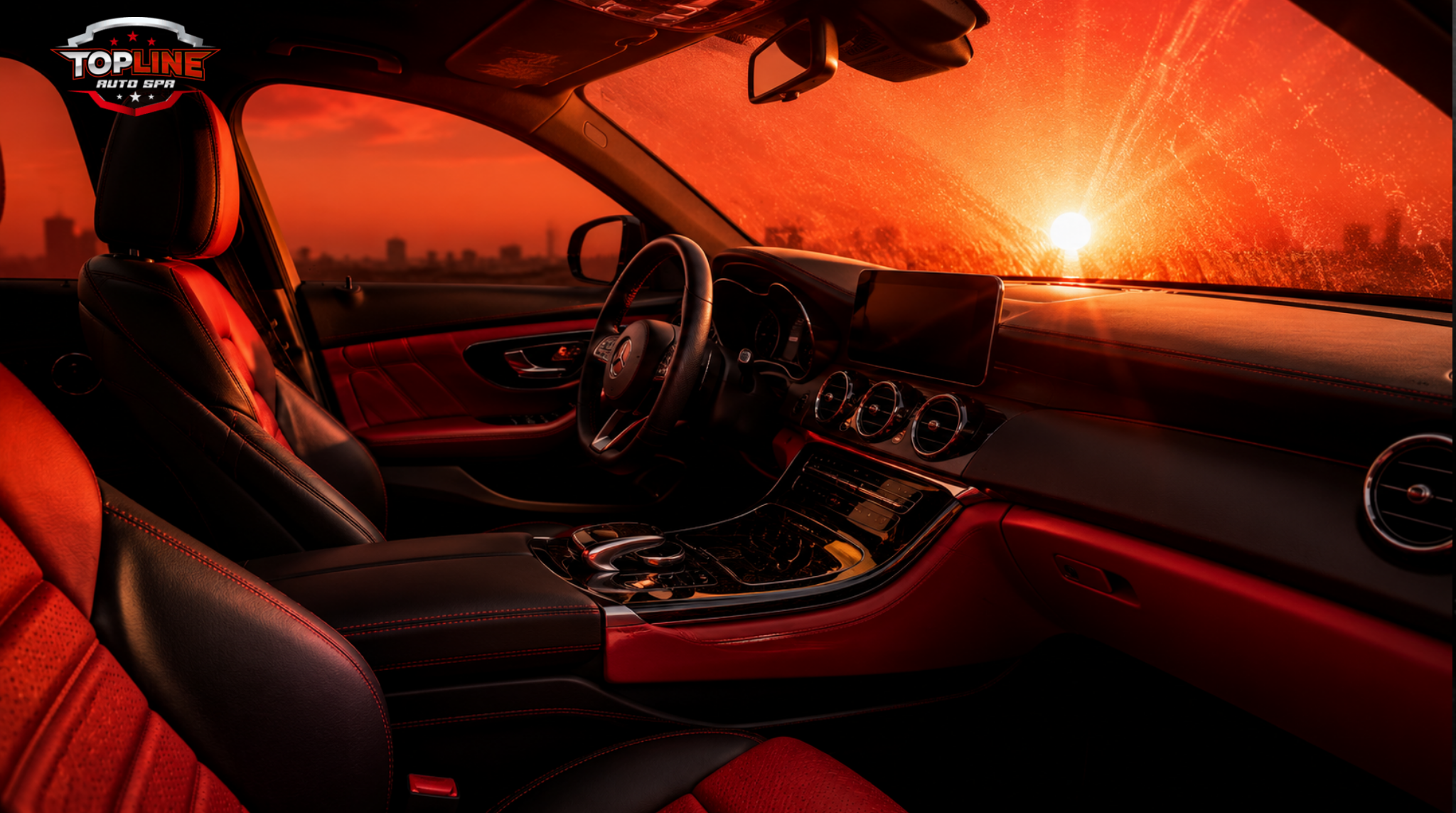
Summer heat can do more than make your vehicle uncomfortable—it can gradually damage your car’s interior in ways many owners don’t notice until the effects become obvious. Prolonged exposure to high temperatures and direct sunlight can affect everything from dashboards and seats to electronic components and interior trim.
Whether your vehicle is parked outside daily or occasionally sits in the sun for extended periods, understanding how summer heat damages your car interior can help you prevent costly repairs and preserve your vehicle’s appearance for years to come.
Key Takeaways
- High temperatures accelerate interior wear and aging
- UV rays can fade dashboards, seats, and trim
- Excessive heat may affect electronic components
- Leather and vinyl surfaces are especially vulnerable
- Preventive maintenance helps extend interior lifespan
Dashboard Fading and Cracking
One of the most common effects of summer heat is dashboard deterioration. Constant exposure to ultraviolet rays causes dashboard materials to dry out over time. As moisture leaves the material, fading, discoloration, and eventually cracking can occur.
Dark-colored interiors often show this damage faster because they absorb more heat from sunlight. Once cracks begin forming, repairs can become expensive and difficult to hide.
Installing window tinting helps reduce heat and UV exposure, providing an additional layer of protection for dashboards and other interior surfaces.
Leather Seats Lose Their Condition Faster
Leather interiors add a premium feel to any vehicle, but they are highly susceptible to heat damage. Continuous exposure to sunlight and elevated temperatures gradually removes the natural oils that keep leather soft and flexible.
As the material dries out, it can become stiff, faded, and prone to cracking. Over time, what once looked luxurious may begin showing noticeable signs of wear. Regular conditioning helps maintain leather, but limiting heat exposure remains one of the best ways to preserve its appearance.
Plastic and Vinyl Trim Can Warp
Modern vehicles contain numerous plastic and vinyl components throughout the cabin. These materials constantly expand and contract as temperatures fluctuate.
During hot summer months, repeated heat cycles can cause interior trim pieces to warp, discolor, or lose their original finish. Areas near the windshield often experience the most damage because they receive direct sunlight for extended periods.
Electronics Are Not Immune to Heat
Today’s vehicles rely heavily on technology, including touchscreens, digital displays, sensors, and electronic control systems.
While manufacturers design these components to withstand high temperatures, prolonged exposure can still accelerate wear and reduce lifespan. Display screens may fade, adhesives can weaken, and electronic performance may gradually decline over time.
Keeping cabin temperatures lower helps reduce stress on these sensitive systems.
Heat Makes Dust and Interior Contamination More Noticeable
Summer heat increases airflow movement inside the cabin, making dust and fine particles more visible on dashboards, vents, and trim surfaces.
If you’ve noticed your vehicle becoming dusty more quickly during warmer months, our guide on Why Car Interiors Get Dusty So Quickly explains some of the hidden causes behind interior contamination and dust buildup.
Regular cleaning combined with professional auto detailing services helps remove contaminants before they settle deeper into fabrics, vents, and interior surfaces.
Adhesives and Interior Materials Can Weaken
Many interior components rely on adhesives to remain securely attached. Headliners, trim panels, and various interior finishes are all vulnerable to prolonged heat exposure.
As temperatures rise repeatedly, these adhesives can weaken and lose their effectiveness. This often contributes to sagging headliners, loose trim pieces, and separated interior panels as vehicles age.
Cars parked outdoors year-round typically experience these issues sooner than vehicles stored in garages or covered parking areas.
Steering Wheels and High-Touch Surfaces Wear Faster
Steering wheels, shift knobs, center consoles, and armrests receive constant contact while also absorbing significant heat.
Over time, leather-wrapped surfaces may dry out and crack, while synthetic materials can fade or become rough to the touch. These high-contact areas often show signs of aging before other interior components.
Protecting them from excessive heat helps preserve both appearance and comfort.
How to Protect Your Interior From Summer Heat
Preventing heat-related damage is often easier and less expensive than repairing it later.
Consider the following protective measures:
- Park in shaded areas whenever possible
- Use windshield sunshades
- Keep interior surfaces clean
- Condition leather regularly
- Apply UV-protectant products
- Install quality window tint
- Schedule routine interior maintenance
Small preventive steps can significantly reduce long-term wear and help your interior maintain its original appearance.
Conclusion
Summer heat affects nearly every part of your vehicle’s interior. From faded dashboards and cracked leather seats to weakened adhesives and increased dust accumulation, prolonged exposure to high temperatures can significantly shorten the lifespan of interior materials.
While some degree of wear is unavoidable, taking preventive measures can dramatically reduce the impact of heat and sunlight. Protecting your vehicle from UV exposure, maintaining interior surfaces properly, and addressing early signs of deterioration all contribute to a cleaner, more comfortable, and longer-lasting cabin.
Many vehicle owners focus heavily on protecting their exterior paint while overlooking the interior, even though they spend most of their time inside the vehicle. Interior damage often develops gradually, making it easy to ignore until repairs become costly.
Regular inspections and full service auto detailing can help identify early signs of heat-related wear before they become major problems. Investing in preventive care today can help preserve your vehicle’s comfort, appearance, and value for years to come.
FAQs
Can summer heat permanently damage a car interior?
Yes. Prolonged exposure to heat and UV rays can cause fading, cracking, warping, and material deterioration that may become permanent if left unaddressed.
What part of a car interior is most affected by heat?
Dashboards, leather seats, steering wheels, trim pieces, and electronic displays are typically the most vulnerable to heat and sun damage.
How can I protect my car interior during summer?
Using sunshades, parking in shaded areas, installing window tint, conditioning leather surfaces, and maintaining a regular cleaning schedule can significantly reduce heat-related damage.