
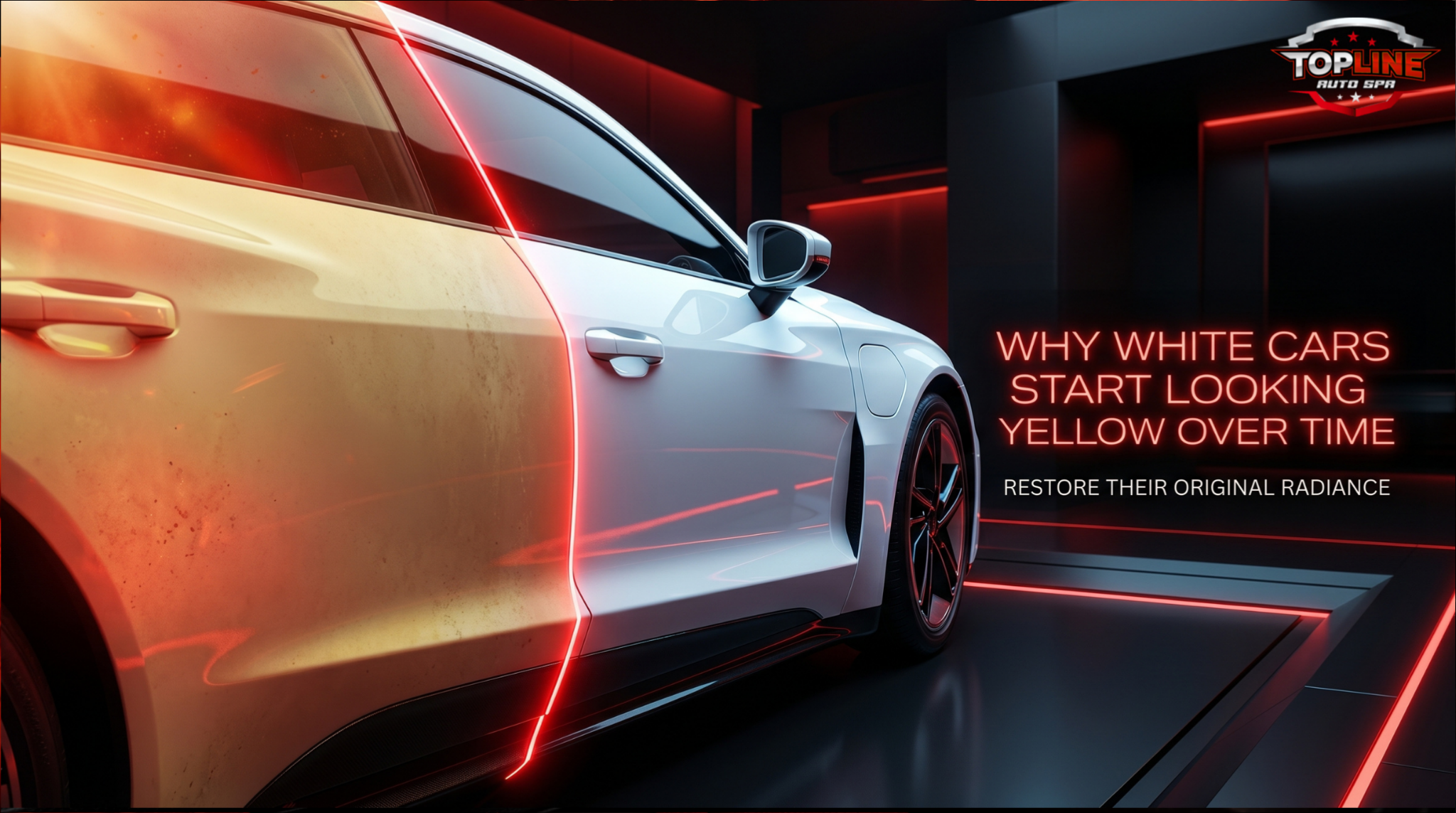
White cars are known for looking clean, bright, and timeless. But over the years, many owners begin noticing a yellowish tint appearing on the paint, especially on the hood, roof, bumpers, and other exposed areas.
This discoloration usually happens gradually, making it easy to ignore at first. However, once the yellowing becomes noticeable, restoring the original finish can become more difficult and expensive.
Understanding why white car paint turns yellow over time can help you prevent long-term damage and maintain a cleaner, brighter finish for years.
Key Takeaways
- UV exposure is one of the biggest causes of yellowing paint
- Oxidation slowly changes the appearance of white surfaces
- Environmental contamination can stain clear coat layers
- Poor maintenance habits accelerate discoloration
- Paint protection helps preserve the brightness of white vehicles
UV Exposure Slowly Breaks Down the Paint
Constant sunlight exposure is one of the primary reasons white vehicles begin developing a yellow tint.
Ultraviolet rays gradually weaken the clear coat protecting the paint surface. As oxidation develops, the finish loses clarity and starts appearing dull, faded, or slightly yellow under sunlight.
Vehicles parked outdoors for long periods are especially vulnerable because the paint experiences continuous heat and UV exposure every day.
Applying ceramic coating can help reduce long-term UV damage by creating an additional protective barrier over the surface.
Oxidation Makes White Paint Look Older
Oxidation occurs when the paint surface reacts with oxygen, moisture, and environmental exposure over time.
White paint tends to reveal oxidation more visibly than darker colors because discoloration stands out against the lighter surface. Instead of looking glossy and bright, the paint starts appearing creamy, faded, or uneven.
This process often develops slowly over several years, especially if the vehicle is rarely protected or maintained properly.
Pollution and Environmental Contaminants Stain the Surface
Road grime, industrial fallout, tree sap, bird droppings, and pollution particles can slowly stain the clear coat if left untreated.
On white vehicles, these contaminants become much more noticeable because the lighter paint highlights even small discoloration changes. Over time, repeated exposure can make certain panels appear yellow or dirty even after washing.
Improper Washing Habits Can Speed Up Yellowing
Using harsh chemicals, dirty towels, or abrasive cleaning products may gradually damage the protective clear coat layer.
Once the surface protection weakens, contaminants and UV rays penetrate more easily into the paint, accelerating discoloration. Automatic car washes and improper drying methods can also contribute to premature surface wear.
Regular maintenance with professional auto detailing services helps remove embedded contamination safely while preserving the condition of the paint.
Heat Exposure Affects White Paint More Than Many Realize
White cars reflect sunlight better than darker vehicles, but that does not make them immune to heat damage.
Constant temperature changes slowly affect the clear coat and paint structure. Areas exposed to the most heat—such as the hood, roof, and trunk—usually begin showing yellowing first because they receive the highest amount of direct sunlight.
Clear Coat Damage Often Starts the Problem
Many people assume yellowing only affects the paint itself, but the issue often begins with the clear coat layer on top of the paint.
As the clear coat weakens, oxidizes, or becomes contaminated, the surface loses transparency and changes the way light reflects off the white paint underneath.
If you want to better understand how this protective layer affects your vehicle’s appearance, this guide on What Is Clear Coat Damage and How to Prevent It explains the early warning signs and causes of clear coat deterioration.
Why White Cars Need More Long-Term Paint Protection
Because white paint highlights discoloration so easily, long-term protection becomes especially important.
Without protection, even minor oxidation or contamination becomes noticeable much faster. Protective solutions help reduce UV exposure, minimize staining, and make contaminants easier to remove before permanent discoloration develops.
High-impact areas can also benefit from paint protection film to help shield the surface from environmental damage and daily wear.
Conclusion
White cars may hide dust and scratches better than darker vehicles, but they often reveal oxidation and discoloration more clearly over time. Sun exposure, environmental contamination, poor washing habits, and neglected maintenance all contribute to the yellowing effect many owners eventually notice.
The good news is that this process can often be slowed significantly with proper care and early protection. Safe washing methods, routine decontamination, paint correction, and professional-grade protection all help preserve the bright, clean appearance that makes white vehicles so appealing.
Ignoring early signs of yellowing can eventually lead to permanent surface damage that becomes far more difficult to restore. Protecting the paint before oxidation worsens is usually far more effective than trying to reverse severe discoloration later.
FAQs
Why does white car paint turn yellow?
White paint usually turns yellow due to UV exposure, oxidation, environmental contamination, and clear coat deterioration over time.
Can yellowed white car paint be restored?
In many cases, professional paint correction and surface treatment can improve the appearance if the damage has not become too severe.
How can I prevent white car paint from yellowing?
Regular washing, paint protection, reducing sun exposure, and proper maintenance help slow down discoloration and oxidation.