
The way your car looks matters. Whether you just invested in a fresh paint job or you’re protecting your daily driver, choosing the right paint protection film finish can make or break your entire aesthetic. But here’s the thing: most car owners focus only on protection and miss that PPF comes in three distinct finishes, each with its own character and trade-offs.
This guide cuts through the noise and helps you pick the finish that actually matches your car’s personality and your lifestyle, not just what looks pretty in the shop lighting.
Key Takeaways
- Gloss PPF delivers that wet, showroom shine but requires regular maintenance to look its best
- Satin PPF strikes a balance between visual appeal and practicality, masking minor imperfections without being overly matte
- Matte PPF gives modern, stealthy aesthetics but demands the most care and shows water spots easily
- Your choice depends on driving habits, climate, and how much maintenance you’re willing to do
- Professional paint protection film services can be paired with ceramic coating services to optimize longevity regardless of your chosen finish
- The wrong finish choice can become frustrating within months, so understanding each option upfront saves time and money
Understanding PPF Finishes: What Actually Changes
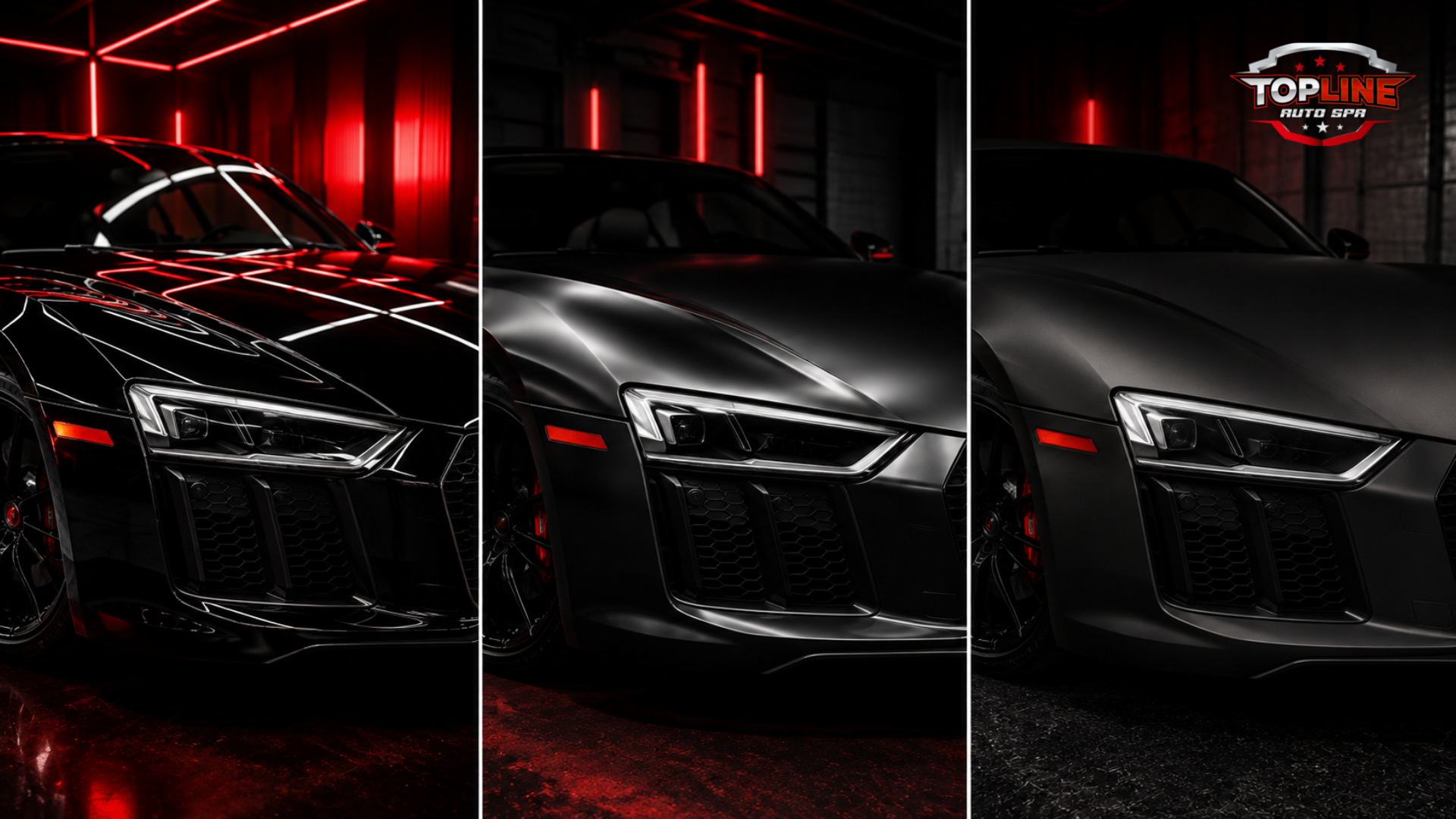
When you choose a gloss, satin, or matte PPF, you’re not changing how the film protects your paint. The protective properties stay the same. What changes is the top layer’s texture, which affects how light reflects off the surface.
Gloss finishes have a smooth, uniform texture that bounces light directly back at your eyes. Satin has a subtle grain pattern that softens reflection. Matte has a pronounced texture that scatters light in all directions. That’s why they look so different, even though they’re protecting your car identically.
Gloss PPF: The Show-Stopper Finish
What it looks like: Gloss PPF mimics original paint. It’s glossy, wet-looking, and comes across as polished and clean. If you want your car to pop in photos and turn heads, gloss is the traditional choice.
Real-world advantages:
- Makes dirt, dust, and water spots less noticeable than matte or satin
- Easiest to keep looking clean with basic washing
- Works beautifully on bright colors (reds, yellows, whites)
- Enhances metallic and pearl finishes
- Most forgiving for irregular lighting conditions
Real-world disadvantages:
- Shows swirl marks and washing scratches more readily than satin or matte
- Requires careful hand-washing to maintain that finish
- Can look plastic-y if the PPF quality is poor
- Not ideal for hiding minor paint imperfections pre-installation
Best for: Cars that are garaged or parked in covered spaces, owners who enjoy car care routines, show cars, anything with a bold color.
Satin PPF: The Practical Middle Ground
What it looks like: Satin walks the line between glossy and matte. It’s refined without being matte, shiny without screaming “film.” Think of it as professional and understated.
Real-world advantages:
- Hides swirl marks better than gloss, less obvious than matte
- Requires less frequent detailing than gloss to look good
- Pairs well with most car colors without looking out of place
- More forgiving to water spots and light dust
- Feels intentional without being edgy
Real-world disadvantages:
- Doesn’t have the showroom sparkle of gloss
- Slightly more sensitive to improper washing technique than gloss
- Less dramatic visual impact than matte on performance or modern cars
- Can look dull if not properly maintained (though less obviously than matte)
Best for: Daily drivers, owners who want protection without obsessing over appearance, cars that see outdoor parking, people who value “looks good, not high-maintenance.”
Matte PPF: The Modern Attitude
What it looks like: Matte PPF is stealthy, modern, and aggressive. It’s the finish you see on high-end sports cars and custom builds. Zero shine, intentional attitude.
Real-world advantages:
- Stunning visual impact on the right car (sports cars, dark colors, modern designs)
- Hides swirl marks completely
- Feels custom and deliberate
- Pairs perfectly with matte wheels and aggressive body kits
- Makes bold color choices feel even bolder
Real-world disadvantages:
- Shows water spots prominently unless dried immediately
- Requires the most frequent washing and drying to maintain appearance
- Sensitive to improper washing techniques (can look streaky or uneven)
- Dust and pollen show more readily
- More expensive to maintain than gloss or satin
- Not forgiving if applied over damaged paint (imperfections become more visible)
Best for: Enthusiasts willing to commit to maintenance, garage-kept vehicles, performance cars, owners with a specific aesthetic vision.
How to Choose: It Really Comes Down to Three Things
1. Your car’s personality and color
Gloss works on everything but shines on bright or metallic colors. Satin works on everything and disappears into the car’s original aesthetic. Matte demands a certain attitude it’s best on darker colors, performance cars, or vehicles with a modern design language.
2. Your actual lifestyle
Be honest here. If your car lives outside and you wash it quarterly, matte will frustrate you. If you love the ritual of hand-washing and waxing, gloss rewards that effort. If you want protection without the maintenance theater, satin is your answer.
3. Your climate
Dry climates are easier on matte finishes because water spot management is simpler. Humid or coastal areas mean salt spray and more water, which favors gloss or satin. Dusty areas (high pollen, construction sites) make matte look dingy faster.
The Professional Approach: Maximize Your Finish Choice
Regardless of which finish you choose, the installation matters. A professional application of PPF is non-negotiable poor installation can make any finish look mediocre. That’s where paint protection film services come in. An expert installation ensures even coverage, proper edge sealing, and longevity.
For those serious about aesthetics and protection, pairing PPF with ceramic coating services adds hydrophobic properties that make water spot management easier across all finishes. The ceramic layer protects the PPF and makes maintenance simpler.
Additionally, if your car has existing minor paint damage, scratches, or swirls, addressing these before PPF installation via paint correction services ensures your chosen finish looks as intended. Paint correction removes those imperfections so the PPF finish shows off a clean canvas.
A Deeper Look: Maintenance Reality Check
Here’s what most people don’t consider: the maintenance gap between these finishes is real.
Gloss PPF can handle automatic car washes (though hand-washing is ideal). You’ll notice swirl marks, but they’re manageable with proper washing technique.
Satin PPF sits in the sweet spot for maintenance. It tolerates less-than-perfect washing without showing every mistake, yet still looks refined with basic care.
Matte PPF demands hand-washing and immediate drying. If you’re parking outside and can’t commit to that routine, matte will look neglected within months despite being perfectly protected.
This is exactly why understanding choosing the right PPF coverage for your car matters the coverage area you protect should align with your maintenance commitment. Full-body matte PPF on someone without a garage is a recipe for frustration.
Conclusion
Choosing between gloss, satin, and matte PPF isn’t about what’s objectively best. It’s about honesty: What does your car deserve? What can you actually maintain? What makes you smile when you look at it?
Gloss is for the proud maintainers. Satin is for the practical optimists. Matte is for the committed enthusiasts. There’s no wrong choice, only the choice that fits your reality.
Whatever you decide, invest in professional installation. The finish is only as good as the application underneath it, and that’s where the difference between a stunning car and a regrettable investment becomes clear.
Frequently Asked Questions
Can I change PPF finish later if I don’t like my choice?
Removing and replacing PPF is possible but expensive and time-consuming. The film can be removed, but it’s a labor-intensive process. Think of your finish choice as semi-permanent. That said, if you truly hate it within the first year, a professional shop can discuss replacement options with you.
Does matte PPF yellow or discolor over time?
Quality matte PPF from reputable manufacturers is resistant to yellowing. However, cheaper films or improper installation can lead to discoloration over several years. Choose a trusted brand and professional installer to avoid this issue.
If I go with satin PPF, will it eventually look matte as it ages?
Not typically, if properly maintained. Satin finish stability depends on film quality and maintenance. Regular washing and occasional detailing keep satin looking refined. Neglect can make it look dull, but that’s neglect-related, not age-related.