
You vacuumed the carpets, wiped down the dashboard, and cleaned the seats—yet somehow your car still smells bad. This is a common frustration for vehicle owners who assume a quick cleaning should eliminate unpleasant odors. In reality, many smells originate from hidden sources that standard cleaning methods simply don’t address.
If your car still smells bad after interior cleaning, understanding the root cause is the first step toward permanently eliminating the odor and restoring a fresh cabin environment.
Key Takeaways
- Surface cleaning often doesn’t remove the true source of odors
- Moisture trapped in carpets and upholstery can create persistent smells
- Air vents and cabin filters frequently harbor odor-causing contaminants
- Food particles, pet hair, and bacteria can remain hidden after cleaning
- Professional interior treatments can target odors at their source
Hidden Moisture Could Be the Problem
One of the most common reasons a car continues to smell after cleaning is trapped moisture. Water can become trapped beneath floor mats, inside carpet padding, or within seat cushions without being immediately visible.
Over time, this moisture creates an ideal environment for mold, mildew, and bacteria growth. Even if the visible surfaces appear clean, odors can continue to develop beneath them.
In many cases, a thorough interior detailing process helps identify and remove moisture-related contaminants that ordinary cleaning often misses.
Your Cabin Air Filter May Be Contaminated
Many vehicle owners overlook the cabin air filter when trying to eliminate interior odors.
The cabin filter collects dust, pollen, dirt, and airborne contaminants. As it becomes clogged, it can begin circulating unpleasant smells throughout the vehicle every time the air conditioning or heating system is used.
Replacing a dirty cabin air filter is often one of the simplest ways to improve interior air quality and reduce lingering odors.
Air Vents Can Harbor Bacteria and Mold
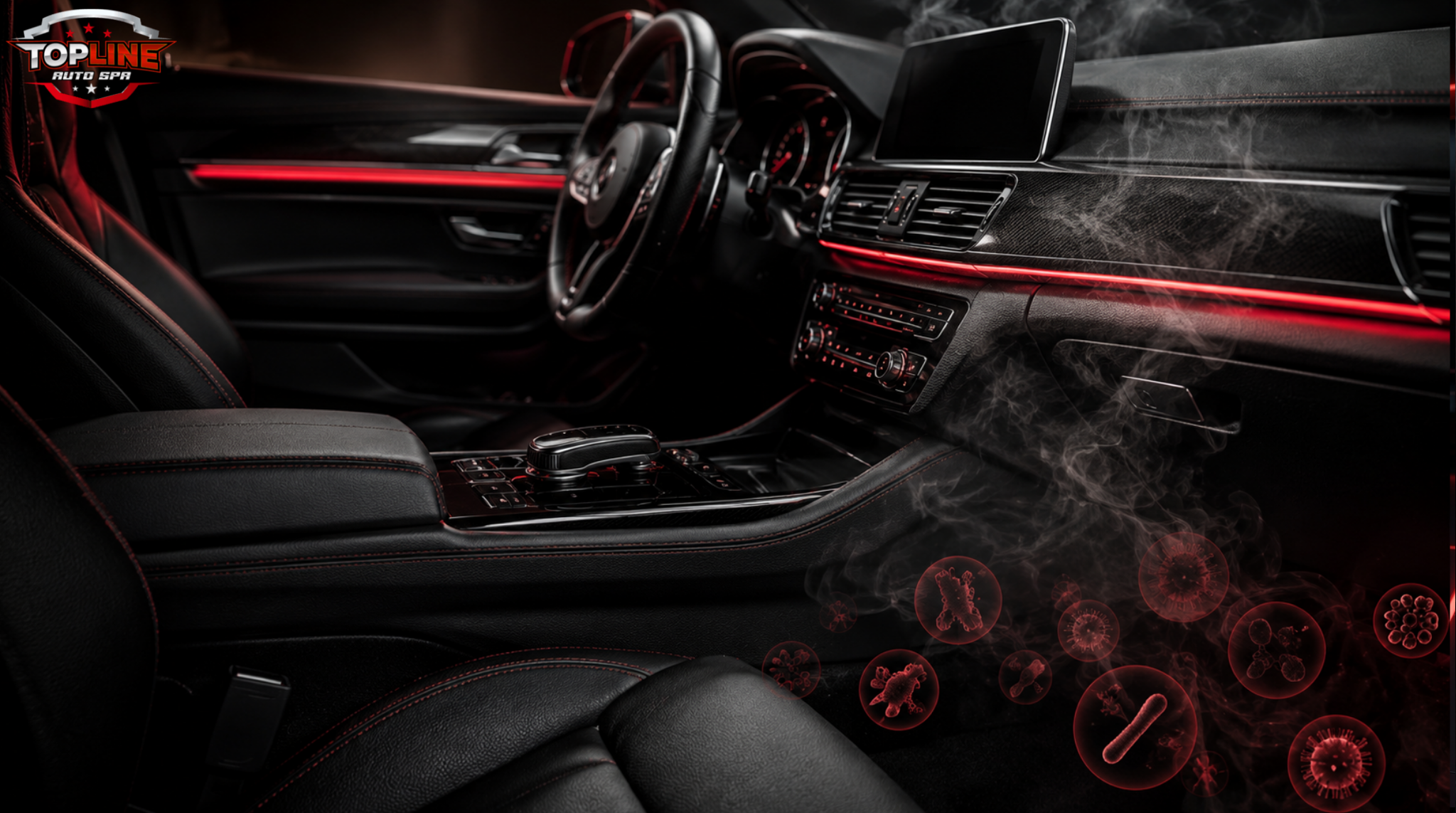
Your HVAC system contains dark, damp areas where bacteria and mold can thrive. These contaminants may develop inside evaporator components, air ducts, and vent systems.
If you notice a musty smell when turning on your air conditioner, the ventilation system could be contributing to the problem.
Surface cleaning alone won’t reach these hidden areas, which is why odors often persist despite repeated attempts to clean the cabin.
Dust and Hidden Contamination Can Trap Odors
Many odors become trapped within dust, dirt, and organic debris that accumulate throughout the interior.
If you’ve noticed your vehicle becoming dusty again shortly after cleaning, our guide on Why Car Interiors Get Dusty So Quickly explains some of the hidden sources of contamination that may also contribute to lingering smells.
Removing these contaminants regularly helps improve both cleanliness and cabin air quality.
Food Residue and Spills Often Go Undetected
Small food particles can easily fall into seat crevices, under seats, and between interior panels. Even minor spills can leave behind organic material that continues producing odors long after the visible mess has disappeared.
Milk, coffee, soft drinks, and fast-food residue are among the most common sources of persistent interior smells.
Without deep cleaning, these hidden contaminants may continue attracting bacteria and producing unpleasant odors.
Pet Hair and Dander Can Cause Lingering Odors
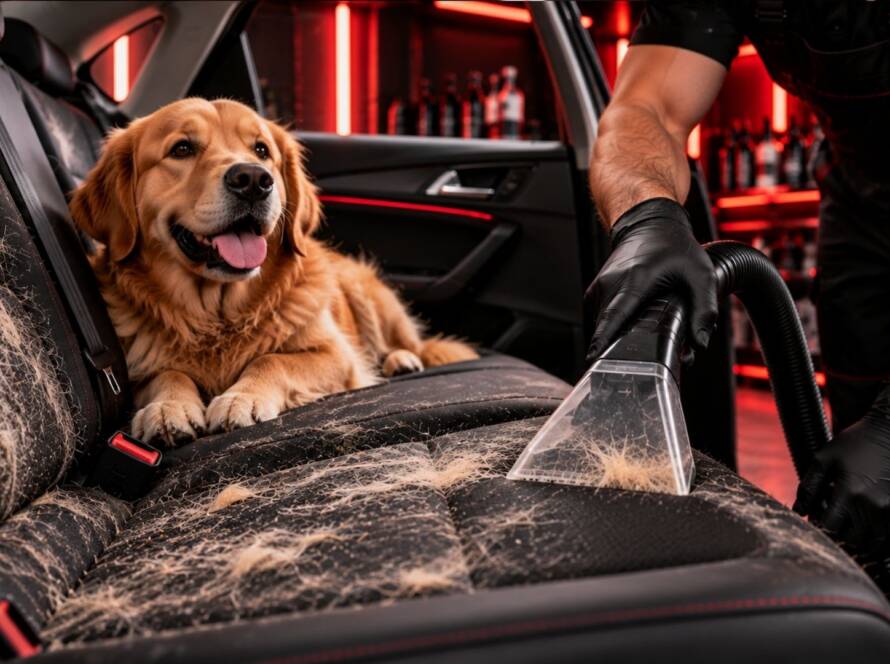
Pets leave behind more than visible hair. Dander, oils, moisture, and microscopic debris can become embedded in fabrics, carpets, and upholstery.
Even after vacuuming, odor-causing particles may remain trapped deep within interior materials.
A thorough deep interior cleaning treatment can help remove contaminants that traditional vacuuming often leaves behind.
Smoke Odors Are Difficult to Remove Completely
Cigarette smoke is one of the most stubborn vehicle odors. Smoke particles can penetrate upholstery, carpets, headliners, and ventilation systems.
Simply masking the smell with air fresheners rarely solves the problem. In many cases, specialized odor-removal techniques are required to fully eliminate smoke-related contamination.
The longer smoke residue remains in the vehicle, the more difficult it becomes to remove.
Why Air Fresheners Only Provide Temporary Relief
Many drivers attempt to solve odor problems by adding stronger air fresheners.
While air fresheners can temporarily mask unpleasant smells, they do not remove the source. Once the fragrance fades, the original odor typically returns.
Long-term odor control requires identifying and eliminating the underlying cause rather than covering it up.
How to Permanently Eliminate Interior Odors
If your car still smells bad after interior cleaning, consider these steps:
- Inspect carpets and floor mats for moisture
- Replace the cabin air filter
- Clean HVAC vents and ductwork
- Remove hidden food residue
- Address mold and mildew growth
- Deep-clean upholstery and carpets
- Eliminate pet hair and dander buildup
- Treat smoke contamination properly
Addressing the root cause is far more effective than repeatedly masking odors with fragrances.
Conclusion
When a vehicle continues to smell bad after cleaning, the problem usually extends beyond what is visible on the surface. Hidden moisture, contaminated air filters, dirty ventilation systems, food residue, pet dander, and bacteria can all contribute to persistent odors that survive routine cleaning efforts.
Many vehicle owners focus on wiping down surfaces while overlooking the deeper sources of contamination that continue generating unpleasant smells. Identifying these hidden causes is essential for achieving a truly fresh interior.
Regular maintenance and a complete interior detail can help remove deeply embedded contaminants, improve air quality, and restore a cleaner, healthier cabin environment. By addressing odors at their source, you can enjoy a vehicle that smells as clean as it looks.
FAQs
Why does my car still smell bad after I clean it?
The odor may be coming from hidden sources such as trapped moisture, mold, food residue, dirty air filters, pet dander, or contaminated air vents.
Can a cabin air filter cause bad smells inside a car?
Yes. A dirty cabin air filter can trap contaminants and circulate unpleasant odors through the vehicle’s ventilation system.
Will air fresheners permanently remove car odors?
No. Air fresheners only mask odors temporarily. The underlying source must be removed to eliminate the smell permanently.